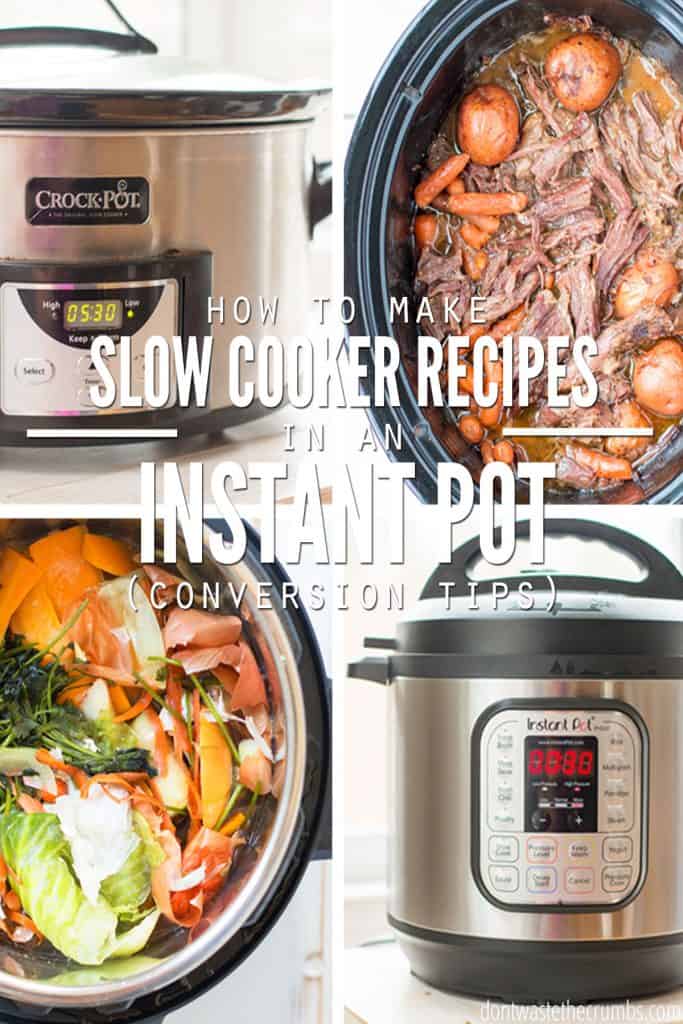
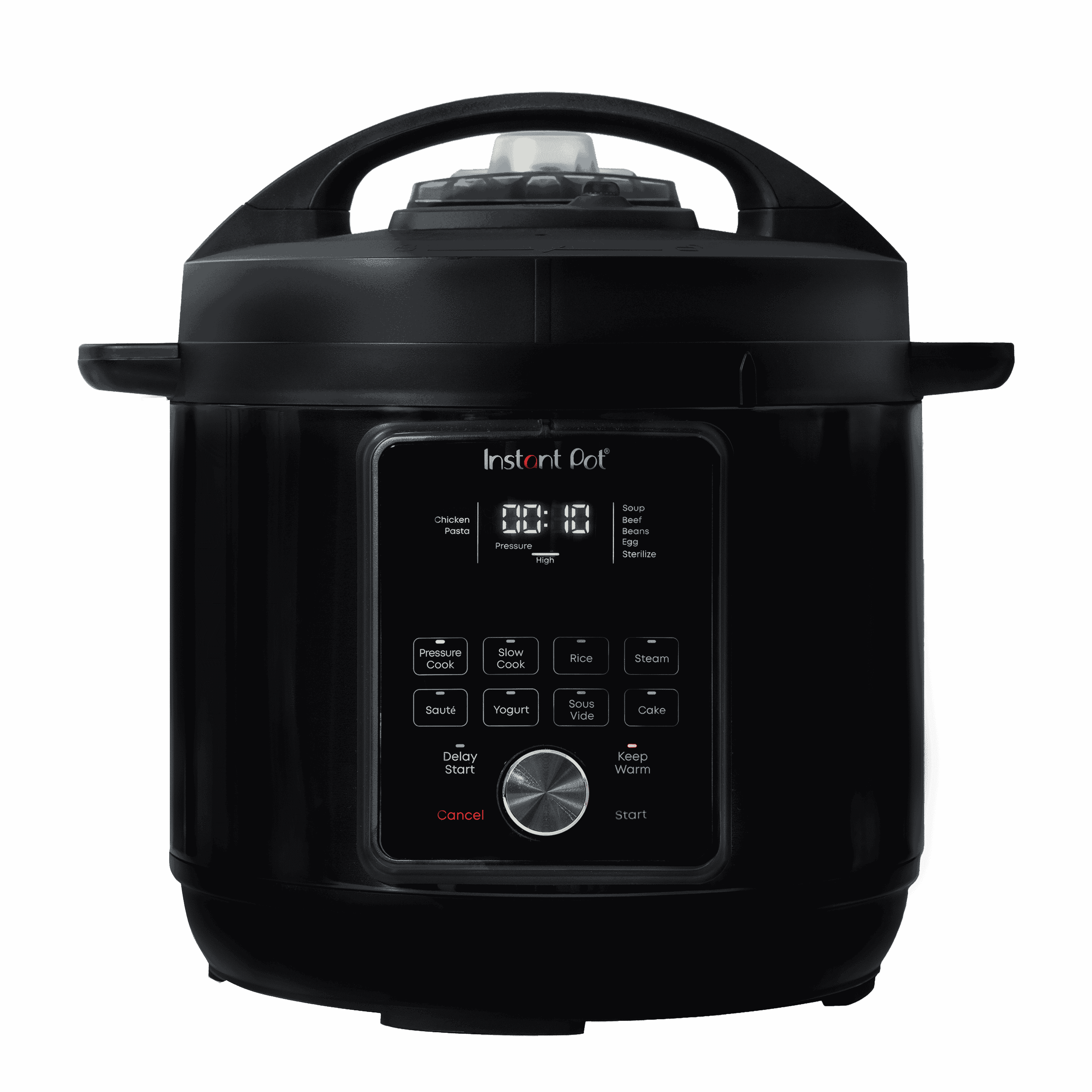
To slow cook on high in a U.S. Instant Pot, press Slow Cook, use the Adjust or Pressure Level button to select More, set the cooking time, and press Start if your model has that button. On many Instant Pot models, More is the slow-cook equivalent of High.
Do not confuse Slow Cook—More with Pressure Cook—High. Slow cooking uses gentle heat and does not build pressure.
This guide explains the correct settings, lid position, cooking times, food safety steps, and common fixes for meals that cook too slowly.
What “High” Means on an Instant Pot
On an Instant Pot, “high” can mean two different things:
- Slow Cook—More: A higher slow-cooking heat level.
- Pressure Cook—High: The higher pressure setting used for pressure cooking.
For slow cooking, choose Slow Cook—More. The exact button name may vary by model. Some newer units show Less, Normal, and More on the display. Others may use a menu or a cooking-level button.
The slow-cook levels usually work like this:
| Displayed setting | General use |
|---|---|
| Less | Low heat or a gentle simmer |
| Normal | Medium slow-cook heat |
| More | High slow-cook heat |
The exact temperature and heating pattern depend on the Instant Pot model and its manual. Treat the settings as levels, not as fixed temperatures.
Slow cook high versus pressure cook high
These settings produce very different results:
- Slow Cook—More: Cooks over several hours at gentle heat.
- Pressure Cook—High: Cooks under pressure in a much shorter time.
- Sauté: Uses direct, open-pot heat for browning or reducing liquid.
A recipe that says “cook on high” may refer to a traditional slow cooker. In that case, use Slow Cook—More on an Instant Pot.
How to Slow Cook on High in an Instant Pot
Use these steps for most U.S. Instant Pot models with a Slow Cook function.
1. Add the food and liquid
Place the ingredients in the inner stainless steel pot. Add the liquid called for by the recipe.
Slow cooking does not need the same minimum liquid requirement as pressure cooking. Still, most recipes need some liquid to prevent drying and to create steam and gentle heat.
Good liquid choices include:
- Broth or stock
- Water
- Tomato sauce
- Wine used as part of the recipe
- Coconut milk
- A cooking sauce
Do not fill the pot beyond the 2/3 fill line. For foods that expand, such as beans, use no more than half the pot.
2. Choose Slow Cook
Press the Slow Cook button.
The display may show a default time, such as four hours. You can change it with the + and − buttons or the time controls on your model.
3. Select More
Press Adjust or Pressure Level until the display shows More.
On many models:
- Press Slow Cook.
- Press Adjust until More appears.
- Set the cooking time.
- Press Start, or wait for the cooker to begin.
If your model does not show More, check the owner’s manual. The button layout differs among the Duo, Duo Plus, Pro, Rio, and other models.
4. Set the cooking time
Set the time based on the recipe and the size of the food.
As a general starting point:
- Small meals: about 3 to 4 hours on high
- Stews and chili: about 4 to 6 hours on high
- Large meat cuts: about 5 to 7 hours on high
These are planning ranges, not guarantees. Food size, starting temperature, liquid level, and the model all affect cooking time.
5. Use the lid correctly
For the best slow-cook results, use a glass lid made for your Instant Pot size, if you have one.
If you use the pressure-cooking lid:
- Follow your model’s manual.
- Keep the steam release handle in Venting.
- Do not try to pressure-cook while using the Slow Cook function.
- Never force the lid open.
Some Instant Pot models let you use the pressure lid for slow cooking. Others work better with a glass lid. The lid should not be sealed for slow cooking unless the manual specifically says otherwise.
6. Check for doneness
The food is ready when it reaches the recipe’s texture and a safe internal temperature.
For meat, use an instant-read thermometer. The USDA lists these minimum internal temperatures:
- Poultry: 165°F
- Ground meats: 160°F
- Beef, pork, lamb, and veal steaks, chops, and roasts: 145°F, followed by a three-minute rest
A safe temperature does not always mean the meat is tender. Tough cuts may need more time for connective tissue to soften.

How Long to Slow Cook on High
Slow Cook—More often takes less time than Slow Cook—Normal or Less, but the difference is not always exact.
A practical guide is:
| Food | Approximate time on Slow Cook—More |
|---|---|
| Chicken pieces | 3–5 hours |
| Beef stew | 4–6 hours |
| Pork shoulder | 5–7 hours |
| Chili | 4–6 hours |
| Pot roast | 5–7 hours |
| Dried beans | Varies by bean and soaking method |
Use these ranges only as a starting point. A large, cold roast takes longer than smaller pieces. A full pot also takes longer to heat than a half-full pot.
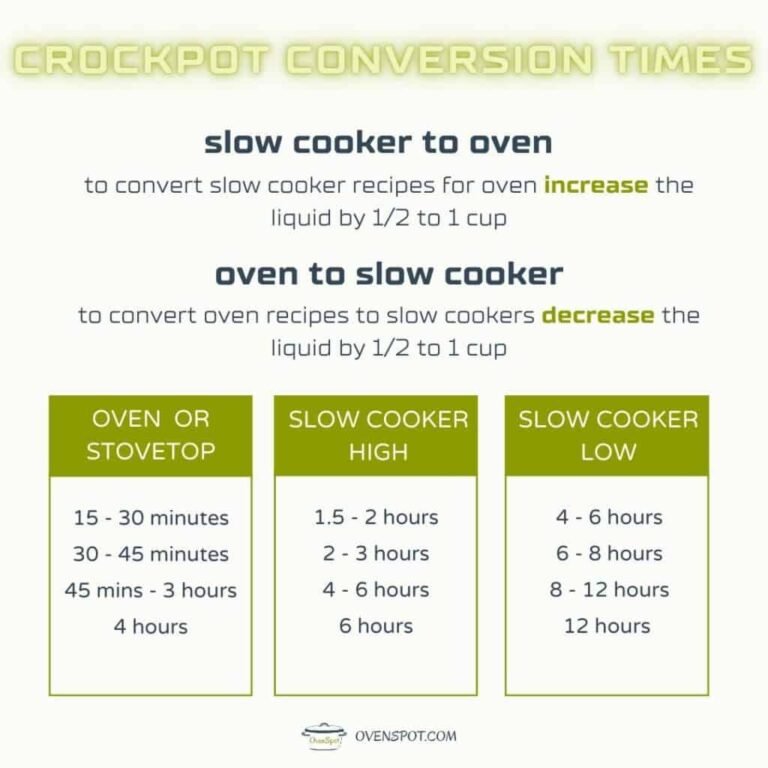
Converting a slow-cooker recipe
If a recipe lists both low and high settings, use its high-time estimate with Slow Cook—More.
For example:
- Recipe says 8 hours on low or 4 hours on high.
- Set the Instant Pot to Slow Cook—More for about 4 hours.
- Begin checking early if the food is cut into small pieces.
Do not treat every recipe as a strict 2-to-1 conversion. Slow cookers and Instant Pots can heat in different ways. The insert shape, lid fit, ingredient amount, and room temperature all matter.
When to start with hot ingredients
Starting with hot broth or browned meat can shorten the time needed for the pot to warm. However, do not use partly cooked food that has sat at room temperature for a long time.
For best results:
- Keep raw meat cold until you are ready to cook.
- Brown meat first with Sauté if the recipe calls for it.
- Add hot broth after browning when practical.
- Start the slow-cook cycle right away.
Starting with cold ingredients is safe when the cooking cycle begins promptly, but it may increase the total time.
Best Foods for Slow Cook—More
Slow Cook—More works well for foods that benefit from steady, gentle heat.
Good choices include:
- Beef stew
- Pot roast
- Pulled pork
- Chicken thighs
- Chili
- Lentil soup
- Bean soup
- Meatballs in sauce
- Braised vegetables
Tough cuts often work better than lean cuts. Beef chuck, pork shoulder, and chicken thighs have more connective tissue or fat than lean loin cuts. That helps them stay moist during a long cook.
Foods that need special care
Some ingredients can become soft or lose their texture:
- Chicken breast may dry out.
- Fish can fall apart.
- Pasta can become mushy.
- Dairy may curdle.
- Fresh herbs may lose flavor.
- Leafy greens may darken.
- Potatoes can stay firm if the liquid is acidic.
Add quick-cooking foods near the end when possible. Add dairy, cream, cheese, and delicate herbs after the main cooking period unless the recipe specifically includes them from the start.
Browning before slow cooking
Browning meat with the Sauté function is optional, but it can improve the flavor and color of the finished dish.
To brown meat:
- Press Sauté.
- Add a small amount of oil.
- Brown the meat in batches.
- Remove excess grease if needed.
- Add liquid and scrape up browned bits.
- Press Cancel.
- Select Slow Cook, then choose More.
Do not leave the pot unattended while using Sauté. The pot can become very hot.

Why Your Instant Pot May Not Slow Cook on High
If the food is still cold or undercooked, check the setting, lid, food amount, and cooking time before changing the recipe.
The setting is on Normal instead of More
The most common issue is selecting Normal instead of More. Press Adjust or Pressure Level and confirm that the display shows More.
Some models may return to a default setting after the cooker is unplugged or after a new program is selected.
The lid is not trapping enough heat
A loose glass lid or a lid that does not fit the pot can slow heating. Use the correct lid size and keep it in place during cooking.
If the lid has a vent hole, that is normal for many slow-cook lids. Slow cooking does not require a pressure seal.
The pot is too full
A very full pot takes longer to heat. It may also cook unevenly.
For better results:
- Cut food into similar-sized pieces.
- Keep the pot below the 2/3 line.
- Avoid packing large pieces tightly together.
- Stir thick foods once or twice when safe and practical.
The food started frozen
Frozen meat can spend too long in the food safety danger zone while the center warms. The USDA advises thawing meat before placing it in a slow cooker.
Thaw food in the refrigerator, in cold water changed regularly, or by using a microwave followed by immediate cooking. Do not slow cook a large frozen roast.
The recipe needs a different method
Some foods are not suited to slow cooking. Pasta, seafood, thin chicken breasts, and recipes that need a crisp crust may work better with another cooking method.
If the food needs a quick boil, pressure cook, sauté, or oven finish, Slow Cook—More may not produce the expected result.
Safety Rules for Slow Cooking in an Instant Pot
Use safe handling from preparation through serving.
Keep perishable food cold before cooking
Store meat, poultry, dairy, and prepared ingredients in the refrigerator until you are ready to use them. Do not leave raw meat on the counter while you prepare other tasks.
Do not use the delay timer with risky foods
Avoid delaying the start of a recipe that contains raw meat, poultry, seafood, eggs, or dairy. These foods can remain too long at unsafe temperatures before cooking begins.
Check the thickest part
Use a food thermometer in the thickest part of the meat. Avoid touching bone, the pot, or a large pocket of fat with the probe.
Refrigerate leftovers promptly
Divide large amounts into shallow containers so they cool faster. Refrigerate leftovers within two hours, or within one hour if the surrounding temperature is above 90°F.
Do not use keep-warm as a long-term holding method
Keep Warm may help hold a finished dish for a short period, but it is not a substitute for safe refrigeration. Check the temperature and refrigerate food that will not be served soon.
For current food-safety details, use the USDA safe minimum internal temperature chart.

How To Slow Cook On High Instant Pot: Common Mistakes
Avoid these mistakes when adapting a slow-cooker recipe.
Mistake 1: Choosing Pressure Cook instead of Slow Cook
The pressure-cooking program will change the method, time, liquid needs, and texture. Confirm that the display says Slow Cook before starting.
Mistake 2: Treating More as a fixed temperature
More is a program level, not a promise that every Instant Pot reaches one exact temperature under all conditions. The model, lid, volume, and ingredients affect results.
Mistake 3: Using too little liquid
Slow cooking does not need pressure-cooking liquid levels, but a dry pot can lead to scorching and tough food. Follow the recipe and add enough sauce, broth, or other liquid to cover the needed area.
Mistake 4: Opening the lid too often
Each lid opening releases heat. Check only when needed, especially during the first few hours.
Mistake 5: Cutting meat into uneven pieces
Small pieces may become dry before large pieces are tender. Cut food into similar sizes so it cooks more evenly.
Mistake 6: Adding thick sauce too early
Thick tomato sauce, cheese sauce, and cream-based mixtures can scorch or separate. Add them later when the recipe allows.
Instant Pot Slow Cook High Versus Other Methods
Choose the method that matches the result you need.
| Method | Best for | Main trade-off |
|---|---|---|
| Slow Cook—More | Tender stews and braises over several hours | Needs planning time |
| Slow Cook—Normal | Longer, gentler cooking | Takes more time |
| Pressure Cook—High | Fast cooking of beans, stews, and tough meat | Produces a different texture |
| Sauté | Browning, reducing, and quick cooking | Needs active attention |
| Oven braise | Even heat and browning | Uses the oven and a separate dish may be needed |
A dedicated slow cooker may also produce more consistent slow-cook results because its heating design is built specifically for that task. An Instant Pot is useful when you want one appliance for browning, slow cooking, pressure cooking, and reheating, but its slow-cook performance can vary by model and lid choice.
Frequently Asked Questions
Can you slow cook on high in every Instant Pot?
Most Instant Pot models with a Slow Cook program offer a higher setting called More. Some models use different controls or may not include slow cooking. Check the manual for your exact model.
What button is high on an Instant Pot slow cooker?
Press Slow Cook, then use Adjust or Pressure Level until More appears. On many models, More is the highest slow-cook level and is closest to High on a traditional slow cooker.
Should the Instant Pot vent be open when slow cooking?
Usually, yes. Slow cooking does not use pressure, so the steam release should be set to Venting when using the pressure lid. Follow the instructions for your model, especially if it uses a special slow-cook lid.
Can you put raw meat in an Instant Pot and slow cook it?
Yes, raw meat can be slow cooked if it is handled safely, the cooking cycle starts promptly, and the meat reaches a safe internal temperature. Thaw frozen meat first, and do not use a delay start for raw meat.
Why is my Instant Pot slow cook setting not hot enough?
The cooker may be on Normal instead of More, the pot may be overfilled, the lid may not fit well, or the ingredients may have started very cold. If the food remains undercooked, continue cooking only if safe handling has been maintained. Otherwise, discard food that has spent too long at unsafe temperatures.
Key Takeaways
- Use Slow Cook—More for the high setting.
- Do not confuse it with Pressure Cook—High.
- Use the correct lid and keep the steam release on Venting when your manual requires it.
- Start with the recipe’s high-time estimate, then check the food early.
- Thaw meat before slow cooking.
- Use a thermometer to confirm safe internal temperatures.
- Add dairy, pasta, seafood, and other delicate ingredients near the end when possible.
- Check your Instant Pot manual because button names and lid instructions vary by model.
Conclusion
To slow cook on high in an Instant Pot, select Slow Cook, choose More, set the time, and use the lid and vent position recommended for your model. Begin with the high-time range from the recipe, but judge the finished meal by texture and internal temperature rather than by the clock alone.
For a reliable result, use thawed ingredients, avoid overfilling the pot, keep the lid closed, and check the thickest part of meat with a thermometer.