Introduction
The Instant Pot slow cooker setting turns the appliance into an electric slow cooker. Add your food, choose Slow Cook, select a heat level, set the time, and let the meal cook gently.
For most Instant Pot models, use the venting position. You can use the pressure lid if your manual allows it, or use an Instant Pot glass lid. The appliance will not build pressure during slow cooking.
What the Instant Pot Slow Cooker Setting Does
The slow cooker setting uses low, steady heat. It does not cook with pressure. This makes it useful for soups, stews, chili, pulled pork, and other meals that benefit from a long cook time.
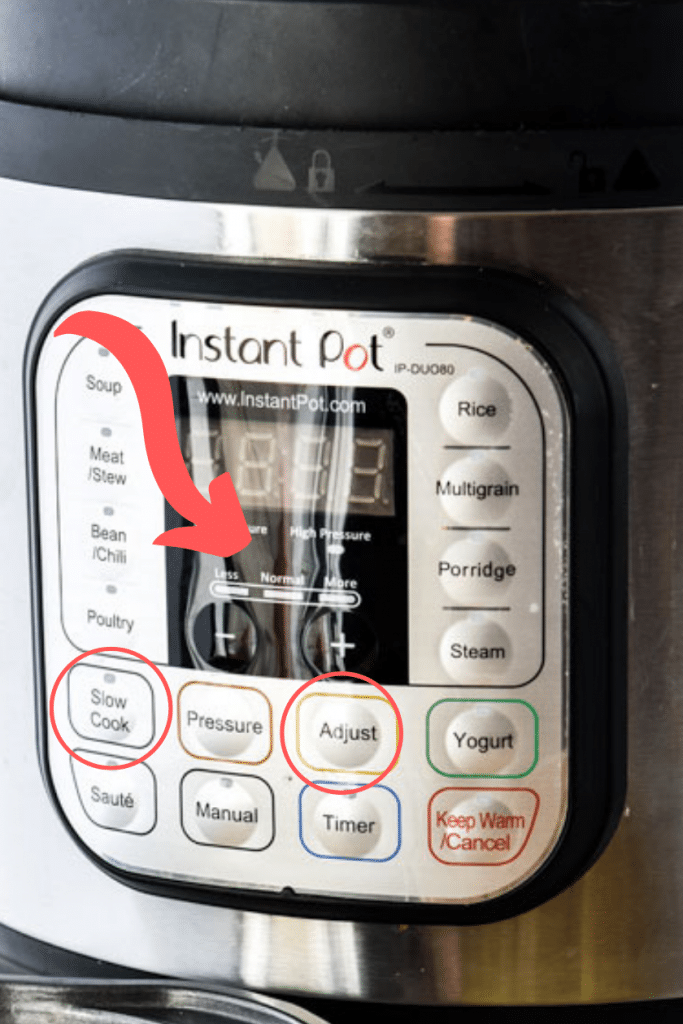
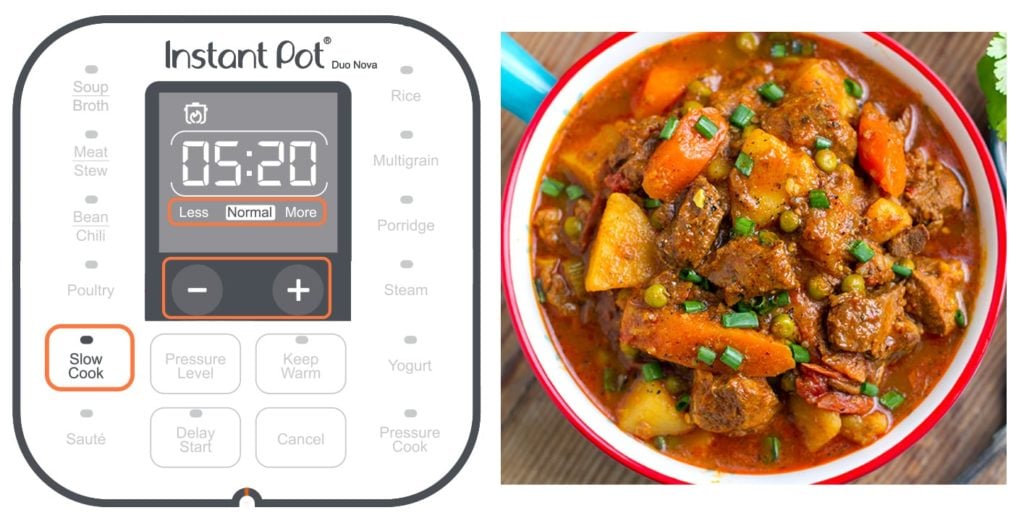
The exact buttons and heat settings vary by model. Many Instant Pot units show three choices:
- Less: Low heat
- Normal: Medium heat
- More: High heat
Some models use separate Low, Medium, and High buttons. Check the manual for your model before you begin.
Slow cook versus pressure cook
These two functions work in very different ways:
| Function | How it cooks | Typical result |
|---|---|---|
| Slow Cook | Gentle heat over a long time | Soft, rich flavors and tender food |
| Pressure Cook | High heat and pressure | Much faster cooking |
| Sauté | Direct heat from the bottom | Browning or quick cooking |
The slow cooker setting does not shorten cooking time like pressure cooking. A stew may need several hours, just as it would in a standard Crock-Pot or other slow cooker.

How to Use the Instant Pot Slow Cooker Setting
Follow these steps for a basic slow cooker meal.
1. Check your model and lid
Read the instructions for your Instant Pot model. The slow cooker function differs slightly between models.
If you use the pressure lid, keep the steam release handle in the Venting position. Do not use a sealed position for slow cooking. The float valve should remain down.
You may also use an approved glass lid. A glass lid can make it easier to check the food, but lifting any lid lets heat escape.
2. Add the ingredients
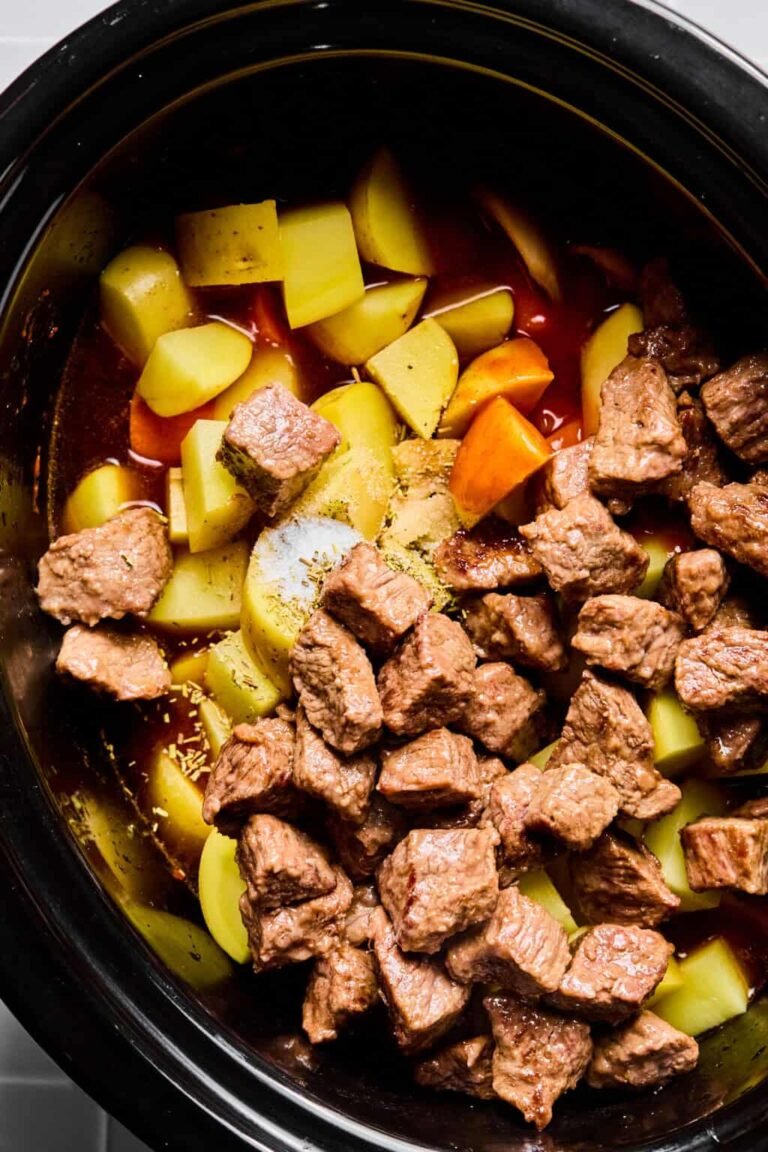
Put the ingredients in the inner cooking pot. Add liquid if the recipe calls for it.
Slow cooking does not cause as much evaporation as cooking in an uncovered pot. Do not add extra liquid just because the recipe uses an Instant Pot. Too much liquid can make a stew thin and dilute its flavor.
For best results:
- Put dense foods, such as potatoes and carrots, near the bottom.
- Cut meat and vegetables into similar-size pieces.
- Do not fill the pot above the maximum fill line.
- Leave enough room for the food to heat evenly.
- Do not place frozen meat in the pot unless the recipe and food safety plan support it.
3. Select Slow Cook
Press the Slow Cook button. The display may show a default time.
Use the + and − buttons, or the time controls, to set the cooking time. Many Instant Pot models allow a long cook period, but the available range depends on the unit.
4. Choose the heat level
Press the Slow Cook button again, or use the adjustment button, to select Less, Normal, or More.
Choose:
- Less for low, gentle cooking.
- Normal for most slow cooker recipes.
- More when the recipe calls for high slow-cooker heat.
The labels do not mean “less food” or “more food.” They refer to the heat program.
5. Start cooking
Some models begin after a short pause. Others need you to press Start.
The screen may show On while the pot heats. Slow cooking does not need a pressure-building stage. This means the display may not behave like it does during pressure cooking.
6. Check the food near the end
When the timer reaches zero, the Instant Pot may switch to Keep Warm. This setting can continue cooking the food and may change its texture.
Turn off Keep Warm if you do not want extra cooking. Check the meat, vegetables, and sauce before serving.
7. Serve safely
Use clean utensils to serve the food. Refrigerate leftovers within two hours. If the room is above 90°F, refrigerate them within one hour, following USDA guidance.
Divide a large amount of food into shallow containers. This helps it cool more quickly.

Which Heat Setting Should You Use?
The best setting depends on the recipe, the cut of meat, and the result you want. Start with the recipe’s instructions when they name a slow cooker setting.
| Recipe instruction | Instant Pot choice |
|---|---|
| Low | Less |
| Medium or standard slow cook | Normal |
| High | More |
This table is a practical guide, not a guarantee for every model. Instant Pot programs can vary by series and generation.
When to use Less
Use Less for foods that need a long, gentle cook. It may work well for:
- Tough beef cuts
- Pork shoulder
- Beans that are already prepared for slow cooking
- Long-simmered sauces
This setting may not bring food to a simmer as quickly as a standard slow cooker on high heat.
When to use Normal
Use Normal for most slow cooker recipes. It is a useful starting point for:
- Chicken soups
- Beef stew
- Chili
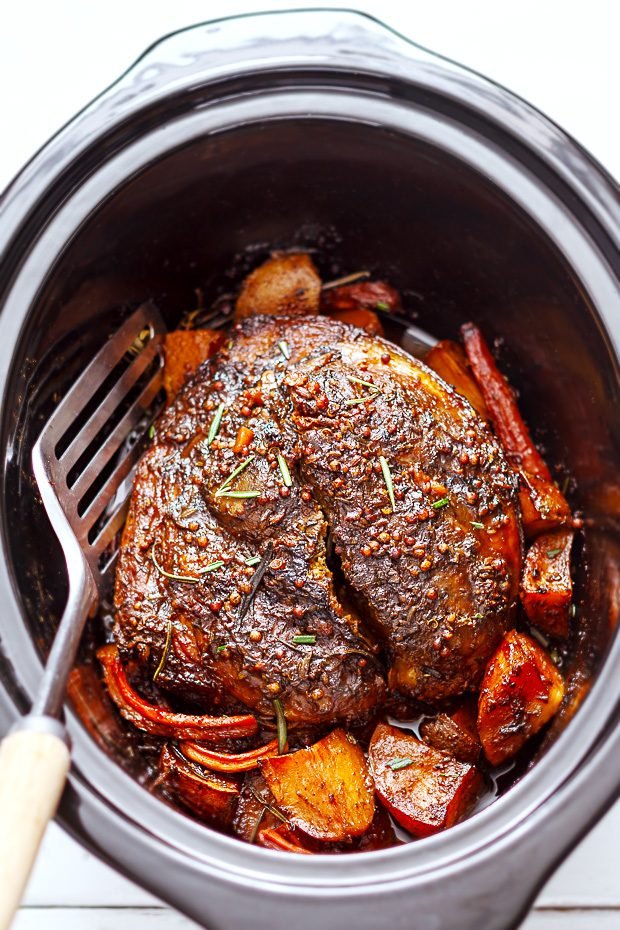
- Pot roast
- Vegetable soups
If the food remains firm after the planned time, continue cooking until it reaches the desired texture.
When to use More
Use More when the recipe calls for high slow-cooker heat. It can help food heat faster and may suit shorter slow-cook recipes.
Do not assume that More equals a specific temperature on every Instant Pot model. Use the manual for your unit if temperature control matters.

How to Prepare Food for Better Results
Good preparation matters as much as the setting. Slow cooking is gentle, but it cannot fix uneven cuts or poor layering.
Brown meat first
Browning is optional, but it can add a deeper taste. Press Sauté, add a small amount of oil, and brown the meat in batches.
Move the meat to a plate before adding other ingredients. Scrape up browned bits with a little liquid. This adds flavor to the sauce.
Do not crowd the pot. Crowded meat steams instead of browns.
Add delicate foods later
Some foods become soft after many hours. Add them near the end when possible.
Examples include:
- Fresh herbs
- Green beans
- Peas
- Dairy products
- Seafood
- Quick-cooking pasta
Add dairy near the end to reduce the risk of curdling. Cook pasta separately or add it late, since long cooking can make it mushy.
Use the right amount of liquid
Slow cookers keep moisture in the pot. Start with the liquid amount listed in the recipe.
If a recipe was written for stovetop cooking, it may need less liquid in the Instant Pot slow cooker. Make this change with care. The food still needs enough liquid to cook evenly and prevent scorching.
Thicken at the end
For a thicker sauce, remove the lid and press Sauté after slow cooking. Simmer the liquid while stirring.
You can also mix cornstarch with cold water to make a slurry. Add it in small amounts, then simmer until the sauce thickens. Follow the proportions in a tested recipe.
Do not add dry flour straight to hot liquid. It can form lumps.

How Long Should You Slow Cook in an Instant Pot?
Cooking time depends on the food, cut size, starting temperature, and heat setting. Use a tested slow cooker recipe when possible.
As a general guide:
- Small chicken pieces may cook in a few hours on high.
- Large meat cuts often need several hours.
- Root vegetables may need more time than soft vegetables.
- Beans require special care because some dry beans need boiling before safe use.
- Food should be tender and fully cooked, not just warm.
Use internal temperature for meat
A cooking time alone does not prove that meat is safe. Check the thickest part with a food thermometer.
The USDA lists these minimum internal temperatures:
- Poultry: 165°F
- Ground meats: 160°F
- Whole cuts of beef, pork, lamb, and veal: 145°F, followed by a three-minute rest
A slow cooker recipe may cook meat beyond these minimums to make it tender. That is normal for pot roast or pulled pork.
Do not use a timer as a safety shortcut
Do not leave meat sitting at room temperature while you wait to start the cooker. Begin cooking soon after preparation.
Avoid partially cooking meat and finishing it later. USDA guidance warns against this practice because bacteria can grow while food stays in unsafe temperature ranges.

Common Instant Pot Slow Cooker Problems
The food is still cold or barely warm
Possible causes include:
- The wrong function was selected.
- The lid is not fitted correctly.
- The inner pot is not seated.
- The heat level is too low for the recipe.
- The cooking time is too short.
- The appliance is still warming up.
First, confirm that Slow Cook appears on the display. Check that the inner pot sits flat on the heating base. Then confirm the heat level and continue cooking if the food remains safe to eat.
If the food has been lukewarm for a long time, do not taste it. Discard it when food safety is uncertain.
The food is too watery
Slow cooking traps steam. It may leave more liquid than stovetop cooking.
You can:
- Remove the lid.
- Select Sauté.
- Simmer until some liquid evaporates.
- Stir often.
- Turn off the heat when the sauce reaches the desired thickness.
A cornstarch slurry can also help.
The food is too dry
The lid may not be seated well, or the recipe may not contain enough liquid. Some foods also lose moisture during a long cook.
Add a small amount of hot stock or water. Do not add a large amount at once. Taste the sauce after each small addition.
The meat is tough
Tough meat may need more time, not less. Keep cooking until the connective tissue softens.
If the meat is dry and stringy, it may have cooked too long or used too little liquid. Lean meat can dry out more quickly than well-marbled cuts.
The display shows “On” for a long time
The On message often means the unit is heating. Slow Cook does not build pressure, so it may not show the same progress pattern as Pressure Cook.
If the pot never heats, check the outlet, power cord, inner pot position, and selected program. Stop using the unit if it smells burnt, shows an error, or has damaged wiring.

Instant Pot Slow Cooker Safety Rules
Use the slow cooker function only when the appliance, lid, and recipe are suitable for that use.
Keep these rules in mind:
- Do not seal the steam release for slow cooking.
- Do not block the steam release area.
- Do not exceed the maximum fill line.
- Do not move a hot, full inner pot without protection.
- Do not place the cooker near water or a hot stove burner.
- Do not use a damaged cord, lid, or sealing part.
- Keep the cooker away from children.
- Use a thermometer for meat and poultry.
- Refrigerate leftovers promptly.
- Do not rely on Keep Warm as a substitute for safe cooking or cooling.
Some Instant Pot models have special lid rules. The instruction manual for your exact model takes priority over a general recipe.
Key Takeaways
- Press Slow Cook, set the time, and choose Less, Normal, or More.
- Use Venting when the pressure lid is approved for slow cooking.
- Choose the heat level that matches the recipe.
- Use the recipe’s liquid amount as your starting point.
- Check meat with a food thermometer.
- Use Sauté after cooking to reduce or thicken a thin sauce.
- Follow the manual for your exact Instant Pot model.
Faqs about How To Use Instant Pot Slow Cooker Setting
Can you slow cook in an Instant Pot with the pressure lid on?
Often, yes, but model instructions differ. If your manual allows the pressure lid, place the steam release handle in Venting. Never set it to sealed for slow cooking. An approved glass lid may also work.
Do you need to seal the Instant Pot when using Slow Cook?
No. Slow cooking does not use pressure. The steam release should stay in the venting position when using a pressure lid.
Is the Instant Pot Slow Cook setting the same as a Crock-Pot?
It serves a similar purpose, but performance can vary. The shape of the pot, heat pattern, lid, and program design may differ. A slow cooker recipe may need an adjustment in time or liquid.
Why does my Instant Pot say “On” during slow cooking?
The display may say On while the appliance heats. This is normal for many models. Slow cooking does not need the pressure-building stage used by Pressure Cook.
Can you put frozen meat in an Instant Pot on Slow Cook?
It is not a good general practice. Frozen meat may spend too long warming through the food safety danger zone. Thaw meat in the refrigerator first, then start the slow cooking cycle promptly.
Can you leave the Instant Pot on Slow Cook overnight?
The appliance may be designed to run for a long period, but the recipe, model, and food safety conditions still matter. Do not use an overnight setting if the cooker, cord, lid, or outlet is damaged. Check your model manual and use a tested recipe.
Conclusion
To use the Instant Pot slow cooker setting, add the food, choose Slow Cook, select the proper heat level, and set the time. Keep the steam release in Venting when your manual permits the pressure lid.
For reliable results, use the right amount of liquid, avoid overfilling, and check the final temperature of meat. If the sauce is thin, use Sauté at the end. If the food is tough, continue cooking until it becomes tender—unless food safety has already become uncertain.
For your next meal, find the model number on your Instant Pot, read its slow-cook lid instructions, and match the recipe’s low, medium, or high setting to Less, Normal, or More.