For most American slow cookers, cook beef stew for 7 to 9 hours on LOW or 3 to 5 hours on HIGH. The stew is ready when the beef is easy to cut with a fork and reaches at least 145°F in the thickest pieces.
For the best texture, use LOW heat when you have time. The longer, gentler cook helps tough beef become soft without drying out the vegetables.
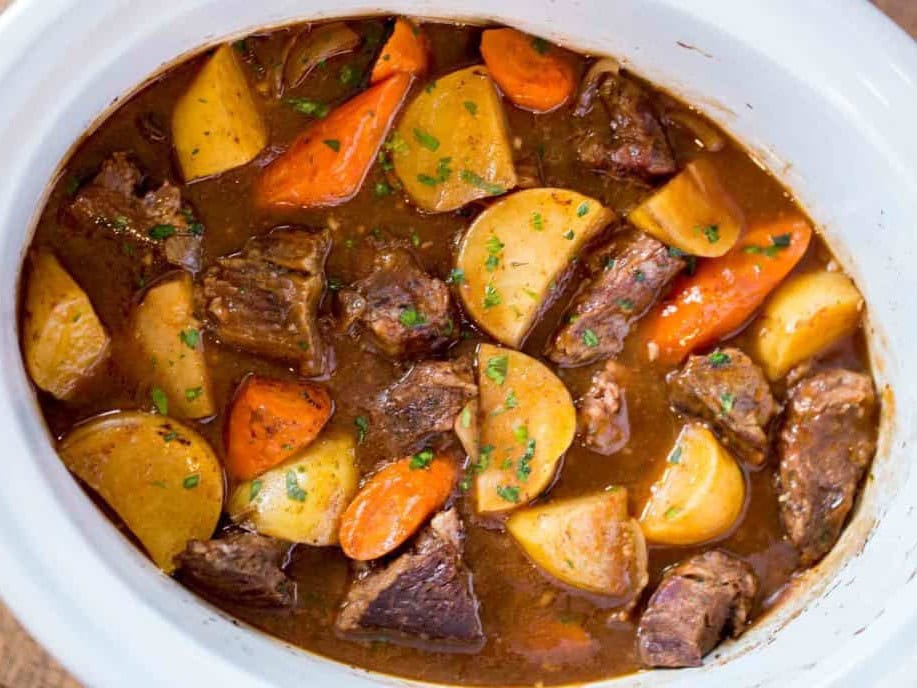
Quick Answer: Slow-Cooker Beef Stew Cooking Times
Use these times as a starting point for a stew made with about 2 to 3 pounds of beef cut into 1- to 1½-inch cubes.
| Slow cooker setting | Typical cooking time | Best use |
|---|---|---|
| LOW | 7–9 hours | Best texture and flavor |
| HIGH | 3–5 hours | Faster meals |
| Keep WARM | Not for cooking | Holding cooked stew before serving |
Cooking time can change with the size of the meat pieces, the amount of stew, the age of the slow cooker, and how often the lid is opened.
The stew should not be judged by time alone. Fork-tender beef is the clearest sign that it is done. If the meat is safe to eat but still chewy, it usually needs more time to break down its connective tissue.

Why Beef Stew Takes So Long in a Slow Cooker
Beef stew meat often comes from hard-working muscles, such as chuck. These cuts contain connective tissue that can feel tough at first.
Slow cooking gives that tissue time to soften. As the stew cooks, collagen changes into gelatin. This makes the beef tender and gives the broth a fuller texture.
A high setting does not always cut the cooking time in half. The slow cooker still needs time to heat the liquid and soften the beef. A short cook on HIGH may produce beef that is fully heated but still firm.
Does the Beef Need to Reach a Specific Temperature?
Yes, but temperature is only part of the answer.
The USDA lists 145°F with a three-minute rest as the minimum safe temperature for whole cuts of beef. Beef stew is usually made from cubes, so check a thick piece with a food thermometer. The center should reach at least 145°F.
Tenderness requires a separate check. Beef can reach a safe temperature and remain chewy. For stew, cook until the meat is soft enough to break apart easily with a fork.
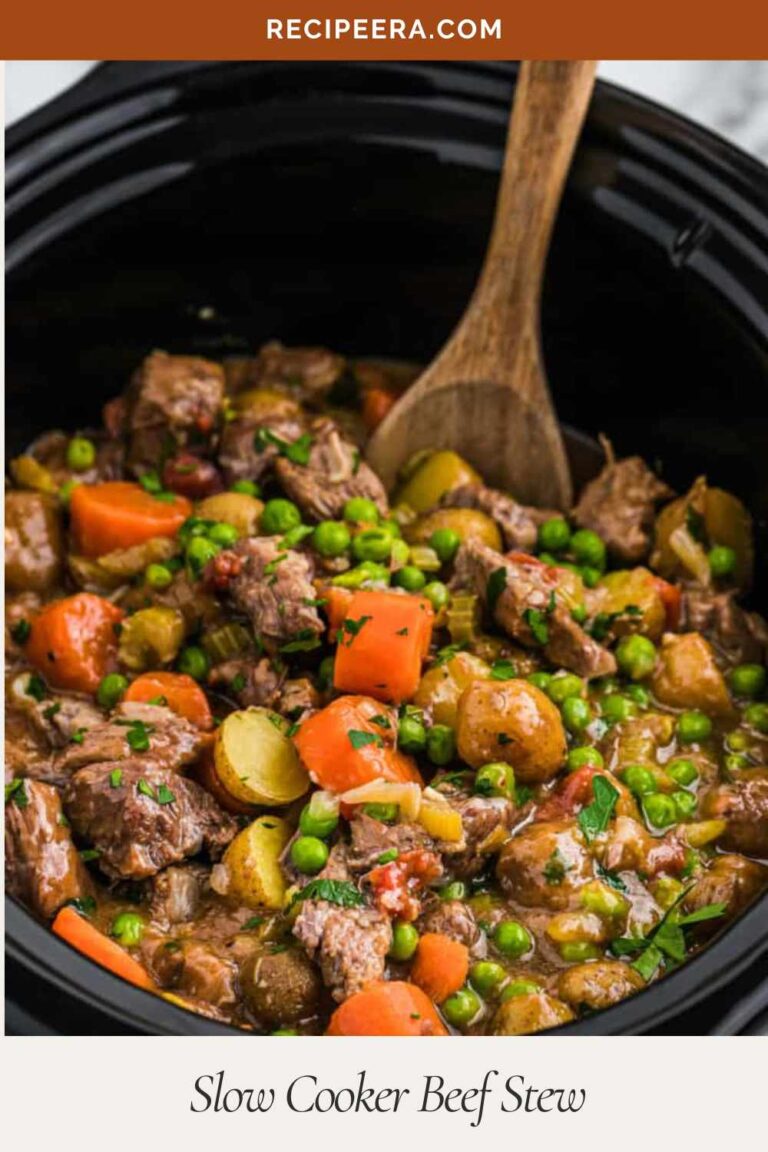
How to Cook Beef Stew in a Slow Cooker
Follow these steps for even cooking and tender beef.
1. Cut the Beef Into Even Pieces
Cut the beef into pieces about 1 to 1½ inches wide. Similar-size pieces cook at about the same rate.
Good choices include:
- Beef chuck roast
- Beef shoulder
- Boneless round roast
- Packaged beef stew meat
Chuck usually gives the richest texture because it has enough fat and connective tissue for a long cook.
2. Brown the Beef if You Have Time
Heat a skillet over medium-high heat. Brown the beef in small batches, then move it to the slow cooker.
Browning is optional. It does not seal in juices, but it creates browned flavors that can make the finished stew taste deeper. Do not crowd the pan, or the beef may steam instead of brown.
3. Add the Vegetables and Liquid
Place the beef, onions, carrots, potatoes, herbs, and other ingredients in the slow cooker.
Add enough liquid to create a moist stew, but do not flood the pot. Slow cookers lose little liquid during cooking, so recipes often need less broth than stovetop stews.
Keep the cooker between one-half and two-thirds full when possible. A very full cooker may heat slowly, while a nearly empty cooker may cook too fast.
4. Choose LOW or HIGH
Set the cooker to:
- LOW for 7 to 9 hours
- HIGH for 3 to 5 hours
If the meat is cut larger than 1½ inches, the cooker is very full, or the ingredients start cold, use the longer end of the range.
Keep the lid closed. Each time you lift it, heat escapes and cooking takes longer.
5. Check for Doneness
Start checking near the early end of the time range. Insert a fork into a piece of beef.
The stew is ready when:
- The beef is easy to pierce.
- The meat separates with gentle pressure.
- The vegetables are tender but not falling apart.
- A thermometer shows at least 145°F in the thickest beef piece.
If the beef is tough, replace the lid and cook for another 30 to 60 minutes on LOW. Tough beef often needs more time, not less.
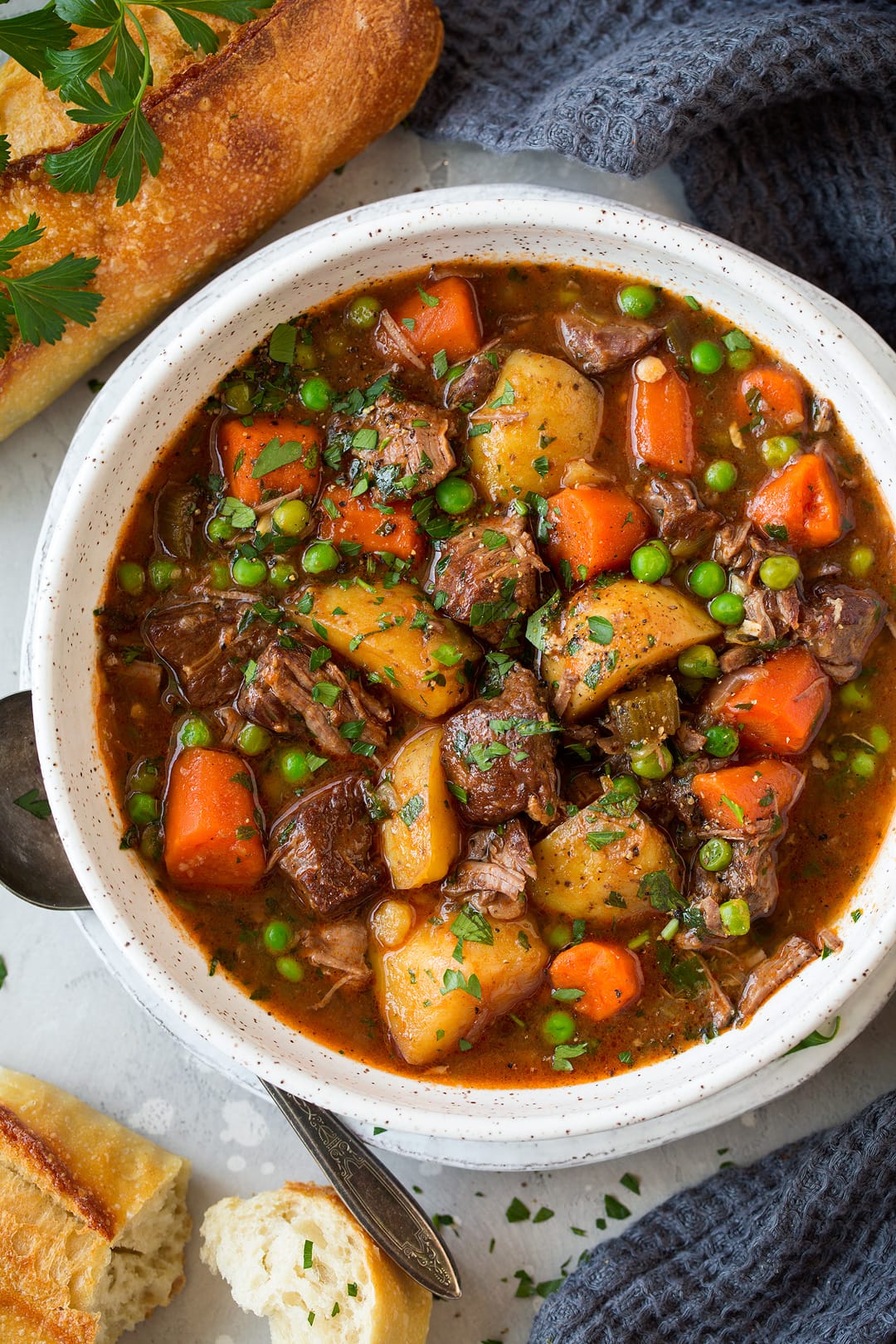
Slow-Cooker Beef Stew Timing Chart
This chart gives practical estimates for common batch sizes. It assumes thawed beef cut into roughly 1- to 1½-inch cubes.
| Batch size | LOW setting | HIGH setting |
|---|---|---|
| 1 to 1½ pounds beef | 6–8 hours | 3–4 hours |
| 2 to 3 pounds beef | 7–9 hours | 3–5 hours |
| 4 pounds beef | 8–10 hours | 4–6 hours |
These are estimates, not guarantees. A newer cooker may run hotter than an older model. Some slow cookers also cook faster around the sides than in the center.
For the most reliable result, use the time range and then check both temperature and tenderness.

What Changes the Cooking Time?
Several details can make beef stew cook faster or slower.
Size of the Beef Pieces
Small cubes cook sooner than large chunks. Pieces larger than 1½ inches may need extra time, especially on LOW.
Try not to mix very small pieces with very large pieces. The small pieces may become dry before the large pieces become tender.
Frozen or Thawed Beef
Use thawed beef for slow-cooker stew. The USDA advises against cooking frozen meat in a slow cooker because it may spend too long in the food-safety danger zone as the cooker heats.
Thaw beef in the refrigerator, in cold water changed every 30 minutes, or in the microwave if you cook it right away.
Quantity of Food
A large batch takes longer to heat than a small one. Do not pack the slow cooker to the rim.
If the cooker is less than half full, food may cook faster. Check the stew early, especially if your model is small or runs hot.
Adding Cold Ingredients
Cold broth, frozen vegetables, or refrigerated meat can extend the cooking time. Thaw meat first, and use room-temperature or warm broth when practical.
Do not use hot liquid to compensate for frozen meat. Safe thawing still matters.
Opening the Lid
Avoid checking the stew repeatedly. A slow cooker loses a large amount of heat when the lid is removed, and recovery takes time.
Look through the glass lid if your cooker has one. If you must stir, do it once near the end.

Should You Cook Beef Stew on LOW or HIGH?
Choose LOW when tenderness matters most. Choose HIGH when you need dinner sooner and can watch the stew near the end of its cooking range.
LOW is usually the better choice for chuck and other tough cuts. HIGH can work well, but vegetables may soften faster than the beef.
If your stew finishes early, switch the cooker to its WARM setting only after the beef and vegetables are fully cooked. A warm setting holds food; it is not a dependable way to cook raw beef.

Common Beef Stew Problems and Fixes
The Beef Is Still Tough
The stew likely needs more time. Keep the lid on and cook for another 30 to 60 minutes, then test again.
Do not turn the heat higher as the first fix. More time allows the connective tissue to soften.
The Beef Is Dry
Dry beef may come from lean meat, small pieces, overcooking, or a slow cooker that runs hot. Use chuck instead of very lean beef, avoid cutting the cubes too small, and check the stew near the early end of the cooking range.
The Vegetables Are Mushy
Potatoes and carrots may cook faster than beef. Cut them into larger pieces, place firm vegetables near the bottom, and avoid cooking far beyond the recommended time.
You can also add quick-cooking vegetables, such as peas, during the final 20 to 30 minutes.
The Broth Is Too Thin
Remove the lid only after the beef is tender. Then thicken the stew with a slurry made from 1 tablespoon of cornstarch mixed with 1 tablespoon of cold water.
Stir the slurry into the hot stew and cook on HIGH for about 10 to 15 minutes, if your slow cooker heats strongly enough. Otherwise, transfer the liquid to a saucepan and thicken it on the stove.
The Broth Is Too Thick
Stir in warm beef broth a little at a time. Taste before adding more salt, since broth and seasoning blends can already contain sodium.

Food-Safety Rules for Slow-Cooker Beef Stew
Use thawed beef, start with a clean cooker, and keep the lid in place during cooking.
After cooking, refrigerate leftovers within 2 hours. If the room temperature is above 90°F, refrigerate them within 1 hour. Store the stew in shallow containers so it cools more quickly.
Use refrigerated leftovers within 3 to 4 days, or freeze them for longer storage. Reheat leftovers to 165°F, as advised by the USDA.
Do not use the slow cooker to reheat cold stew. Reheat it on the stovetop, in the oven, or in a microwave until steaming hot, then transfer it to a slow cooker set to WARM if you need to hold it.

FAQs about How Long To Cook Beef Stew In A Slow Cooker
Can I cook beef stew for 12 hours in a slow cooker?
You can, but the result may suffer. Beef may become dry or stringy, while potatoes and carrots may break apart. If you need a long cook, use larger vegetable pieces and a moist, collagen-rich cut such as chuck. Check your slow cooker manual for its recommended limits.
Is 4 hours on HIGH the same as 8 hours on LOW?
Not exactly. Four hours on HIGH may cook the beef, but texture can differ from eight hours on LOW. Use the setting that fits your schedule, then check the beef for tenderness rather than relying only on a time conversion.
Can I put raw beef directly into a slow cooker?
Yes. Raw beef can cook safely in a slow cooker when it is thawed, the cooker is used correctly, and the beef reaches a safe temperature. Browning first is optional and mainly adds flavor.
When should I add peas to beef stew?
Add frozen peas during the last 20 to 30 minutes. They need much less time than beef, potatoes, and carrots. Adding them too early can make them dull and soft.
Why is my beef stew watery?
Slow cookers hold in moisture. Too much broth, watery vegetables, or a loose recipe can produce thin stew. Thicken it near the end with a cornstarch slurry, or reduce the liquid separately in a saucepan.

Key Takeaways
- Cook beef stew for 7 to 9 hours on LOW or 3 to 5 hours on HIGH.
- Use thawed beef cut into even 1- to 1½-inch cubes.
- Choose chuck for tender, flavorful results.
- Check for both 145°F minimum temperature and fork-tender texture.
- If the beef is tough, cook it longer.
- Refrigerate leftovers within two hours and reheat them to 165°F.
Conclusion
For most slow-cooker beef stew, plan on 7 to 9 hours on LOW. Use 3 to 5 hours on HIGH when time is short. The final test is simple: the beef should be safe, tender, and easy to pierce with a fork.
Start with thawed beef, avoid lifting the lid, and check the stew near the early end of the cooking range. If the beef is still chewy, give it more time rather than turning the heat up.