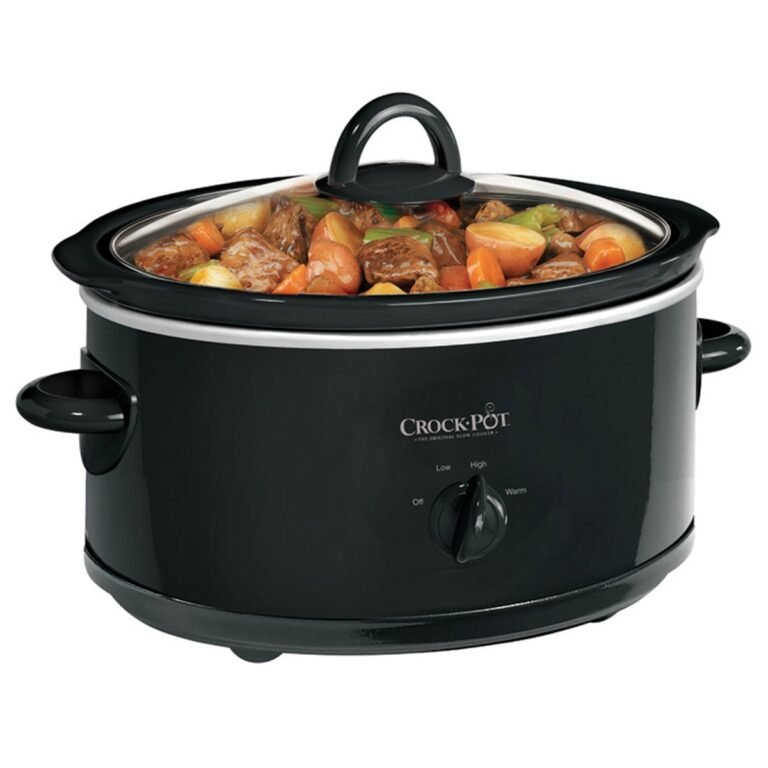
For most 3- to 4-pound pork shoulders, cook on LOW for 8 to 10 hours or HIGH for 4 to 6 hours in a slow cooker. The pork is ready when it is tender, reaches at least 145°F, and pulls apart easily with a fork.
For pulled pork, aim for an internal temperature of about 195°F to 205°F. This higher range helps the tough connective tissue break down. Exact time depends on the size, shape, bone, starting temperature, and heat of your slow cooker.
Quick Answer
A pork shoulder usually takes:
| Pork shoulder size | LOW setting | HIGH setting |
|---|---|---|
| 2 to 3 pounds | 6 to 8 hours | 4 to 5 hours |
| 3 to 4 pounds | 8 to 10 hours | 5 to 6 hours |
| 5 to 6 pounds | 10 to 12 hours | 6 to 8 hours |
These times are estimates for a thawed pork shoulder. Use a meat thermometer and check for tenderness rather than relying on the clock alone.

What Cut of Pork Should You Use?
The best cuts for slow cooking are pork shoulder, Boston butt, and picnic shoulder. Despite the name, pork butt does not come from the animal’s rear. It is usually cut from the upper shoulder and contains enough fat and connective tissue for long cooking.
A Boston butt is often the easiest choice for pulled pork because it has a fairly even shape and good marbling. A picnic shoulder may have more skin, bone, and connective tissue, so it can take longer.
You can cook pork shoulder with or without the bone:
- Boneless pork shoulder: Easier to cut and portion. It may cook a little faster.
- Bone-in pork shoulder: Often has strong flavor and stays moist. It may need extra time.
- Pork loin: Much leaner and is not a direct substitute. It can become dry if cooked for the same long time.
For classic slow-cooker pulled pork, choose a well-marbled shoulder rather than a lean pork roast.
How Long to Cook Pork Shoulder on LOW
Cook a thawed pork shoulder on LOW for 8 to 10 hours when it weighs about 3 to 4 pounds. Larger shoulders may need 10 to 12 hours.
LOW is usually the better setting when you have time. It gives the meat a longer period to soften and can make timing easier for meals such as dinner or sandwiches.
Start checking the pork near the shortest time in the range. Insert the thermometer into the thickest part, avoiding the bone. If the pork has reached the desired temperature but still feels firm, keep cooking it.
Pork shoulder is ready for pulled pork when:
- A fork slides into the meat with little resistance.
- The meat separates into strands.
- The bone twists or pulls out easily, if it is bone-in.
- The internal temperature is often between 195°F and 205°F.
The temperature range is a texture guide, not a replacement for safe handling. USDA guidance says whole cuts of pork should reach at least 145°F, followed by a three-minute rest. Shoulder usually needs a higher temperature for tender texture.
How Long to Cook Pork Shoulder on HIGH
Cook a thawed pork shoulder on HIGH for about 4 to 6 hours if it weighs 3 to 4 pounds. A 5- to 6-pound shoulder may need 6 to 8 hours.
HIGH can work well when you have less time, but it does not always produce the same texture as a longer LOW cook. Start checking the meat early because slow cookers vary. Some models run hotter than others.
Do not switch repeatedly between LOW and HIGH to speed up the cooking process. Opening the lid also releases heat and may add cooking time. If the pork is not tender at the end of the estimated time, replace the lid and continue cooking until it passes the fork test.
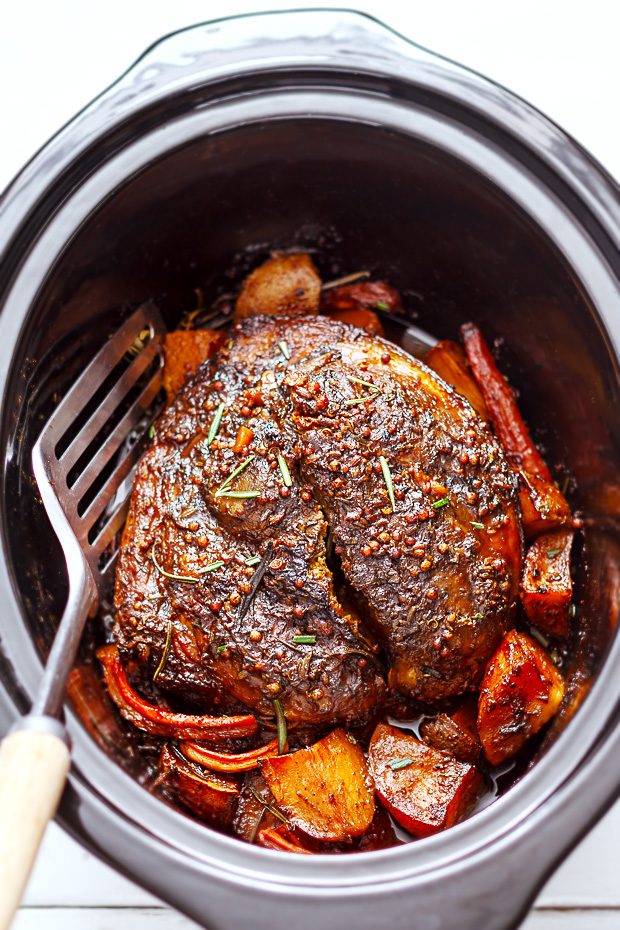
The Best Method for Slow-Cooking Pork Shoulder
Use this simple process for tender pork shoulder.
1. Thaw the pork safely
Thaw the pork in the refrigerator before placing it in the slow cooker. A large shoulder may need one to two days to thaw fully.
Do not put a frozen pork shoulder directly into a slow cooker. The meat may remain in the food-safety danger zone for too long while the center warms.
2. Trim only excess fat
Leave some fat on the shoulder for flavor and moisture. Trim away very thick, hard pieces of surface fat. Too much fat can make the cooking liquid greasy.
3. Season the meat
A basic seasoning mix can include:
- Kosher salt
- Black pepper
- Paprika
- Garlic powder
- Onion powder
- Brown sugar
- Chili powder
Use less salt if you plan to add bottled barbecue sauce later. You can also sear the pork first for a deeper roasted flavor, but searing is optional. The pork will cook safely without it.
4. Add a small amount of liquid
Pork shoulder releases moisture as it cooks, so you do not need to cover it with liquid. Add about ½ to 1 cup of liquid for a typical roast.
Good choices include:
- Chicken broth
- Apple juice
- Water
- Low-sodium barbecue sauce
- Vinegar-based cooking sauce
Too much liquid can dilute the flavor and make the finished pork soupy.
5. Place the pork in the slow cooker
Put the pork in the cooker with the thickest side facing down or toward the heat source. Add onions, garlic, or other vegetables if desired.
Keep the lid on during cooking. Each lid lift can allow heat to escape and extend the cooking time.
6. Cook until safe and tender
Cook on LOW or HIGH using the time ranges above. Begin checking the temperature near the lower end of the range.
The pork may be safe before it is tender. If it has reached 145°F but is still tough, continue cooking. Safety and texture are related but not identical goals.
7. Rest, shred, and season
Move the cooked pork to a large dish and let it rest for about 15 to 30 minutes. Remove large pieces of fat and bone, then shred the meat with two forks.
Taste the pork before adding more sauce. You can mix in some cooking liquid, barbecue sauce, vinegar, or salt to adjust the texture and flavor.
What Temperature Should Pork Shoulder Reach?
Pork shoulder should reach at least 145°F for food safety, according to the USDA’s guidance for whole cuts of pork. A three-minute rest follows that minimum temperature.
However, 145°F is usually too low for pulled pork texture. At that point, pork shoulder may be safe to eat but still chewy. The collagen and connective tissue need more time and heat to soften.
For different results:
| Desired result | Useful temperature guide |
|---|---|
| Safe whole-cut pork | At least 145°F, then rest 3 minutes |
| Sliceable shoulder | About 180°F to 190°F |
| Pull-apart pork | About 195°F to 205°F |
Temperature is only one test. A thermometer tells you about heat, while a fork tells you about tenderness. Use both.

Factors That Change the Cooking Time
Cooking time can vary even when two pork shoulders have the same weight.
Bone-in versus boneless
A bone-in shoulder can take longer because of its shape and density. The bone itself does not automatically make the pork more flavorful, but it can affect how the meat sits in the cooker.
Shape and thickness
A thick, compact roast may take longer than a flatter roast of the same weight. The center is the slowest part to heat.
Starting temperature
A refrigerated, thawed roast takes longer than a room-temperature roast. For food safety, do not leave raw pork out for long periods just to warm it.
Slow-cooker size
The cooker should be large enough to hold the pork without crowding. The USDA advises filling a slow cooker about one-half to two-thirds full for proper cooking.
A very full cooker may cook slowly. A very large cooker with a small roast may heat differently and can increase the risk of overcooking the edges.
Lid and model
Slow cookers vary in power and design. A loose lid, frequent opening, or an older appliance may increase the cooking time.
Adding cold ingredients
Large amounts of cold broth, sauce, or vegetables can lower the temperature inside the cooker. Letting the cooker recover may take time.
How to Tell When Pork Shoulder Is Done
The pork is done when it passes three checks:
- Temperature: It has reached at least 145°F for safety.
- Tenderness: A fork enters the thickest part with little resistance.
- Texture: The meat shreds or slices in the way you want.
If you want pulled pork, do not stop only because the pork reached 145°F. Keep cooking if it feels tight or rubbery.
If the pork reaches 205°F but remains tough, it may need more time rather than more heat. Connective tissue breaks down gradually. Keep the lid closed and check again after 30 to 60 minutes.
What to Do If the Pork Is Tough
Tough pork shoulder usually needs more cooking time. It is often not a sign that the meat has failed.
Try these steps:
- Check the temperature in the thickest section.
- Make sure the slow cooker is set to LOW or HIGH, not WARM.
- Replace the lid and continue cooking.
- Check again after 30 to 60 minutes.
- Rest the pork before shredding.
If the pork is dry but tender, it may have cooked too long, had too little fat, or been kept warm for an extended period. Add a small amount of cooking liquid or sauce after shredding.
If the slow cooker never becomes hot enough, stop using it for raw meat and check the appliance instructions or replace it. Do not rely on a faulty cooker for food safety.

Can You Put Pork Shoulder in a Slow Cooker Overnight?
Yes, you can cook pork shoulder overnight on LOW if the pork is thawed, the slow cooker is working properly, and the cooker is not overfilled.
A 3- to 4-pound shoulder may be ready after 8 to 10 hours. If it finishes before you wake up, switch the cooker to its WARM setting only if the appliance instructions allow it and the pork is already fully cooked.
Do not use WARM to cook raw pork. It is designed to hold hot food, not bring cold food to a safe temperature.
For the best texture, shred the pork soon after it becomes tender. Long holding can make the meat soft and dry around the edges.
Food-Safety Rules for Slow-Cooker Pork
Follow these basic rules when preparing pork shoulder in the United States:
- Thaw pork in the refrigerator, cold water, or microwave before slow cooking.
- Do not start with a frozen pork shoulder in the slow cooker.
- Use a food thermometer in the thickest part of the meat.
- Keep raw pork and its juices away from ready-to-eat foods.
- Wash hands, knives, cutting boards, and work surfaces after handling raw pork.
- Refrigerate leftovers within two hours.
- Store cooked pork in shallow containers so it cools quickly.
- Eat refrigerated leftovers within three to four days or freeze them.
- Reheat leftovers to 165°F.
For official details, see the USDA guidance on pork safety and its slow-cooker food-safety guidance.
Should You Add Barbecue Sauce Before or After Cooking?
Add a small amount of sauce before cooking if you want the pork to absorb its flavor. Add most of the barbecue sauce after shredding.
This approach gives you more control over the final taste and avoids making the sauce too thin. It also helps prevent sugar in the sauce from becoming overly dark around the sides of the cooker.
For a simple finish, mix the shredded pork with:
- A few spoonfuls of cooking liquid
- Barbecue sauce
- Apple cider vinegar
- A pinch of salt
- Black pepper or hot sauce
Taste as you go. Pork shoulder can need more acid or salt after a long, mild cook.

Key Takeaways
- Cook a 3- to 4-pound pork shoulder for 8 to 10 hours on LOW.
- Cook it for 4 to 6 hours on HIGH when you need a faster result.
- Use a thermometer, but also test the pork with a fork.
- Pork is safe at 145°F, but pulled pork usually needs about 195°F to 205°F for a tender texture.
- Start with thawed pork, keep the lid closed, and refrigerate leftovers within two hours.
FAQs about How Long To Slow Cook Pork Shoulder Slow Cooker
Is 4 hours long enough to slow cook pork shoulder?
Four hours may be enough on HIGH for a small 2- to 3-pound shoulder. It is usually not enough on LOW for a standard 3- to 4-pound pork shoulder. Check both temperature and tenderness before serving.
Can I cook pork shoulder on LOW for 12 hours?
Yes, a large shoulder can often cook on LOW for 10 to 12 hours. Check it near the 10-hour mark. If it is tender, remove it rather than letting it dry out for several more hours.
Do I need to brown pork shoulder first?
No. Browning is optional. It can add a roasted flavor and darker color, but the slow cooker will cook the pork safely without searing it first.
Can I cook pork shoulder without liquid?
Yes. Pork shoulder releases its own juices. Still, adding about ½ to 1 cup of liquid can help create a flavorful sauce and prevent the surface from becoming dry.
Why is my slow-cooker pork not shredding?
It most likely needs more time. If the meat has reached 145°F but remains firm, keep cooking until it is tender. Pork shoulder can be safe before its connective tissue has fully softened.
Conclusion
For tender slow-cooker pork shoulder, plan on 8 to 10 hours on LOW or 4 to 6 hours on HIGH for a 3- to 4-pound roast. Use thawed pork, check the thickest part with a thermometer, and keep cooking if the meat is safe but not yet tender.
For pulled pork, the fork test matters as much as the temperature. When the meat pulls apart easily, rest it, shred it, and add sauce or cooking liquid to taste.