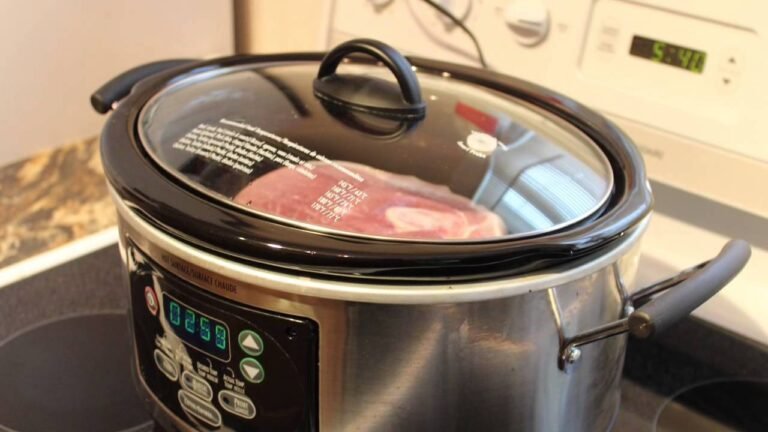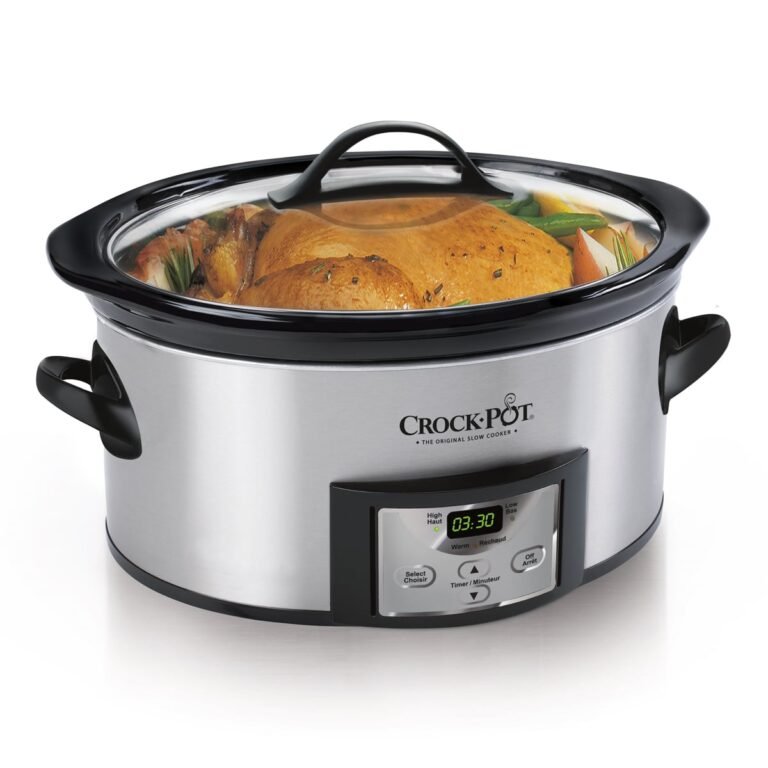
A slow cooker uses gentle heat, a heavy inner pot, and a tight lid to cook food over several hours. In the United States, most slow cookers have a heated base, a ceramic or metal insert, and settings such as Low, High, and Keep Warm. Let’s go to see how does a slow cooker works step by step.
The base warms the insert. The insert warms the food. The lid traps steam, so the food cooks in a moist, steady environment.
That simple design helps soften tough meat, cook dried beans, and build flavor in soups, stews, chili, and sauces with little hands-on work.
The Main Parts of a Slow Cooker
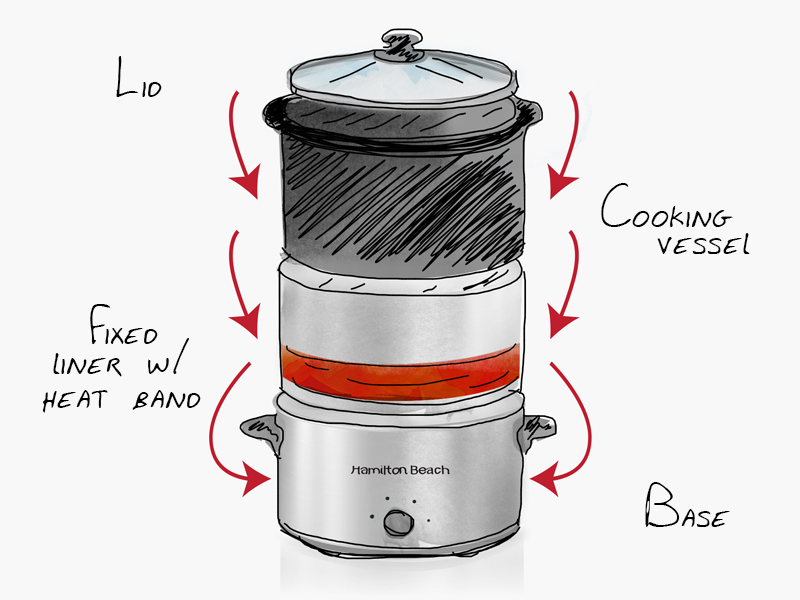
A slow cooker has four key parts:
- Heating base: An electric unit that produces heat.
- Cooking insert: A removable ceramic or metal pot that holds the food.
- Glass lid: A cover that holds in heat and moisture.
- Control panel: The switch or digital controls for cooking modes.
The heating base is usually wrapped around the lower part of the insert. Some models heat mostly from the bottom. Others spread heat around the sides as well.
The insert transfers heat slowly to the food. Ceramic inserts are thick and hold heat well. Metal inserts may heat faster and may be safe for stovetop use, but only if the manual says so.
The lid is just as important as the heater. It traps hot steam and reduces moisture loss. When you lift the lid, heat and steam escape. The cooker then needs time to return to its cooking temperature.
What the settings mean
The labels do not mean that the food cooks at one exact temperature in every model.
- Low: Uses a gentler heating pattern and usually needs more time.
- High: Brings the food to a cooking temperature sooner.
- Keep Warm: Holds cooked food at a warm temperature. It is not meant to cook raw food.
- Manual or timer settings: Found on some digital models. These may change the cooking time or switch to Keep Warm.
A slow cooker often cycles its heater on and off. This helps control heat instead of allowing the base to heat without limits.
How a Slow Cooker Heats Food
A slow cooker uses three forms of heat transfer:
- Conduction: Heat moves from the heating base to the insert and then into the food.
- Convection: Hot liquid moves through the food as it warms.
- Steam and condensation: Moisture rises, touches the lid, condenses, and returns to the food.
The process is slower than cooking in a skillet or oven. That slower pace is useful because it gives connective tissue in meat time to soften.
Tough cuts contain collagen. With enough heat and time, collagen changes into gelatin. This can make cuts such as chuck roast, pork shoulder, and chicken thighs tender.
A slow cooker does not brown food well because its moist interior limits the high, dry heat needed for browning. Browning meat in a skillet first can add a deeper roasted flavor, but it is optional.
Why the food stays moist
The lid holds in much of the water that leaves the food. As steam cools on the lid, it turns back into liquid and falls into the pot.
This means slow-cooker recipes often need less liquid than stovetop recipes. Adding too much broth, water, or sauce can make the finished dish thin.
The food still loses some water. Rice, pasta, vegetables, and meat also release moisture as they cook. The final liquid level depends on the recipe, the lid seal, the ingredients, and the cooking time.

What Happens During a Slow-Cooking Cycle?
A typical cycle has several stages.
1. The cooker warms up
The heating element begins warming the insert. Food in a full cooker heats more slowly than food in a shallow pan.
The starting temperature matters. Cold food from the refrigerator takes longer to heat than food that begins closer to room temperature. For safety, do not leave raw food at room temperature just to make it warm before cooking.
2. The liquid becomes hot
Broth, sauce, and food juices heat first. As the liquid warms, it transfers heat through the rest of the dish.
Liquid foods usually heat more evenly than thick, dry foods. That is one reason slow cookers work well for soups and stews.
3. Steam forms under the lid
The hot liquid produces steam. The lid traps much of it, which keeps the cooking environment moist.
The lid may collect water droplets. This is normal. Avoid lifting it unless the recipe requires it.
4. The food cooks through
The center of the food eventually reaches a safe cooking temperature. The exact time depends on the food’s size, shape, starting temperature, amount, and the cooker itself.
Use a food thermometer when safety depends on the internal temperature. Do not judge doneness by the display timer alone.
5. The cooker holds the food warm
Many modern models switch to Keep Warm after the cooking time ends. This may help maintain serving temperature for a short period, but it does not improve food quality forever.
For best quality and safety, serve the food soon after cooking. Refrigerate leftovers in shallow containers within two hours, or within one hour if the surrounding temperature is above 90°F, according to the U.S. Department of Agriculture.
How Long Does Food Take in a Slow Cooker?
Cooking time varies by recipe and model. A larger piece of meat may need much longer than small pieces. A full pot may also take longer to heat than a partly filled pot.
Use the recipe and your appliance manual as the main guide. The table below gives only a rough starting point for recipes that provide both settings.
| Typical time on High | Rough time on Low |
|---|---|
| 2 to 3 hours | 4 to 6 hours |
| 4 to 6 hours | 8 to 10 hours |
| 6 to 8 hours | 10 to 12 hours |
These are not universal conversions. A slow cooker may run hotter or cooler than another model. A recipe with meat, beans, or dense vegetables may also need a different schedule.
Factors that change cooking time
Cooking may take longer when:
- The insert is very full.
- Ingredients are large or tightly packed.
- Food starts very cold.
- The lid does not fit well.
- The recipe contains little liquid.
- The cooker is used at high altitude.
- The appliance is old or has a weak heating element.
Cooking may take less time when:
- Ingredients are cut into small pieces.
- The insert is only partly full.
- The cooker runs hotter than average.
- The lid is lifted often.
- The recipe contains a large amount of hot liquid.

How Full Should a Slow Cooker Be?
Fill a slow cooker about one-half to two-thirds full, unless the manufacturer gives different instructions.
A cooker that is too full may heat slowly and cook unevenly. A cooker that is too empty may cook too fast, dry out food, or make temperature control less reliable.
Keep the lid closed during cooking. Each lid lift releases heat and moisture. Checking the food once near the end is usually better than checking it many times.
Arrange ingredients with care:
- Put dense root vegetables near the bottom.
- Place large pieces of meat where they have room to heat.
- Cut ingredients into similar sizes when even cooking matters.
- Keep food covered with liquid when the recipe calls for it.
- Do not pack food so tightly that heat cannot move through it.
Is a Slow Cooker Safe for Raw Meat?
A slow cooker can safely cook raw meat when used correctly. The meat must reach a safe internal temperature, and the cooker must heat the food without long delays.
The USDA recommends thawing meat before placing it in a slow cooker. Frozen meat may take too long to pass through unsafe temperatures.
Use a food thermometer to check the thickest part of the meat. General USDA minimum internal temperatures include:
- Poultry: 165°F
- Ground meats: 160°F
- Whole cuts of beef, pork, veal, and lamb: 145°F, followed by a three-minute rest
- Leftovers and casseroles: 165°F
These temperatures measure safety, not tenderness. A beef roast may be safe at one temperature but still tough. Longer cooking can soften it further.
Never use a slow cooker to reheat leftovers from cold. Reheat them on the stove, in an oven, or in a microwave until they reach 165°F, then place them in the slow cooker to keep warm.

Why Do Slow Cookers Make Meat Tender?
Slow cookers make some meat tender by combining time, moisture, and moderate heat.
Tough cuts often contain muscle fibers and connective tissue. Long cooking breaks down some of that connective tissue into gelatin. The liquid in the pot helps keep the meat from drying out.
This does not mean every cut improves with a long cook. Lean meat can become dry or stringy if it stays in the cooker too long.
For the best result:
- Choose cuts that contain enough connective tissue for slow cooking.
- Avoid cutting meat into very small pieces unless the recipe calls for it.
- Use a thermometer to prevent overcooking.
- Let the meat rest briefly before slicing.
- Slice across the grain when possible.
A slow cooker is often a better match for chuck roast than for a thin beef steak. A steak needs quick, high heat for a good texture, while a chuck roast benefits from a long, moist cook.
Can You Put Frozen Food in a Slow Cooker?
Do not put frozen meat or poultry directly into a slow cooker. It may stay too long in the temperature range where bacteria grow quickly.
Thaw meat in the refrigerator, in cold water, or in a microwave. If you use cold water or a microwave, cook the food right away.
Frozen vegetables may work in some recipes, but they can lower the temperature of the dish. Add them in a way that still allows the food to heat steadily.
Do not use a slow cooker to thaw food. It is designed to cook food, not to bring frozen food safely through the thawing stage.
What Ingredients Need Special Care?
Some foods do not behave like meat and vegetables in a slow cooker.
Dairy
Milk, cream, sour cream, and soft cheese can curdle during long cooking. Add them near the end when the recipe permits.
A small amount of dairy may work better than a large amount. Use the recipe’s timing as your guide.
Pasta and rice
Pasta can become soft and swollen if it cooks for many hours. Add it late, or cook it separately and stir it in before serving.
Rice needs the correct amount of liquid and the right cooking time. Some slow cookers cook rice well; others do not. Follow the recipe for your model.
Seafood
Fish and shellfish cook faster than meat. Add them near the end so they do not become dry or rubbery.
Beans
Dried beans need special care. Some varieties, including red kidney beans, contain a natural toxin called phytohemagglutinin. The FDA advises boiling these beans for at least 10 minutes to destroy the toxin before slow cooking.
Do not assume that a slow cooker alone will safely prepare every type of dried bean. Follow tested instructions from a reliable food-safety source.
Alcohol
Alcohol may not evaporate as quickly in a covered slow cooker as it does in an open pan. Use less alcohol than you would in an uncovered recipe, or cook it separately first when appropriate.

Common Slow-Cooker Mistakes
Most problems come from too much liquid, poor timing, or weak heat control.
Lifting the lid too often
Each lift lets heat and steam escape. This can extend the cooking time and change the texture.
Better approach: Keep the lid closed until the recipe’s stated check time.
Adding too much liquid
Slow cookers lose less water than open pots. Extra liquid can leave soup, gravy, or stew watery.
Better approach: Start with the recipe’s liquid amount. You can add more later, but removing excess liquid takes time.
Overfilling the insert
An overfilled cooker may heat slowly and unevenly.
Better approach: Leave enough space for heat to circulate and follow the one-half to two-thirds guideline.
Cooking delicate ingredients too long
Pasta, seafood, dairy, and lean meat may not tolerate an all-day cook.
Better approach: Add them late or cook them separately.
Using Keep Warm as a cooking mode
Keep Warm is for holding cooked food. It may not bring raw food to a safe temperature.
Better approach: Cook food fully on Low or High first.
Putting a hot insert on a cold surface
A ceramic insert can crack from sudden temperature changes.
Better approach: Place a hot insert on a dry heat-resistant pad. Do not move it directly from a hot surface to a cold countertop.
Using a damaged insert or lid
Cracks, chips, loose handles, or a badly damaged cord can create safety and performance problems.
Better approach: Stop using damaged parts and check the manufacturer’s replacement guidance.

How to Adapt an Oven or Stovetop Recipe
You can adapt some recipes, but the result may not match the original.
Start by asking what the original recipe depends on:
- Does it need browning?
- Does it need water to evaporate?
- Does it need pasta or seafood cooked quickly?
- Does it need a thick sauce?
- Does it rely on a specific oven temperature?
Brown meat and aromatics in a skillet first if you want a deeper flavor. Then move them to the slow cooker.
Reduce the liquid unless the original recipe is a soup or stew. Keep the lid closed so the liquid does not evaporate at the same rate as it would in an oven or uncovered pan.
Add quick-cooking ingredients near the end. Check the food with a thermometer and adjust the sauce after cooking. You may need to simmer the sauce separately to thicken it.
Do not convert a recipe by time alone. The ingredient size, liquid level, cooker shape, and desired texture all matter.
Slow Cooker vs. Pressure Cooker
A slow cooker and an electric pressure cooker use different methods.
| Feature | Slow cooker | Pressure cooker |
|---|---|---|
| Main method | Gentle heat and moist cooking | Heat and pressure |
| Typical use | Long, unattended cooking | Faster cooking |
| Texture | Soft, gradual results | Fast tenderizing |
| Browning | Usually limited | Often possible in the pot |
| Lid | Vented or lightly sealed | Locked and sealed |
| Pressure | No pressure cooking | Uses pressurized steam |
A slow cooker suits meals that can cook for several hours. A pressure cooker suits people who want similar ingredients ready much sooner.
Neither appliance is automatically better. The right choice depends on time, texture, recipe steps, and how much hands-on work you want.

How to Know When a Slow-Cooker Meal Is Done
A meal is done when it reaches a safe temperature and has the texture the recipe requires.
Look for these signs:
- Meat reaches the correct internal temperature.
- Meat separates or slices as the recipe describes.
- Vegetables are tender when pierced with a fork.
- Beans are soft all the way through.
- Sauce has the intended thickness.
- The food smells and looks normal.
A timer does not prove that meat is safe. A thermometer gives a better answer.
If food is still firm, continue cooking with the lid closed. If the sauce is too thin, remove the cooked food and thicken the sauce in a separate pan when needed.
If food is dry, the cooker may have been too hot, too empty, or used for too long. Add moisture only after checking the texture; extra liquid cannot restore meat that has already become dry.
Cleaning and Care
Unplug the slow cooker before cleaning it. Let the insert cool before washing it.
Most removable inserts can be washed with warm, soapy water. Check the manual before placing the insert or lid in a dishwasher.
Do not immerse the electrical base in water. Wipe it with a damp cloth, then dry it.
Avoid sudden temperature changes with ceramic inserts. Do not place a hot insert in cold water, and do not place a cold insert on a hot burner unless the manufacturer specifically approves stovetop use.
Inspect the cord, plug, handles, lid, and insert. Replace damaged parts with approved replacements when available.

Key Takeaways
- A slow cooker uses gentle electric heat, a heavy insert, and a lid that holds in moisture.
- Low and High are heating modes, not universal temperature standards.
- Fill the insert about one-half to two-thirds full.
- Keep the lid closed as much as possible.
- Thaw meat before slow cooking.
- Use a food thermometer to check safety.
- Add dairy, seafood, pasta, and rice at the time the recipe recommends.
- Use Keep Warm only after the food has cooked.
- Follow the appliance manual because models heat differently.
Frequently Asked Questions
Does a slow cooker boil food?
A slow cooker may produce small bubbles, especially around the edges, but it usually cooks below a strong rolling boil. The exact behavior depends on the model, setting, food volume, and recipe.
Does a slow cooker use a lot of electricity?
It uses electricity for several hours, but the heating element is designed for low, steady heat and may cycle on and off. Energy use varies by model, setting, cooking time, and local electricity rates.
Should meat go on the bottom of a slow cooker?
Large, dense ingredients often cook well near the bottom because that area receives strong heat. Put vegetables and meat where the recipe directs, and avoid tightly packing the insert.
Can I leave a slow cooker on while I am away?
Many slow cookers are designed for long cooking, but use the appliance only on a stable, heat-safe surface away from water and flammable items. Follow the manufacturer’s instructions, and do not use a damaged cooker or cord.
Why is my slow-cooker food watery?
The lid traps steam, so less liquid evaporates than it would in an uncovered pan. Too much starting liquid, frozen ingredients, or added vegetables can also thin the dish. Thicken the liquid separately after cooking if needed.
Conclusion
A slow cooker works by applying steady heat to a covered pot. The pot holds moisture, and the long cooking time helps soften tough ingredients.
For reliable results, use the right amount of food and liquid, keep the lid closed, thaw meat first, and check safe internal temperatures. The next best step is to read your model’s manual before adapting a recipe, since heating patterns and settings vary across slow cookers.