A slow cooker turns a few basic ingredients into a hot meal with little hands-on work. In a U.S. kitchen, the safest method is simple: thaw meat first, add enough liquid for the recipe, keep the lid on, and check that meat reaches a safe internal temperature with a food thermometer.
This guide explains how to use a slow cooker, when to choose LOW or HIGH, how much food to add, and how to avoid common food safety mistakes.

What Is a Slow Cooker?
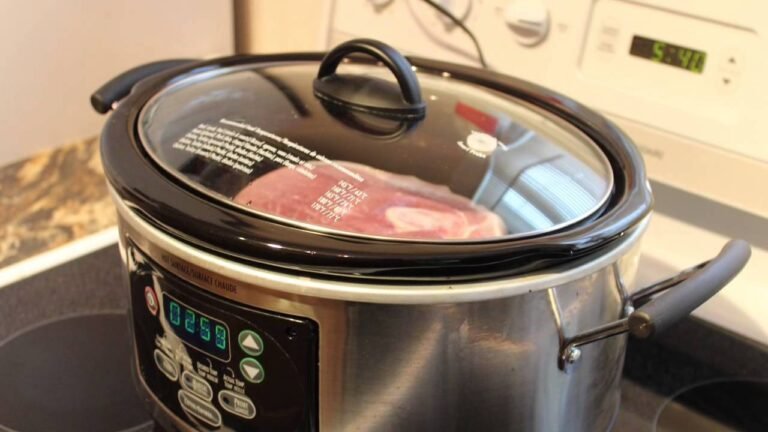
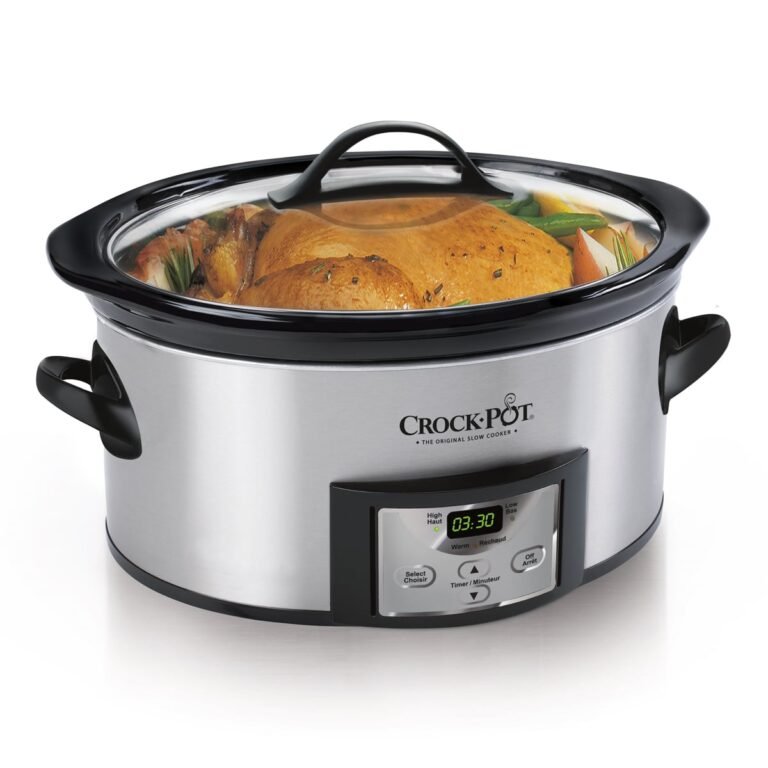
A slow cooker is an electric countertop appliance that cooks food at a low heat for several hours. It has a heated base, a removable cooking crock, and a lid that holds in heat and moisture.
Most slow cookers have three basic settings:
- LOW: Gentle cooking over a longer period.
- HIGH: Faster cooking at a higher heat.
- WARM: Holds already-cooked food at a serving temperature.
“Warm” is not meant to cook raw food. It is also not the best setting for cooling food or reheating leftovers.
Slow cookers work well for:
- Soups and stews
- Chili
- Pulled pork and shredded chicken
- Pot roasts
- Beans
- Meatballs
- Oatmeal
- Dips
- Braised vegetables
A slow cooker does not brown food well. If you want browned meat or a deep roasted flavor, sear the meat in a skillet before adding it to the crock. This step is optional, but it can improve flavor and color.

What You Need Before You Start
Before using a slow cooker, gather the appliance, its removable crock, the lid, a recipe, and a food thermometer.
Check these items first:
- Inspect the crock and lid. Do not use a cracked crock or damaged cord.
- Place the cooker on a dry, heat-safe surface. Leave space around the appliance.
- Make sure the crock sits inside the heating base. Do not place the crock directly on a burner or in an oven unless the manufacturer says it is oven-safe.
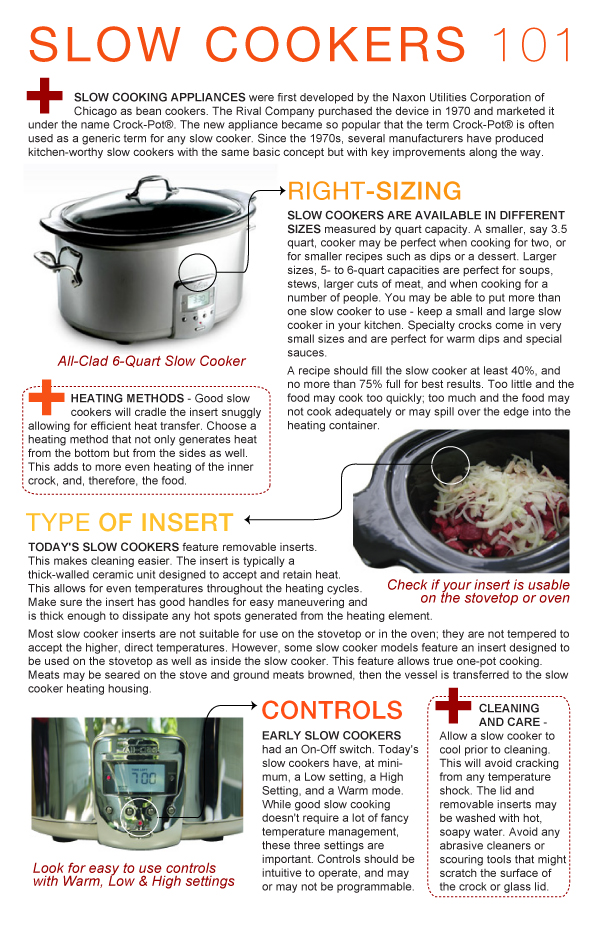
- Use the correct size. Food cooks best when the crock is about half to two-thirds full.
- Thaw meat in the refrigerator. Do not place frozen meat in a slow cooker.
A slow cooker does not heat frozen meat quickly enough to keep it out of the food safety “danger zone,” which is between 40°F and 140°F. Bacteria can grow quickly in this range.
Wash your hands, knives, cutting boards, and other tools after they touch raw meat. Keep raw meat separate from foods that will not be cooked.
How to Use a Slow Cooker Step by Step
Follow the recipe in this order. The exact cooking time depends on the food, the amount, and your slow cooker.
1. Prepare the ingredients
Cut vegetables and meat into similar-size pieces. Similar pieces cook at a more even rate.
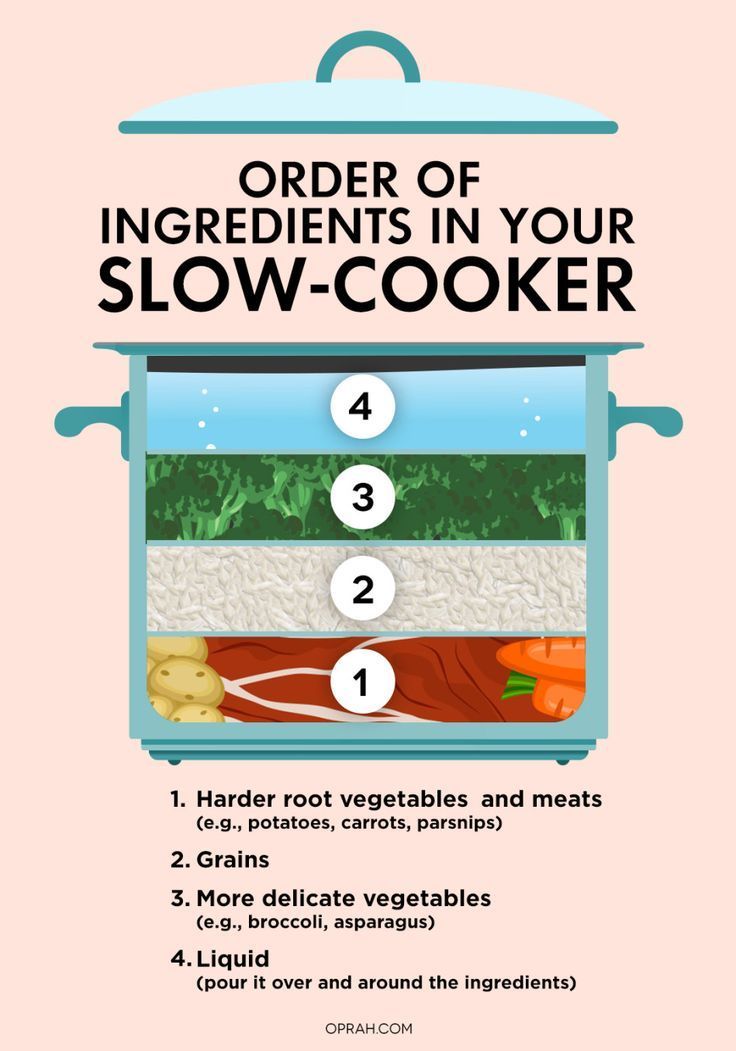
Place firm vegetables, such as carrots and potatoes, near the bottom. They need more direct heat and often take longer to soften.
Trim large areas of excess fat from meat. Fat can make the cooking liquid greasy, especially when it has no way to drain away.
2. Add the ingredients to the crock
Add food in layers when the recipe gives no special order:
- Firm vegetables
2. Meat - Beans or softer vegetables
- Sauce, broth, or other liquid
- Herbs and seasonings
Do not pack food tightly into the crock. Leave room for heat to move through the ingredients.
You usually need less liquid than you would in a stovetop recipe. A slow cooker loses little water because the lid traps steam. Too much broth can make soup, stew, or sauce thin.
3. Choose LOW or HIGH
Use LOW when you have more time or want a gentle cook. Use HIGH when the recipe calls for a shorter cooking period.
Do not assume that every recipe converts perfectly between settings. A common starting point is that 1 hour on HIGH may equal about 2 hours on LOW, but this is only a rough guide. The shape of the meat, the amount of food, and the model of the cooker all affect the result.
Follow the recipe’s stated time when possible. If you adapt a recipe, use texture and temperature to judge when it is done.
4. Put the lid on and leave it there
Keep the lid closed during cooking. Each time you lift it, heat escapes and cooking slows.
If you must check the food, do so near the end of the suggested cooking time. Use a thermometer or a fork to check doneness quickly, then replace the lid.
Do not stir unless the recipe tells you to. Many slow cooker recipes cook evenly without stirring.
5. Check the food before serving
Use an instant-read food thermometer in the thickest part of the meat. Avoid touching bone, the crock, or a large pocket of fat.
Use these minimum internal temperatures from the U.S. Department of Agriculture:
| Food | Safe minimum temperature |
|---|---|
| Poultry, including chicken and turkey | 165°F |
| Ground beef, pork, lamb, and veal | 160°F |
| Beef, pork, lamb, and veal steaks, roasts, and chops | 145°F, then rest for 3 minutes |
| Leftovers and casseroles | 165°F |
Tenderness also matters. A roast may reach a safe temperature before it becomes soft enough to shred. If meat is safe but still tough, it may need more cooking time.
6. Serve or store the food promptly
Serve the meal from the crock, or move it to shallow containers for faster cooling.
Refrigerate perishable food within 2 hours. If the room is above 90°F, refrigerate it within 1 hour. Use refrigerated leftovers within 3 to 4 days, or freeze them for longer storage.
Do not cool a large, deep pot of food slowly on the counter. Divide it into smaller containers instead.

How Long Should Food Cook in a Slow Cooker?
Cooking time depends on the food, its starting temperature, the size of the pieces, and the slow cooker itself. Use time ranges as guides, not guarantees.
| Food | LOW setting | HIGH setting | Signs it is ready |
|---|---|---|---|
| Chicken pieces | About 4–6 hours | About 2–4 hours | Thickest part reaches 165°F |
| Beef or pork roast | About 8–10 hours | About 4–6 hours | Tender and reaches a safe temperature |
| Chili | About 6–8 hours | About 3–4 hours | Hot throughout and flavors have blended |
| Dried beans | Varies by bean and method | Varies by bean and method | Fully soft; follow bean safety guidance |
| Root vegetables | About 6–8 hours | About 3–4 hours | Easily pierced with a fork |
| Meatballs | About 4–6 hours | About 2–3 hours | Center reaches 160°F |
These are general planning ranges. A small slow cooker and a large slow cooker may cook at different rates. Read the appliance manual when available.
For the most reliable result, combine three checks:
- The food reaches the correct internal temperature.
- Meat has the texture the recipe needs.
- Vegetables are soft enough to eat.

How Much Liquid Should You Add?
Add enough liquid to create steam and prevent the food from drying out, but do not fill the crock with broth just because the recipe uses broth on the stove.
Good liquid choices include:
- Water
- Low-sodium broth
- Crushed tomatoes
- Tomato sauce
- Salsa
- Coconut milk
- Wine used as part of the recipe
As a general guide, liquid often reaches about one-third to one-half of the way up the food. Some recipes need less. Meat and vegetables release their own juices as they cook.
A slow cooker cannot reduce liquid as quickly as a saucepan. If a sauce is too thin, try one of these methods near the end:
- Remove the lid for a short time, if the recipe allows.
- Stir in a cornstarch slurry.
- Transfer the liquid to a saucepan and reduce it on the stove.
- Add instant mashed potato flakes to a thick stew in small amounts.
- Stir in cream cheese or another suitable thick ingredient when the recipe calls for it.
To make a cornstarch slurry, mix equal parts cornstarch and cold water until smooth. Stir it into the hot liquid, then cook until thickened. Never add dry cornstarch directly to a hot slow cooker, since it may form lumps.

How to Add Meat, Vegetables, Dairy, and Pasta
Different ingredients need different treatment in a slow cooker.
Meat
Cut meat into large, even pieces. Small pieces can become dry during long cooking.
Searing meat first is optional. It does not replace slow cooking or make the center safe by itself. If you sear meat, move it to the slow cooker soon after browning.
Do not rely on color to judge doneness. A thermometer gives a better answer.
Vegetables
Put dense vegetables near the bottom. Potatoes, carrots, onions, and winter squash can handle long cooking.
Add delicate vegetables, such as peas, spinach, zucchini, and fresh herbs, during the last part of cooking. This helps them keep their color and texture.
Dairy
Milk, cream, sour cream, and soft cheese can separate during long cooking. Add them near the end unless the recipe is designed for a long dairy cook.
Use full-fat dairy when a recipe calls for it. Lower-fat products may curdle more easily.
Pasta and rice
Pasta and rice may become soft or mushy during long cooking. Add them near the end, or cook them separately and stir them in before serving.
Brown rice and wild rice need more liquid and time than white rice. Follow a recipe made for the specific grain.
Fresh herbs
Fresh herbs often taste brighter when added near the end. Tough herbs, such as rosemary or bay leaves, can cook longer. Remove bay leaves before serving.

Slow Cooker Food Safety Rules
The safest slow cooker habits are simple: start with thawed food, keep the lid on, use safe temperatures, and chill leftovers quickly.
Do not cook frozen meat
Thaw meat in the refrigerator before adding it to the crock. A refrigerator thaw is slow and controlled.
You can also thaw meat in cold water or in a microwave if you cook it right away. Do not thaw meat on the counter.
Handle dry beans with care
Some dry beans, especially red kidney beans, contain a natural toxin called phytohemagglutinin. Slow cooking may not destroy enough of it.
To reduce the risk, boil dry kidney beans in fresh water for at least 30 minutes before placing them in a slow cooker. Canned beans are already cooked and are a simple option for many recipes.
Do not use a slow cooker to reheat leftovers
Reheat leftovers on the stovetop, in the oven, or in a microwave until they reach 165°F. You can then place the hot food in a slow cooker set to WARM for serving.
A slow cooker may heat leftovers too slowly.
Keep hot food hot
If food is being served over time, keep it at 140°F or above. Check the temperature with a food thermometer if the meal will sit for a long period.
Do not leave perishable food at room temperature for more than 2 hours.
Clean the appliance safely
Unplug the base before cleaning it. Do not put the electrical base in water.
Wash the removable crock and lid with hot, soapy water. Follow the manufacturer’s instructions for dishwasher use. Let all parts dry before storing the appliance.

Common Slow Cooker Problems and Fixes
The meat is tough
Likely causes:
- The cut needs more time.
- The slow cooker was opened often.
- The cooker was underfilled or overfilled.
- The meat was cut too small.
- The recipe used a lean cut for a long cooking time.
What to do: Check the internal temperature and texture. If the meat is safe but tough, continue cooking until it becomes tender. If it is dry, it may have cooked too long or used too little liquid.
The vegetables are still hard
Likely causes:
- Pieces are too large.
- Dense vegetables were placed on top.
- The crock is too full.
- The food has not cooked long enough.
What to do: Cut vegetables into even pieces and place firm vegetables near the bottom. Continue cooking until a fork passes through easily.
The sauce is watery
Likely causes:
- Too much liquid was added.
- Frozen ingredients released extra water.
- The lid was removed and condensation changed the texture.
- The recipe needs a finishing thickener.
What to do: Use a cornstarch slurry, reduce the liquid on the stove, or remove the lid briefly near the end if the recipe permits.
The food tastes bland
Likely causes:
- Too much liquid diluted the seasoning.
- Salt was added too early or not adjusted at the end.
- The recipe lacked browning, acid, or fresh herbs.
What to do: Taste the finished food. Add salt in small amounts, then consider lemon juice, vinegar, fresh herbs, or a small amount of hot sauce. Add these changes slowly.
The food is burning around the edges
Likely causes:
- The crock is too small for the amount of food.
- The food is underfilled.
- There is too little liquid.
- The cooker runs hotter than expected.
What to do: Check the manufacturer’s capacity guidance. Use a better-sized crock, add the liquid called for by the recipe, and avoid leaving a nearly empty crock on HIGH for many hours.
The slow cooker is not heating
Check these items in order:
- Confirm that the appliance is plugged in.
- Test the outlet with another appliance.
- Make sure the control is set to LOW or HIGH, not OFF.
- Check the cord for damage.
- Stop using the appliance if the cord, plug, or base is damaged.
Do not repair an electrical slow cooker unless a qualified technician or the manufacturer provides the repair.

Tips for Better Slow Cooker Results
A few small choices can improve both flavor and texture.
- Brown meat first for deeper flavor. This is useful for beef stew, pot roast, and pork.
- Use less liquid than a stovetop recipe. Steam stays inside the crock.
- Season in layers. Add some seasoning early, then taste and adjust at the end.
- Add fresh ingredients late. Herbs, greens, peas, and dairy often benefit from shorter cooking.
- Cut ingredients evenly. This helps them finish at the same time.
- Do not overfill the crock. Food needs space for heat to move.
- Do not underfill it for long cooking. A nearly empty crock may cook too aggressively.
- Keep the lid closed. Look through the glass instead of lifting it when possible.
- Use a thermometer. Time and appearance are not enough for meat safety.
- Write down changes. Record the setting, time, liquid, and result so you can improve the recipe next time.
For a first recipe, choose a dish with a forgiving texture, such as chili, pulled pork, chicken stew, or vegetable soup. These foods are easier to adjust than delicate dishes.
Can You Leave a Slow Cooker on While You Are Away?
Many slow cookers are designed for unattended cooking, but you should follow the appliance manual and use a safe setup.
Place the cooker:
- On a stable, heat-safe counter
- Away from the edge
- Away from towels, paper, curtains, and other flammable items
- Where the cord cannot be pulled or caught
Do not use a damaged appliance. Do not place the heating base on a stovetop. Do not cover the cooker with a towel while it is running.
If you will be away for many hours, choose a recipe suited to the full cooking time. A dish that needs four hours should not cook for twelve hours unless the recipe supports that time.

Frequently Asked Questions
Should I use LOW or HIGH on a slow cooker?
Use LOW for a longer, gentler cook and HIGH when you need the meal sooner. The two settings are not always exact time conversions. Use the recipe’s instructions and check the food for safe temperature and proper texture.
Do I need to put water in a slow cooker?
Not always. Most recipes need some liquid, but the amount varies. Meat and vegetables release moisture, and the lid traps steam. Too much liquid can make the finished dish watery.
Can I put raw meat in a slow cooker?
Yes, if the meat is thawed and handled safely. Place it in the crock with the other ingredients and cook it until it reaches the proper internal temperature. Browning the meat first is optional.
Can I put frozen chicken in a slow cooker?
No. Thaw chicken in the refrigerator before slow cooking. Frozen chicken may remain too long between 40°F and 140°F, where bacteria can multiply.
Can I open the lid while food cooks?
You can, but avoid doing so unless needed. Each opening releases heat and may extend the cooking time. Check the food near the end of the recommended cooking period.
How do I clean a slow cooker?
Unplug the appliance and wash the removable crock and lid with hot, soapy water. Keep the electrical base dry. Check the owner’s manual before putting parts in a dishwasher.
Can I cook rice or pasta in a slow cooker?
Yes, but timing matters. Rice and pasta can turn soft during long cooking. Add them near the end or cook them separately, unless the recipe was created for slow cooking.
How should I store slow cooker leftovers?
Divide leftovers into shallow containers and refrigerate them within 2 hours. Use them within 3 to 4 days, or freeze them. Reheat leftovers to 165°F before eating.
Final Takeaway
To use a slow cooker well, start with thawed ingredients, fill the crock halfway to two-thirds full, add only the needed liquid, and keep the lid closed. Choose LOW or HIGH based on the recipe and your available time.
Check meat with a thermometer, not color alone. Refrigerate leftovers quickly, and never use the slow cooker to reheat cold food. Once you learn how your appliance cooks, simple meals such as chili, stew, pulled pork, and chicken become easy to plan.