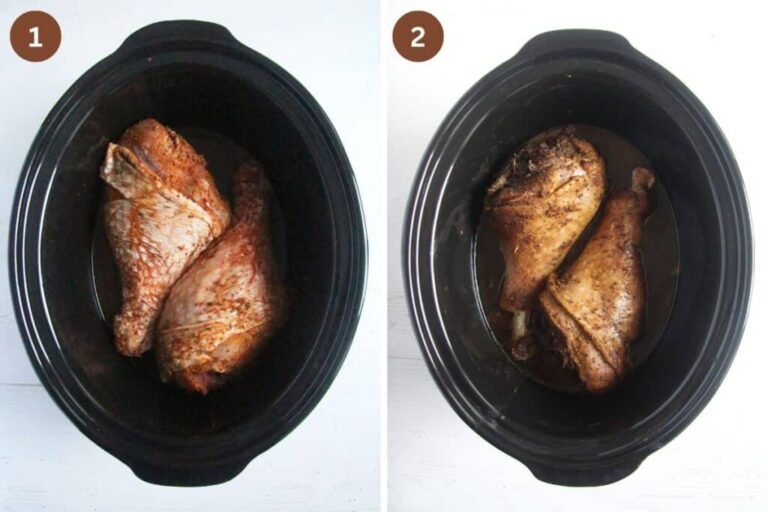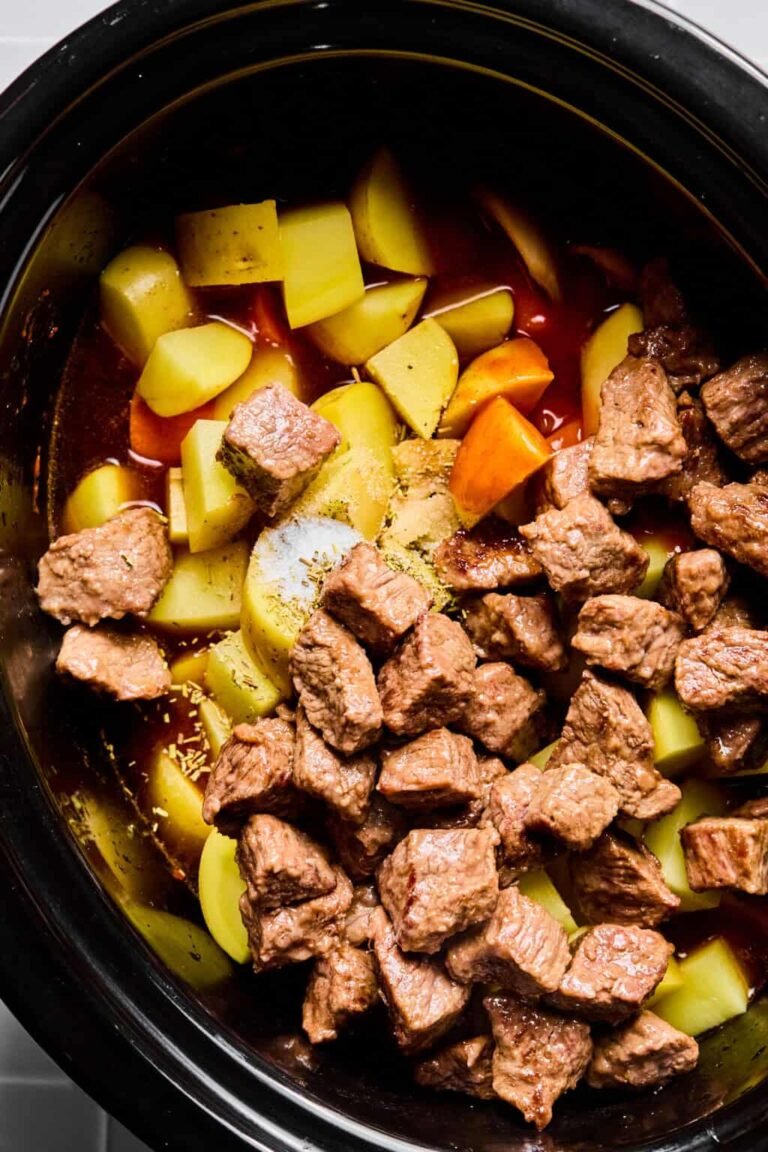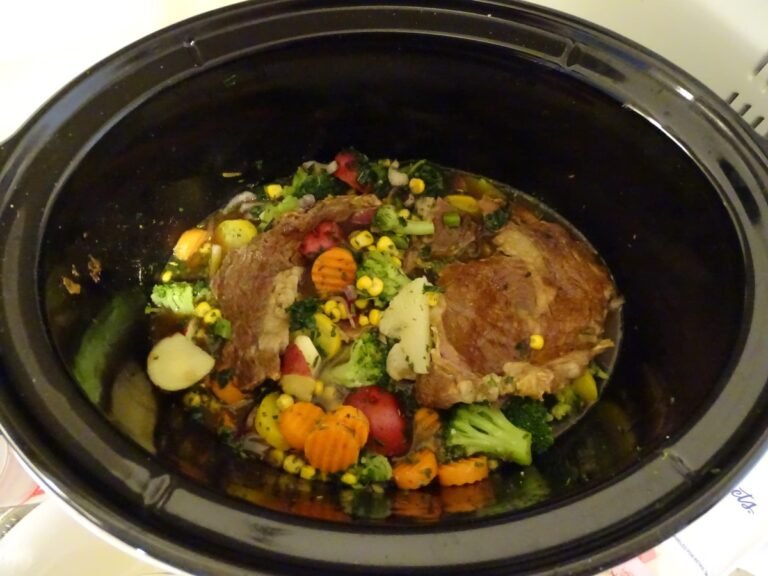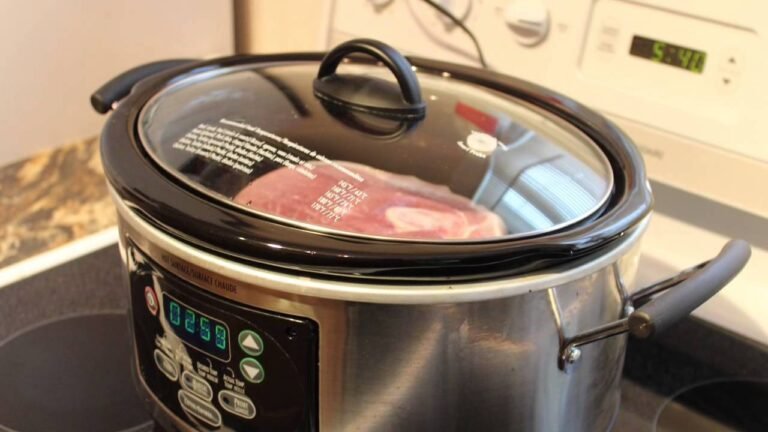
You can slow cook without a Crock-Pot by using a Dutch oven, heavy pot, covered oven dish, or a low burner. For most U.S. home kitchens, the oven is the easiest substitute because it gives steady heat with less stirring than a stovetop.
Use a heavy, oven-safe pot with a tight lid. Add enough liquid to keep the food moist, cook at a low temperature, and leave room for the food to simmer gently rather than boil hard. A Dutch oven set at 200°F to 250°F works well for soups, stews, beans, pulled pork, pot roast, and similar dishes.
Food safety still matters. Keep meat cold until cooking, use a food thermometer, and follow the [USDA’s safe minimum internal temperature chart](https://www.fsis.usda.gov/food-safety/safe-food-handling-and-preparation/meat/ safe-temperature-chart) when the dish is done.

The Best Crock-Pot Alternatives
The best method depends on how much attention you can give the food and how evenly you want it to cook.
| Method | Best for | Main benefit | Main limit |
|---|---|---|---|
| Dutch oven in the oven | Stews, roasts, beans, braises | Steady, even heat | The oven uses more energy |
| Heavy pot on the stovetop | Soups, chili, curry, sauces | Easy to adjust | Needs regular checks |
| Covered casserole dish | Smaller meals and baked stews | Simple setup | May not hold enough food |
| Slow-cook setting on a multicooker | Hands-off cooking | Convenient timer | Results vary by model |
| Heavy pot over very low heat | Basic soups and braises | No special appliance needed | Heat can vary by burner |
A Dutch oven is usually the closest substitute for a slow cooker. Its thick walls hold heat well, and its lid traps steam. A heavy stainless steel or enameled pot can also work.
A thin saucepan is less reliable. It may create hot spots that scorch food on the bottom before the center becomes tender.
Oven versus stovetop
Choose the oven when you want stable heat and minimal stirring. Choose the stovetop when you need to reduce a sauce, cook quickly, or watch the food closely.
The oven heats the pot from all sides. A burner heats mainly from the bottom, so stovetop cooking needs more attention. Keep the burner low enough for a slow simmer, not a rolling boil.
How to Slow Cook in the Oven
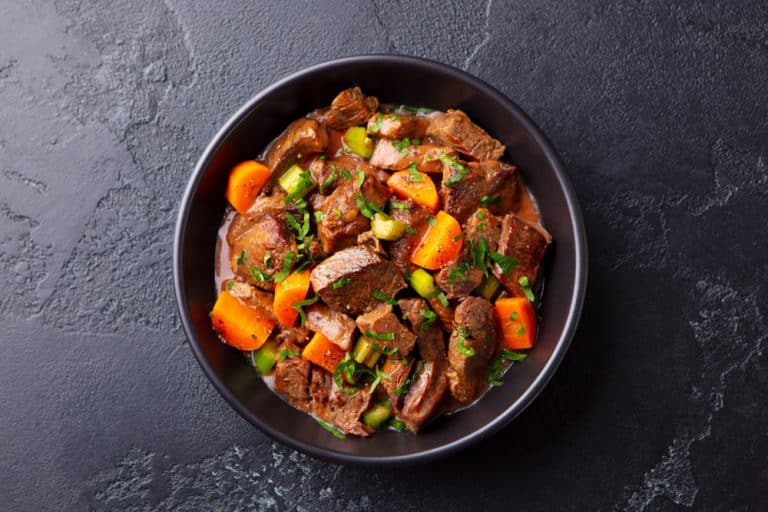
The oven gives the most consistent results when you do not have a crock pot. Use a covered Dutch oven or another heavy, oven-safe pot.
What you need
- A heavy pot with a tight lid
- Meat, vegetables, beans, or another slow-cook ingredient
- Cooking liquid, such as stock, water, tomatoes, or sauce
- Oil for browning, if desired
- An instant-read food thermometer
- Oven mitts and a stable heat-safe surface
Step-by-step method
Prepare the ingredients. Cut vegetables into large, similar-size pieces. Trim large amounts of surface fat from meat, but leave some fat for flavor and moisture.
Brown the meat, if you want deeper flavor. Heat a small amount of oil in the pot over medium-high heat. Brown the meat in batches. This step is optional, but it adds color and savory flavor.
Cook the aromatics. Add onions, garlic, celery, carrots, or spices to the same pot. Stir for a few minutes until fragrant.
Add the liquid. Pour in stock, water, wine, tomato sauce, or another suitable liquid. Scrape up the browned bits from the bottom.
Return the main ingredients. Place the meat and vegetables in the pot. The liquid should usually reach about one-third to one-half of the way up the food. You do not need to cover every ingredient.
Cover the pot tightly. A tight lid slows evaporation. If the lid does not fit well, place a layer of foil under it, but make sure the pot and lid are oven-safe.
Set the oven to 200°F to 250°F. A lower setting gives a longer, gentler cook. A setting near 250°F may finish the meal sooner.
Cook until tender and safe. Cooking time varies by the food’s size, cut, and starting temperature. Start checking after about two to three hours for smaller dishes and later for large roasts or dried beans.
Check the food. Meat should feel tender when pierced with a fork, and a thermometer should confirm a safe internal temperature. Vegetables should be soft but not falling apart unless the recipe calls for that texture.
Rest and adjust. Let meat rest before slicing. Taste the sauce, then add salt, pepper, acid, herbs, or a thickener as needed.
A useful oven temperature guide
| Oven temperature | Cooking style | What to expect |
|---|---|---|
| 200°F | Very gentle cooking | Longer cooking time and less evaporation |
| 225°F | Gentle braising | Good for many roasts and stews |
| 250°F | Low oven cooking | Faster results with more active bubbling |
| Above 300°F | Regular braising or baking | Faster cooking and a greater risk of drying |
These temperatures are practical starting points, not fixed rules. Your pot, lid, oven, food quantity, and recipe all affect the result.

How to Slow Cook on the Stovetop
A stovetop method works well for chili, soup, curry, beans, and smaller braises. It requires more care than an oven because the heat comes from one place.
Start the dish over medium heat until the liquid reaches a gentle simmer. Then reduce the burner to low and cover the pot. The surface should show a few small bubbles now and then.
A hard boil can make meat tough, break vegetables apart, and cause liquid to evaporate too fast. If the food boils steadily, lower the heat or move the pot to a smaller burner.
Stovetop steps
- Use a heavy pot with a flat base.
- Brown meat or cook aromatics first, if the recipe uses them.
- Add liquid and scrape the bottom clean.
- Bring the liquid to a gentle simmer.
- Cover the pot.
- Turn the heat to low.
- Check the pot every 30 to 45 minutes at first.
- Stir food that may stick, such as beans, tomato sauce, or thick chili.
- Add hot water or stock if the liquid level drops too far.
- Remove the lid near the end if the sauce needs to thicken.
Do not leave a stovetop pot unattended for long periods. A burner can run hotter than expected, especially on gas or electric ranges.
If the bottom keeps scorching, move the pot to a smaller burner, use a heat diffuser, or finish the dish in the oven. Never place a non-oven-safe pot in the oven.

How to Adapt a Slow-Cooker Recipe
You can usually adapt a slow-cooker recipe for the oven, but the liquid and cooking time may need changes.
Slow cookers lose less moisture than many oven pots. An oven recipe may need a little more liquid, while a stovetop recipe may need more frequent additions.
General conversion approach
- Use a covered Dutch oven or heavy pot.
- Set the oven to 225°F to 250°F.
- Begin checking the dish after about half the listed slow-cooker time.
- Use the recipe’s texture and food temperature as the final guide.
- Add liquid only when needed; too much can dilute the sauce.
- Add delicate ingredients later.
For example, a slow-cooker beef stew may call for eight hours on low. In a covered Dutch oven at 225°F to 250°F, begin checking around four to five hours. A large, tough roast may need longer, while small meat pieces may finish sooner.
This is an estimate, not a guaranteed conversion. Slow-cooker settings vary, and oven pots transfer heat in different ways.
When to add ingredients
Some ingredients do better when added near the end:
- Potatoes and carrots: Add at the start for soft vegetables; add later for firmer pieces.
- Green beans and peas: Add during the last 20 to 40 minutes.
- Pasta and rice: Add late unless the recipe is designed for long cooking.
- Dairy: Stir in near the end to reduce curdling.
- Fresh herbs: Add at the end for a brighter taste.
- Flour or cornstarch slurry: Add during the final stage to thicken the sauce.
Avoid filling the pot to the rim. Leave space for bubbling and safe handling.

How Long Does It Take to Slow Cook Without a Crock Pot?
Cooking time depends on the food, cut size, starting temperature, pot, and heat level. Tenderness is often a better guide than the clock, but the food still must reach a safe internal temperature.
Use this table as a starting point for a covered pot at about 225°F to 250°F:
| Food | Approximate time | Check for |
|---|---|---|
| Small chicken pieces in sauce | 1½ to 3 hours | Safe internal temperature and tender texture |
| Beef stew cubes | 2½ to 4 hours | Fork-tender meat |
| Pork shoulder | 4 to 7 hours | Meat pulls apart easily |
| Beef chuck roast | 4 to 7 hours | Fork slides in with little resistance |
| Lentils | 30 to 60 minutes | Soft centers |
| Dried beans | 1½ to 3 hours after soaking, often longer without soaking | Creamy center |
| Root vegetables | 1½ to 3 hours | A fork passes through easily |
Times can vary widely. A large roast takes longer than small pieces, and cold ingredients take longer than ingredients that start at room temperature.
Do not use time alone to judge meat safety. The USDA lists these common minimum internal temperatures:
- Poultry: 165°F
- Ground meats: 160°F
- Whole cuts of beef, pork, lamb, and veal: 145°F, followed by a three-minute rest
A tough cut may be safe before it becomes tender. That is why slow cooking often continues after the minimum safe temperature is reached.

How to Keep Slow-Cooked Food Moist and Tender
Keep the pot covered, use moderate heat, and avoid cutting meat into pieces that are too small. These steps reduce moisture loss and help tough connective tissue soften over time.
The liquid should create a moist cooking environment without drowning the food. For a braise, liquid often reaches one-third to one-half of the way up the meat. For soup, the ingredients may be fully submerged.
Do not keep lifting the lid to check the food. Each opening releases heat and steam. Check only when needed, and work quickly.
Why meat may stay tough
Meat can remain tough for several reasons:
- The cut needs more time.
- The heat is too low for the dish to cook properly.
- The pot contains large pieces.
- The meat was sliced before it finished.
- The dish boiled hard and dried the surface.
- The meat is naturally lean and not suited to long cooking.
If beef chuck or pork shoulder is safe but still tough, keep cooking it in the covered pot. Add a small amount of hot liquid if the pot looks dry.
Why vegetables may turn mushy
Vegetables can become soft before the meat is tender. Cut them into larger pieces, choose firm vegetables, or add delicate vegetables later.
Potatoes can also break down when stirred too often. Stir gently and only when needed.

Food Safety When Slow Cooking Without a Crock Pot
Use safe temperatures, clean tools, and proper cooling. A low oven or burner is not automatically safe if the food stays in the bacterial “danger zone” for too long.
The USDA describes the danger zone as 40°F to 140°F. Keep raw meat refrigerated until you begin cooking. Do not partially cook meat, cool it, and finish it later unless you follow a tested food-safety process.
Use a food thermometer in the thickest part of the meat. Avoid touching bone, the pot, or a pocket of liquid because those spots can give a false reading.
Safe handling rules
- Wash hands before and after handling raw meat.
- Keep raw meat and vegetables on separate cutting boards when possible.
- Do not use the same spoon for raw and cooked food without washing it.
- Keep the pot covered during cooking.
- Refrigerate leftovers within two hours.
- Refrigerate within one hour when the room or outdoor temperature is above 90°F.
- Store leftovers in shallow containers so they cool faster.
- Reheat leftovers to 165°F.
Do not use a slow-cooking method to preserve food at room temperature. Low heat helps cook food, but it does not replace refrigeration or safe holding practices.
For more detail, use the USDA FSIS food safety resources.

Common Problems and Simple Fixes
The food is not tender
Keep cooking if the meat is safe but still firm. Tough connective tissue often needs more time to soften.
If the liquid is boiling hard, lower the heat. If the liquid is barely warm after several hours, raise the oven temperature slightly or bring the stovetop pot back to a gentle simmer.
The sauce is too thin
Remove the lid during the final 15 to 30 minutes and let some liquid evaporate. You can also mix a small amount of cornstarch with cold water, stir it into the hot sauce, and simmer until thick.
Do not add dry flour straight to a hot liquid. It may form lumps.
The sauce is too thick
Add warm stock or water a little at a time. Stir gently and taste again before adding salt.
The food tastes flat
Slow cooking can soften flavor. Add salt in small amounts, then consider a little acid, such as lemon juice or vinegar. Fresh herbs can also help.
Add strong ingredients near the end when you want their flavor to stay clear.
The bottom is burning
Move the pot to a smaller burner, lower the heat, and stir the bottom gently. If food is already burned, transfer the unburned portion to a clean pot without scraping the black layer into it.
A thicker pot, a heat diffuser, or the oven can help prevent this problem.
The dish is watery
Remove the lid near the end. Do not raise the heat too much, since rapid boiling can toughen meat and scorch the base.
Can You Slow Cook in Other Appliances?
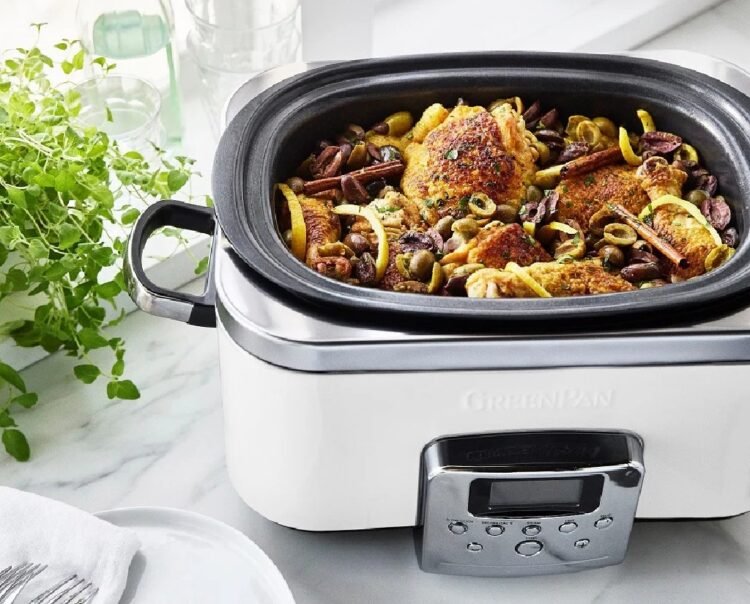
You can use a multicooker’s slow-cook function if the manufacturer allows it and the lid is used as directed. Results may differ from a traditional slow cooker because some multicookers heat from the bottom and have different lid designs.
A rice cooker may cook some simple soups or porridges, but it is not a universal slow-cooking tool. Use it only if the manual supports the function and the food can cook safely without overflowing.
Do not use a regular glass bowl, plastic container, or unapproved insert in an oven or on a burner. Check the cookware markings or manufacturer instructions first.
An electric countertop roaster may work for large batches, but follow its manual for temperature, fill level, and safe operation.

FAQ about How To Slow Cook Without A Crock Pot
Can I slow cook in a regular pot?
Yes. Use a heavy pot with a tight lid. An oven is usually easier because it provides more even heat, while a stovetop requires closer watching.
What is the lowest oven temperature for slow cooking?
About 200°F is a practical low setting for many dishes. Some foods need a higher temperature to simmer properly. The food must heat safely, so use a thermometer and check the dish rather than relying on the oven setting alone.
Should the liquid cover the meat?
Usually, no. For a braise, liquid often reaches one-third to one-half of the way up the meat. Fully covering the meat creates more of a stew or poaching method.
Can I put a cold Dutch oven into a hot oven?
Follow the cookware maker’s instructions. Some materials can handle the change, but sudden temperature shifts may damage certain pots or cause thermal shock. Let a very cold pot warm gradually when the instructions require it.
Is slow cooking the same as braising?
They are similar but not identical. Both use gentle heat and moisture. Braising often cooks larger pieces partly covered by liquid, while slow cooking can describe a wider range of long, low-heat methods.
Can I leave a stovetop pot cooking while I leave the house?
No. A stovetop pot needs supervision because the burner can overheat the food, boil the pot dry, or create a fire risk. Use a properly designed countertop appliance when you need a cooking method intended for unattended use.
Final Recommendation
For the closest crock-pot substitute, use a covered Dutch oven at 225°F to 250°F. Brown the ingredients first if you want more flavor, add moderate liquid, keep the lid on, and cook until the food is tender and reaches a safe internal temperature.
Use a stovetop pot when you can stay nearby and adjust the heat. Whichever method you choose, gentle heat, a tight lid, enough liquid, and a food thermometer will give you the most reliable result.