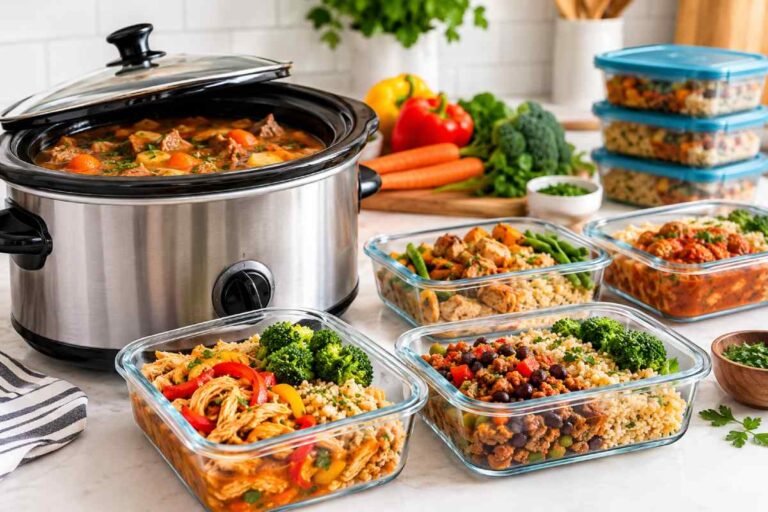
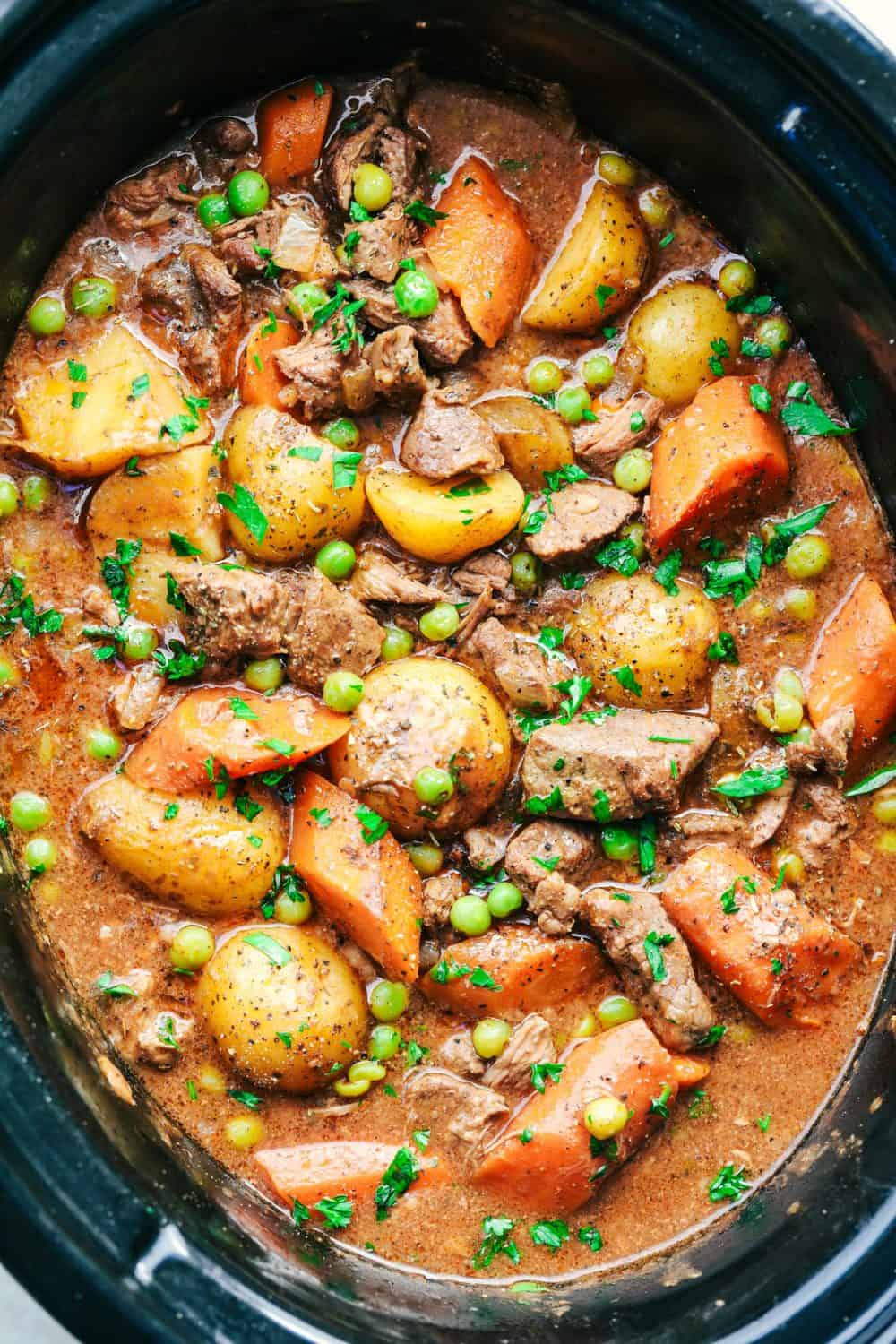
For a cozy American-style beef stew, use beef chuck, root vegetables, a savory broth, and a slow cooker set to LOW for 8 to 9 hours or HIGH for 4 to 5 hours. The stew is ready when the beef is fork-tender and the vegetables are soft.
This method works well for a weeknight meal, a Sunday dinner, or a cold-weather gathering. The key is to cut the ingredients evenly, avoid lifting the lid too often, and thicken the broth at the end if needed.
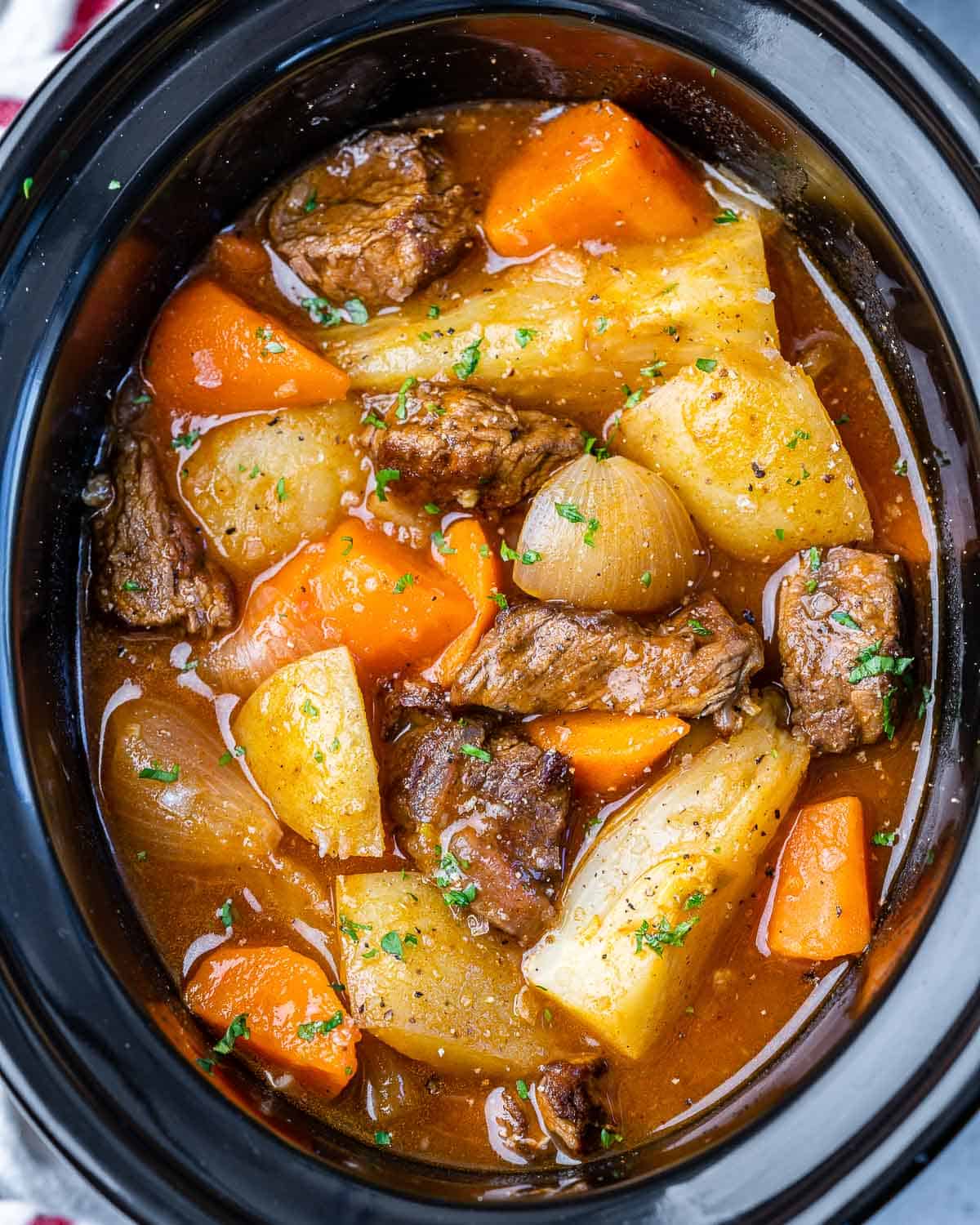
Ingredients for Slow Cooker Beef Stew
The following amounts make about 6 servings.
- 2 ½ to 3 pounds beef chuck roast, cut into 1½-inch cubes
- 1½ teaspoons kosher salt, plus more to taste
- 1 teaspoon black pepper
- 2 tablespoons all-purpose flour, optional
- 2 tablespoons vegetable oil, for browning
- 1 large yellow onion, cut into chunks
- 3 garlic cloves, minced
- 4 medium carrots, peeled and cut into 1-inch pieces
- 1½ pounds Yukon Gold or russet potatoes, cut into 1½-inch pieces
- 2 celery stalks, sliced
- 3 cups low-sodium beef broth
- 2 tablespoons tomato paste
- 1 tablespoon Worcestershire sauce
- 1 teaspoon dried thyme
- 1 teaspoon dried rosemary, or 1 tablespoon fresh rosemary
- 2 bay leaves
- 1 cup frozen peas, added near the end
- 2 tablespoons cornstarch
- 3 tablespoons cold water
Best beef for stew
Beef chuck roast is the best general choice for slow cooker stew. It contains enough fat and connective tissue to stay moist during a long cook. As it cooks, the connective tissue softens and helps give the stew a rich texture.
Other suitable cuts include:
- Beef shoulder
- Bottom round
- Top round
- Beef stew meat
Pre-cut stew meat is convenient, but the pieces may come from several cuts. If you buy a chuck roast, you can trim it and cut the cubes to the same size. This helps the meat cook evenly.
Choosing the vegetables
Carrots, potatoes, onions, and celery are classic choices. Yukon Gold potatoes hold their shape well, while russet potatoes become softer and can help thicken the broth.
For firmer vegetables, cut them into larger pieces. Small pieces may become very soft during a long cooking time.
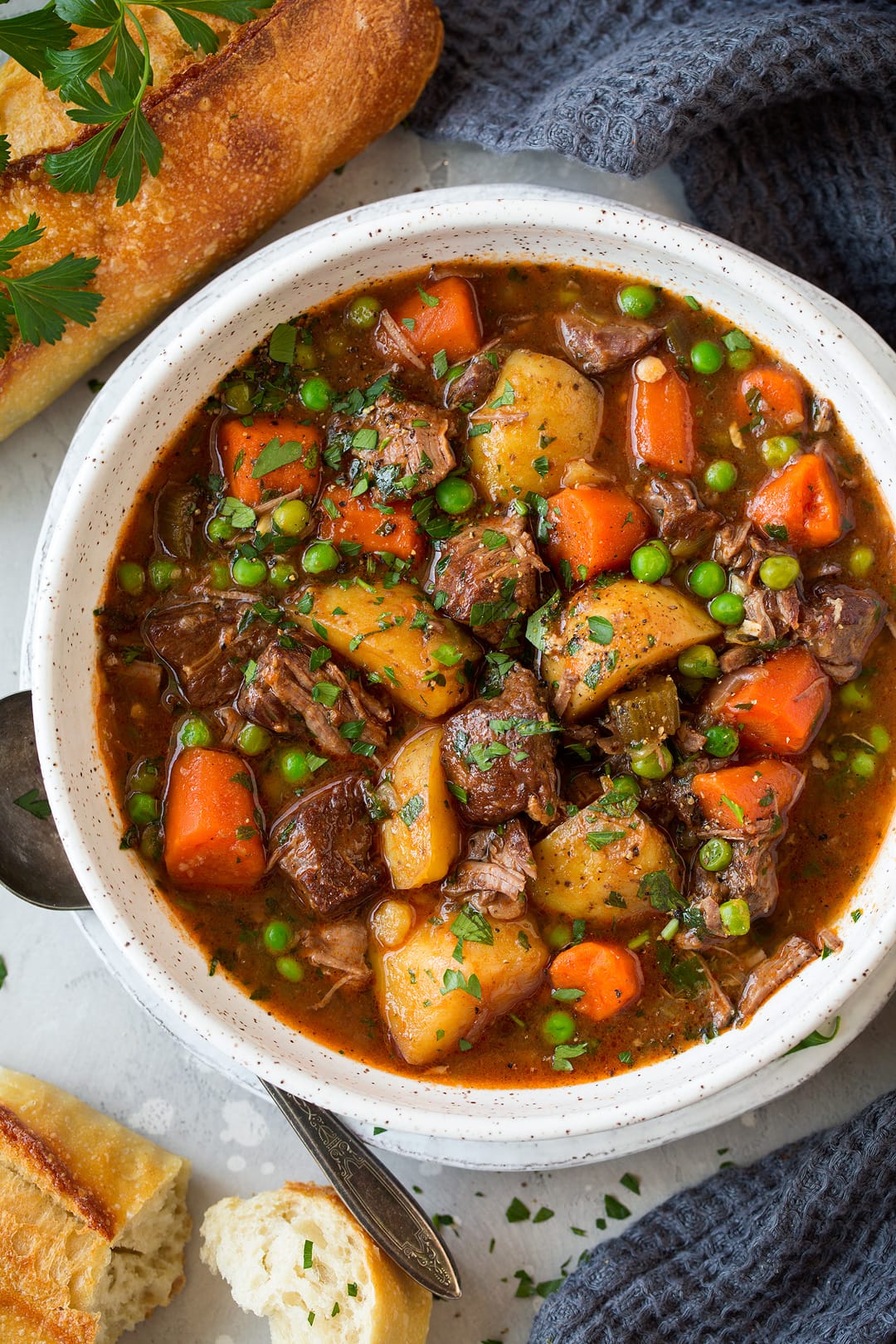
How to Prepare Beef Stew in a Slow Cooker
Follow these steps for tender beef, soft vegetables, and a flavorful broth.
1. Cut and season the beef
Trim away large pieces of hard fat and cut the beef into pieces about 1½ inches wide. Small pieces can dry out, while very large pieces may take longer to become tender.
Pat the beef dry with paper towels. Season it with salt and black pepper. If you want a thicker broth, toss the beef with the flour. The flour also helps the meat brown, but you can leave it out and thicken the stew later.
2. Brown the beef, if desired
Heat the oil in a large skillet over medium-high heat. Brown the beef in small batches for about 2 to 3 minutes per side.
Do not crowd the pan. Too much beef at once can release liquid and cause the meat to steam instead of brown.
Browning is optional. It adds a deeper roasted flavor, but the slow cooker can still produce good stew without this step. If you skip browning, place the seasoned beef directly into the slow cooker.
3. Layer the ingredients
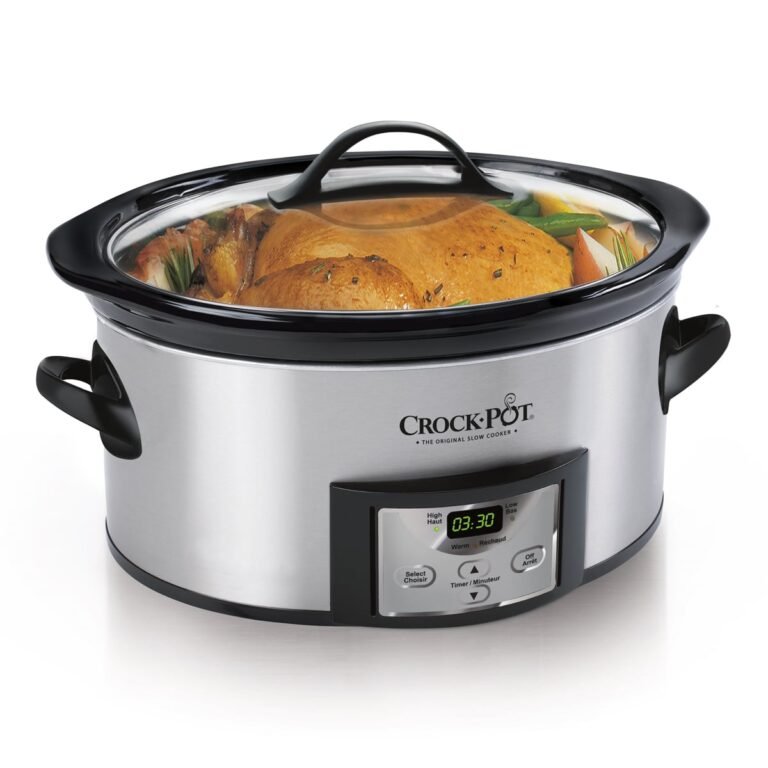
Place the ingredients into a 6-quart slow cooker in this order:
- Onion and garlic
- Carrots, potatoes, and celery
- Browned or raw seasoned beef
- Beef broth
- Tomato paste
- Worcestershire sauce
- Thyme, rosemary, and bay leaves
Stir the broth mixture gently around the meat and vegetables. The liquid does not need to cover every ingredient. A slow cooker traps steam, so the stew produces more cooking liquid than a pot with an open lid.
4. Cook the stew
Cover the slow cooker and cook until the beef is tender:
- LOW: 8 to 9 hours
- HIGH: 4 to 5 hours
Cooking time can vary by slow cooker, cube size, and the amount of food in the pot. Start checking near the early end of the range, but do not stop based only on the clock.
The beef should break apart easily when pressed with a fork. If it still feels chewy, continue cooking. Tough beef is often undercooked rather than ruined.
Keep the lid closed as much as possible. Each time the lid is removed, heat escapes and the cooking time increases.
5. Add the peas
Stir in the frozen peas during the last 10 to 15 minutes. This keeps them bright and prevents them from becoming mushy.
Remove the bay leaves before serving.
6. Thicken the broth
For a thicker beef stew, mix the cornstarch with cold water in a small bowl. Stir until smooth.
Add the slurry to the hot stew during the final 15 to 20 minutes of cooking. Stir gently, replace the lid, and let the stew finish.
Do not add dry cornstarch directly to the slow cooker. It can form lumps. You can also thicken the stew on the stovetop by transferring some of the broth to a saucepan and simmering it with the slurry.

How to Know When Slow Cooker Beef Stew Is Done
The best sign of doneness is texture. The beef should be tender enough to pull apart with a fork, and the potatoes and carrots should be easy to pierce.
A food thermometer is still useful for checking safety, but temperature alone does not tell you whether chuck roast has become tender. Beef stew meat may reach a safe internal temperature before its connective tissue has softened.
Check these signs:
- The beef yields easily under a fork.
- The potatoes are tender but not completely falling apart.
- The carrots are soft enough to bite without crunch.
- The broth is hot and evenly mixed.
- No raw flour taste remains if flour was used.
For food safety, the U.S. Department of Agriculture recommends cooking whole cuts of beef to at least 145°F, followed by a three-minute rest. Stew meat is usually cooked well beyond that point because it needs time to become tender.
Do not place frozen beef in a slow cooker. USDA guidance recommends thawing meat in the refrigerator, in cold water, or in the microwave before slow cooking. The slow cooker may heat frozen meat too slowly through the food-safety danger zone.

Slow Cooker Beef Stew Timing Guide
Use the table below as a starting point. Texture matters more than a fixed cooking time.
| Setting | Approximate time | Best use |
|---|---|---|
| LOW | 8–9 hours | Best for a tender texture and flexible meal timing |
| HIGH | 4–5 hours | Useful when the stew must be ready sooner |
| Keep warm | Follow appliance guidance | Short holding period after cooking |
Avoid filling the slow cooker too little or too much. A cooker usually works best when it is filled about halfway to two-thirds full, although the appliance manual takes priority.
If you double the recipe, use a larger slow cooker rather than packing a standard 6-quart cooker to the top. A crowded cooker may heat unevenly and may need more time.
Altitude, unusually large meat pieces, and different appliance designs can also change the cooking time.

Common Beef Stew Problems and Fixes
The beef is tough
The meat probably needs more time. Keep cooking on LOW and check it again after 30 to 60 minutes.
Chuck roast becomes tender when its connective tissue breaks down. Raising the heat does not always solve the problem. A longer cook is usually the better fix.
The stew is watery
Slow cookers do not allow much liquid to evaporate. Use less broth next time, or thicken the finished stew with cornstarch.
For the current batch, mix:
- 2 tablespoons cornstarch
- 3 tablespoons cold water
Stir the mixture into the stew and cook for 15 to 20 minutes. Add another small batch only if needed.
The stew is too thick
Stir in warm beef broth a little at a time. Taste again before adding salt because the broth may already contain sodium.
The potatoes are falling apart
The pieces may be too small, or the stew may have cooked longer than needed. Use larger potato pieces and choose Yukon Gold potatoes for better shape retention.
If you prefer very firm potatoes, add them halfway through cooking. This requires opening the lid, so it may extend the cooking time.
The stew tastes flat
Taste it after cooking and adjust in small amounts. Possible additions include:
- Salt
- Black pepper
- A small splash of Worcestershire sauce
- A teaspoon of tomato paste
- A little fresh parsley
- A few drops of lemon juice or red wine vinegar
Acid should be added carefully. Too much can overpower the broth.
The beef tastes bland
Browning the meat can add a richer flavor. You can also season the beef before cooking and use tomato paste, Worcestershire sauce, garlic, and herbs in the broth.
Low-sodium broth gives you more control over the final salt level.

Food Safety and Storage
Serve the stew promptly after cooking, or transfer it to shallow containers for faster cooling. USDA guidance recommends refrigerating perishable leftovers within 2 hours, or within 1 hour when the surrounding temperature is above 90°F.
Store beef stew in the refrigerator for 3 to 4 days. For longer storage, freeze it in airtight containers or freezer bags. Leave a little space for expansion.
To reheat, warm the stew on the stovetop or in a microwave until it reaches 165°F. Stir during microwave reheating so the heat spreads evenly.
Frozen stew may be thawed overnight in the refrigerator. You can also reheat it from frozen in a saucepan over low to medium heat, stirring often and adding broth if needed.
Do not taste food to decide whether it is safe. Smell and appearance cannot reliably detect harmful bacteria.

What to Serve With Beef Stew
Beef stew is filling on its own, but these sides work well:
- Crusty bread for dipping
- Cornbread
- A green salad
- Steamed green beans
- Roasted Brussels sprouts
- Buttered egg noodles
- Mashed potatoes, if the stew contains fewer potatoes
For a lighter plate, serve smaller portions of stew with a salad or steamed vegetables. For a hearty meal, add bread or noodles.
Fresh parsley added just before serving gives the stew a bright contrast to its rich broth.

Easy Variations
Gluten-free beef stew
Skip the flour and use cornstarch to thicken the broth. Check the labels on the beef broth and Worcestershire sauce because some brands may contain gluten-based ingredients.
Dairy-free beef stew
The basic recipe is naturally dairy-free. Use oil instead of butter if browning the beef.
Red wine beef stew
Replace up to 1 cup of the beef broth with dry red wine. Simmer the wine in the skillet for a few minutes after browning the beef to reduce its sharp edge, then add it to the slow cooker.
Vegetable-rich beef stew
Add mushrooms, parsnips, turnips, or frozen green beans. Add quick-cooking vegetables, such as green beans, during the last 30 to 45 minutes so they retain more texture.
Spicy beef stew
Add a pinch of red pepper flakes, smoked paprika, or a chopped jalapeño. Start with a small amount because the flavor can become stronger during cooking.
Key Takeaways
- Use beef chuck for the most tender result.
- Cut the beef and vegetables into even pieces.
- Brown the beef for deeper flavor, but skip it if you need a faster start.
- Cook on LOW for 8 to 9 hours or HIGH for 4 to 5 hours.
- Judge doneness by tenderness, not only by time.
- Add cornstarch slurry near the end if the broth needs thickening.
- Thaw beef before placing it in a slow cooker.
- Refrigerate leftovers within 2 hours and use them within 3 to 4 days.
Frequently Asked Questions
Can I put raw beef directly into a slow cooker?
Yes. Raw beef can go directly into the slow cooker with the other ingredients. Browning is optional and mainly improves flavor and color.
Should the beef stew liquid cover the meat?
No. The liquid does not need to cover everything. A slow cooker holds in steam, and the vegetables and meat release additional moisture as they cook.
Can I use frozen stew meat?
No. Thaw the beef first in the refrigerator, cold water, or a microwave. Frozen meat may remain too long in the food-safety danger zone while the slow cooker heats.
Can I make beef stew without flour?
Yes. Leave out the flour and thicken the finished stew with cornstarch mixed with cold water. You can also let the broth remain thin for a soup-like stew.
Why is my slow cooker beef stew not thick?
Slow cookers trap moisture, so the broth does not reduce much. Use a cornstarch slurry near the end, or reduce some broth in a saucepan before stirring it back into the stew.
Can I prepare beef stew the night before?
Yes. Cut the vegetables and beef, measure the seasonings, and refrigerate the prepared ingredients separately or in the slow cooker insert if the appliance manufacturer allows it. Keep raw beef refrigerated until cooking time, and do not leave the assembled ingredients at room temperature.
Conclusion
To prepare beef stew in a slow cooker, combine seasoned beef chuck, vegetables, broth, tomato paste, and herbs, then cook until the beef is fork-tender. Use LOW for the most forgiving result, thicken the broth at the end, and follow safe thawing, cooling, and reheating practices.
For the next step, gather the ingredients, cut the beef into even cubes, and decide whether you want to brown it before loading the slow cooker.