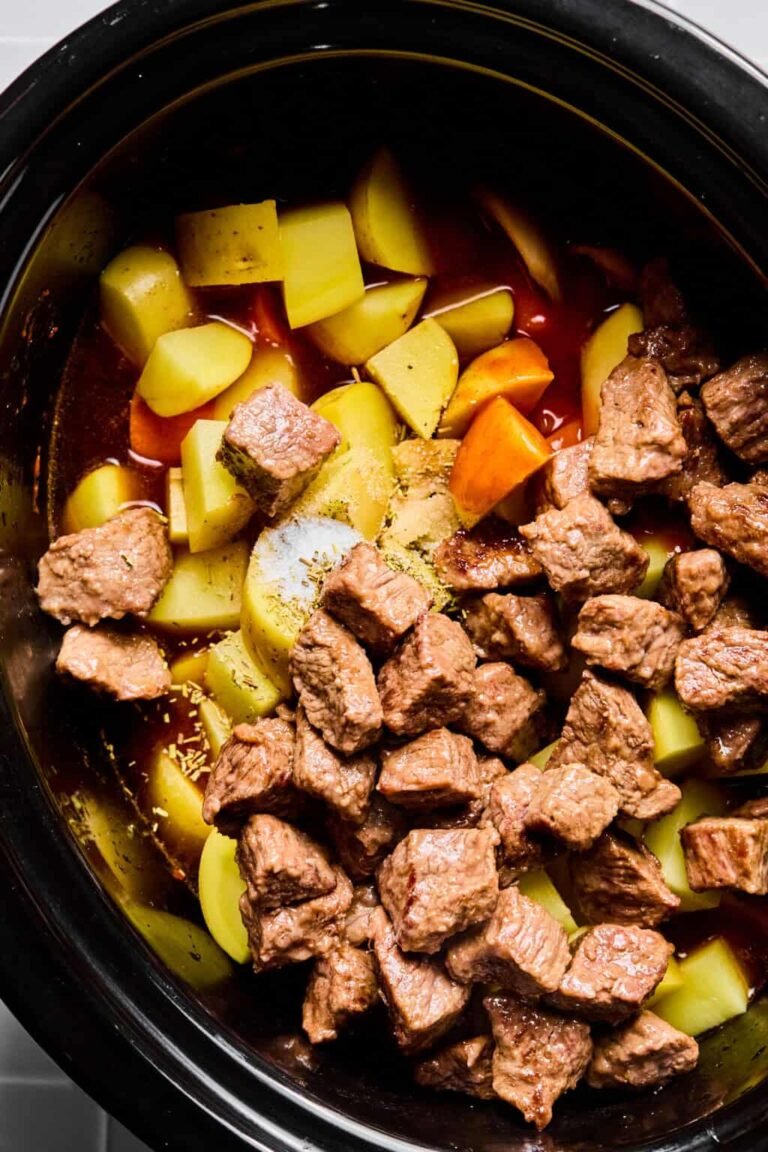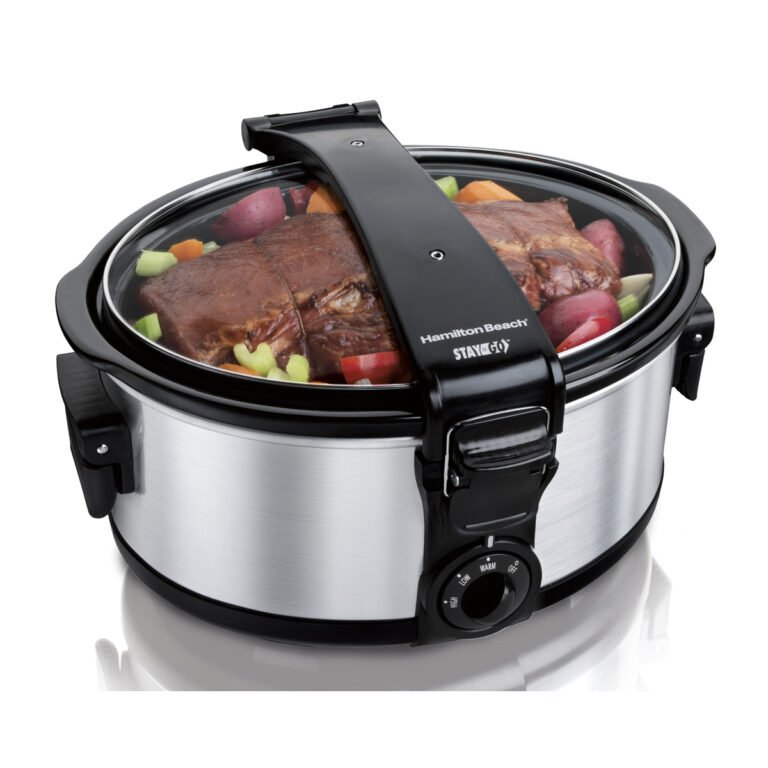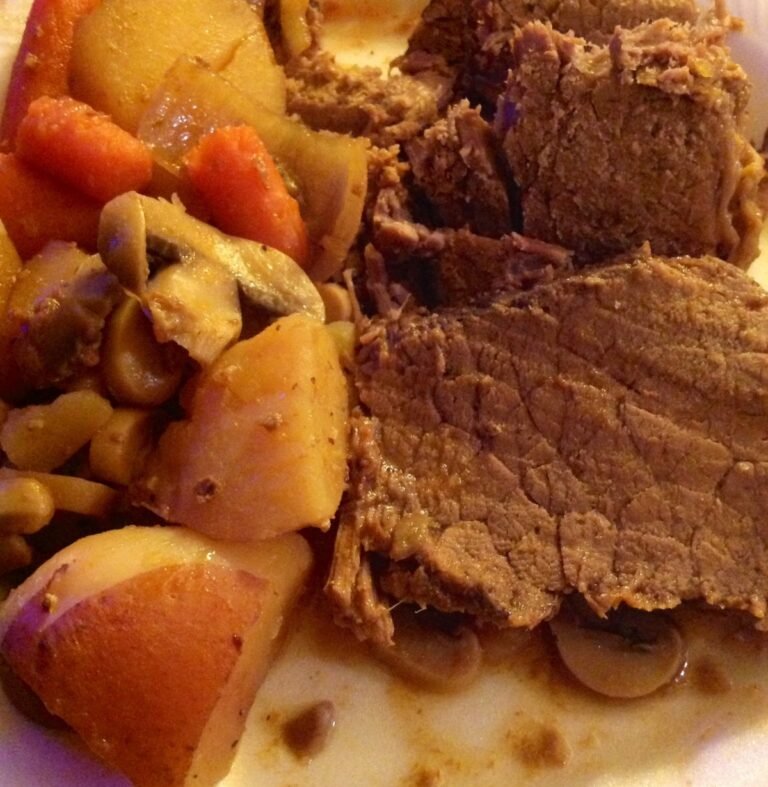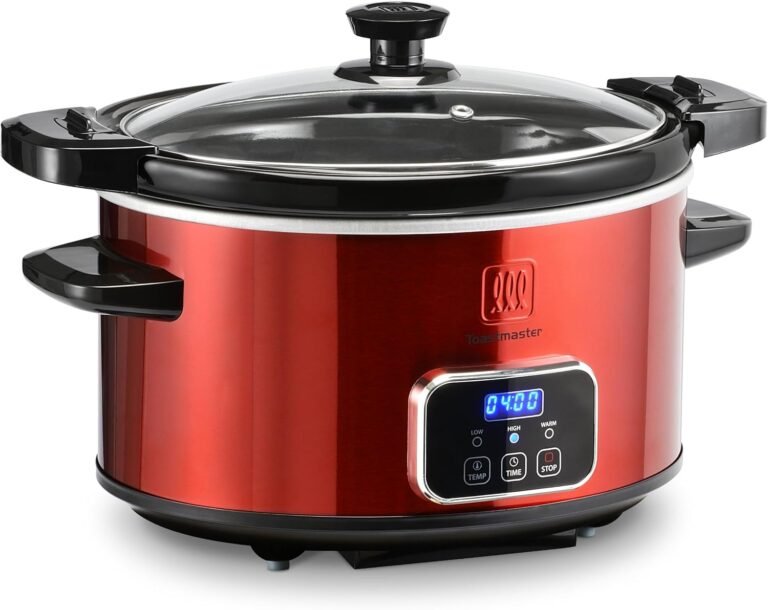
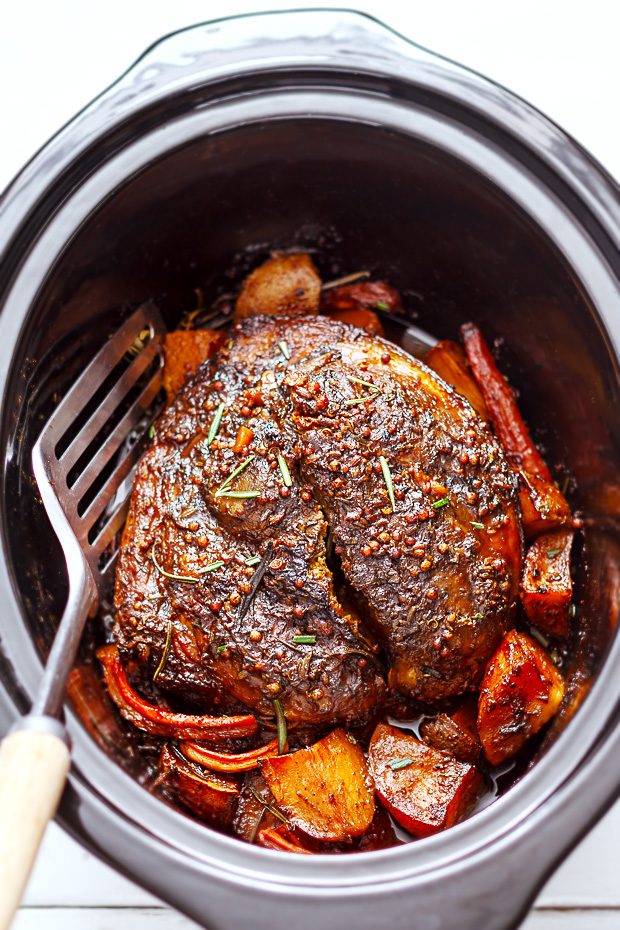
An 8-pound pork shoulder usually takes 8 to 10 hours on LOW or 5 to 6 hours on HIGH in a slow cooker. The exact time depends on the cut, its shape, whether it has a bone, and how hot your slow cooker runs.
For tender pulled pork, do not rely on time alone. Cook the pork until it is easy to pull apart and reaches about 195°F to 205°F in the thickest part. The USDA’s safety minimum for whole pork cuts is 145°F, followed by a three-minute rest, but pork shoulder often needs a much higher temperature to become soft enough to shred.
For the best result, use LOW, keep the lid closed, and begin checking the meat after 8 hours.

Quick Answer: 8-Pound Pork Shoulder Cooking Times
Use this table as a starting point, not a guarantee. Slow cookers vary in heat, and a large roast can take longer than a smaller one.
| Pork shoulder setup | LOW setting | HIGH setting | Best use |
|---|---|---|---|
| Whole 8-pound bone-in shoulder | 8–10 hours | 5–6 hours | Pulled pork or sliced pork |
| Whole 8-pound boneless shoulder | 8–10 hours | 5–6 hours | Pulled pork or sliced pork |
| Shoulder cut into 3- to 4-pound pieces | 7–9 hours | 4–5 hours | Faster, more even cooking |
| Very cold but fully thawed shoulder | May need the longer end | May need extra time | Check with a thermometer |
| Frozen shoulder | Do not slow-cook from frozen | Do not slow-cook from frozen | Thaw in the refrigerator first |
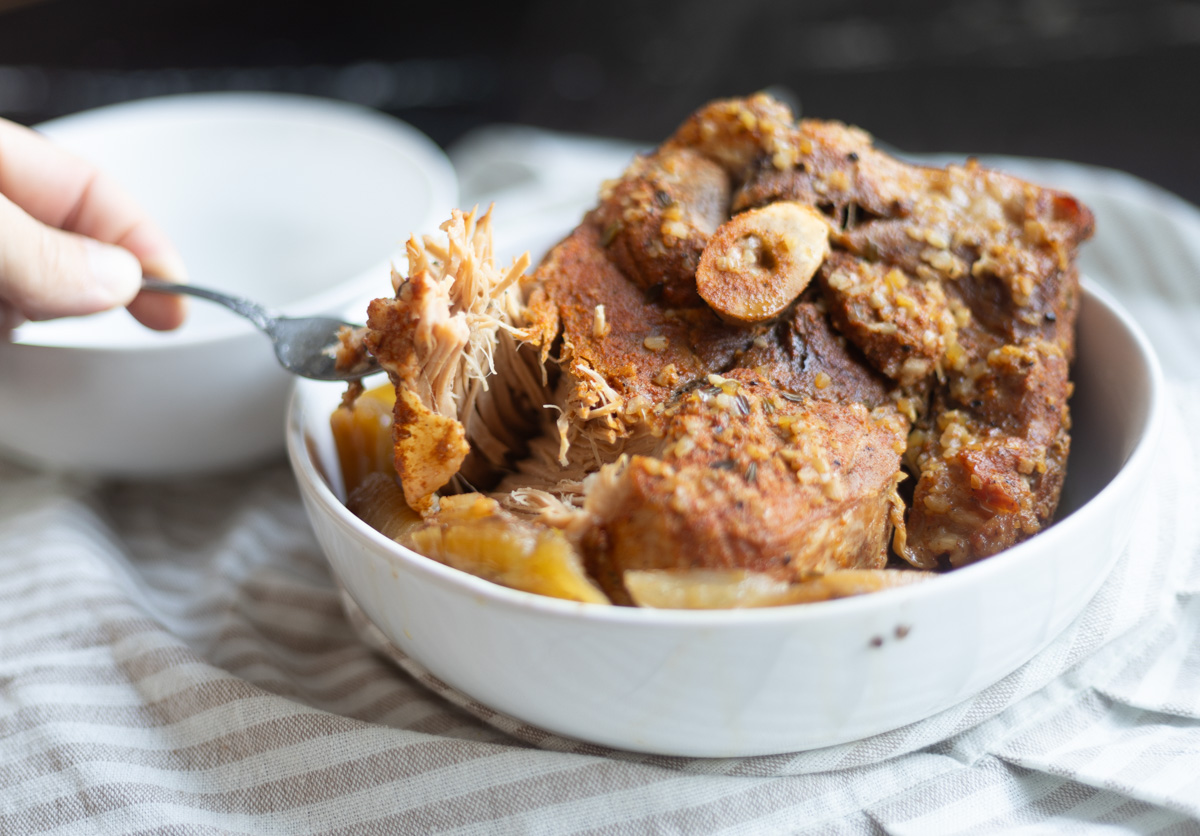
The pork is ready for pulled pork when a fork slides into the meat with little resistance and the roast separates easily. A thermometer should read around 195°F to 205°F in the thickest section for that texture.
Why an 8-Pound Pork Shoulder Takes So Long
Pork shoulder is a tough cut with a great deal of connective tissue. Slow cooking gives that tissue time to soften and turn into gelatin. This is what makes the meat moist and easy to shred.
The roast’s weight matters, but its thickness matters more. A compact, thick 8-pound roast may take longer than two smaller pieces with the same total weight. A bone-in roast can also take longer to heat through, although the bone itself does not provide a precise cooking-time rule.
The USDA explains that a slow cooker safely cooks food when the cooker reaches a temperature high enough to kill harmful bacteria. However, the food still needs enough time to heat through. For this reason, use a fully thawed roast, avoid lifting the lid, and confirm doneness with a food thermometer.

How to Cook an 8-Pound Pork Shoulder in a Slow Cooker
Follow these steps for a simple, reliable method.
1. Thaw the pork safely
Thaw the pork shoulder in the refrigerator. An 8-pound roast may need about two days, depending on its shape and your refrigerator temperature.
Do not thaw the roast on the kitchen counter. Do not place a frozen pork shoulder directly into a slow cooker. USDA guidance recommends thawing meat before slow cooking because frozen meat may remain in the unsafe temperature range for too long.
2. Check the size of your slow cooker
A large pork shoulder needs room for heat to move around it. The cooker should not be packed tightly or filled to the rim.
Most slow cooker guidance recommends filling the insert about one-half to two-thirds full. An 8-pound roast may not fit safely in a smaller 4-quart cooker. If the meat presses against the lid, cut it into two or more large pieces or use a larger cooker.
The lid should close fully. If it does not, the cooker may lose heat and the pork may cook unevenly.
3. Trim only excess fat
Leave a thin layer of fat for flavor and moisture, but trim off thick, hard pieces. Too much fat can leave the cooking liquid greasy.
If the roast has a thick fat cap, place it fat-side up or down according to your recipe. In a slow cooker, the difference is small because the meat cooks in moist heat.
4. Season the pork
A basic seasoning blend may include:
- Kosher salt
- Black pepper
- Garlic powder
- Onion powder
- Smoked paprika
- Chili powder, if you want heat
- Brown sugar, if you want a sweet crust
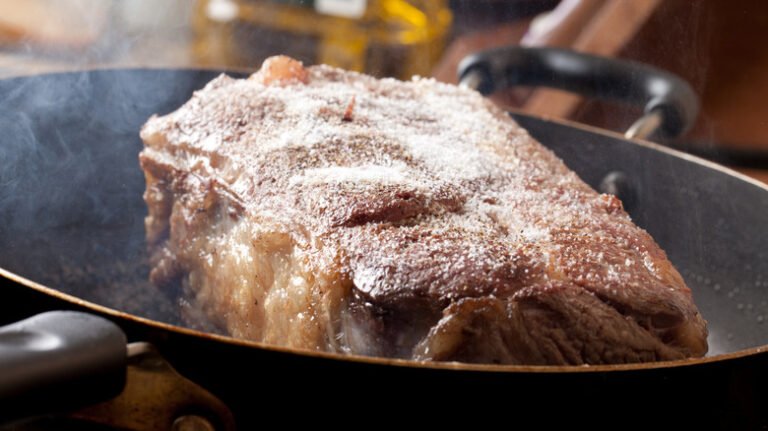
Apply the seasoning to all sides. You can also sear the pork first, but this step is optional. Searing adds browned flavor; it does not make the slow cooker cook the roast faster.
5. Add a small amount of liquid
Add enough liquid to support moist cooking, but do not cover the pork. About ½ to 1 cup of liquid is often enough for a large roast.
Good choices include:
- Low-sodium chicken stock
- Apple juice
- Water
- Cider vinegar mixed with stock
- A barbecue sauce mixture
Many pork shoulders release plenty of juice as they cook. Too much liquid can dilute the flavor and make the finished pork soupy.
6. Cook on LOW or HIGH
Set the slow cooker to LOW for 8 to 10 hours. This is the better choice when you want soft, pull-apart pork.
Use HIGH for about 5 to 6 hours when you need the meal sooner. Check the roast early because some slow cookers run hotter than others.
Keep the lid closed during cooking. Each time you lift it, heat escapes and the cooking time can increase.
7. Check the temperature and texture
Insert a digital thermometer into the thickest part of the meat. Avoid touching the bone because it can give a misleading reading.
For food safety, whole pork should reach at least 145°F, followed by a three-minute rest, according to the USDA. For pulled pork, continue cooking until the meat reaches roughly 195°F to 205°F and feels tender when tested with a fork.
Temperature is a guide. Texture decides whether the pork is ready to shred.
8. Rest, shred, and serve
Transfer the cooked pork to a tray or large bowl. Let it rest for 15 to 30 minutes before shredding.
Remove the bone, if present, and pull the meat apart with two forks or clean, heat-resistant gloves. Discard large pieces of fat and any tough connective tissue.
Mix some of the cooking juices back into the shredded pork. Add barbecue sauce at the table or after shredding so you can control the flavor and moisture.

The Best Setting: LOW or HIGH?
LOW is usually best for an 8-pound pork shoulder. It gives the connective tissue more time to soften and makes it easier to avoid a dry outer layer.
HIGH can work well, but the cooking window is shorter. The outside of the roast may become tender before the center reaches the texture you want. If you use HIGH, begin checking after about 5 hours.
Choose LOW when:
- You have 8 to 10 hours available.
- You want pulled pork.
- The roast is large and thick.
- You want a wider margin for timing.
- You are cooking the pork overnight or during the workday.
Choose HIGH when:
- You need the pork in about 5 to 6 hours.
- The roast is cut into smaller pieces.
- You can check the temperature before serving.
- Your slow cooker has a documented high-heat setting that you trust.
Do not switch repeatedly between LOW and HIGH to “speed up” the cooking. The timing becomes harder to predict. If you need faster cooking, cut the roast into large, similar-size pieces before starting.

How to Tell When the Pork Shoulder Is Done
The pork is done when it passes both a temperature check and a texture check.
Temperature signs
- 145°F: Safe minimum for whole pork, followed by a three-minute rest.
- 180°F to 190°F: Often cooked through but may still be too firm to pull apart.
- 195°F to 205°F: Common range for tender pulled pork.
- Above 205°F: May still be tender, but overcooking can dry some parts of the roast.
These ranges are practical cooking targets, not strict laws. Pork shoulder can become tender at slightly different temperatures depending on the cut and the cooker.
Texture signs
Look for these signs:
- A fork enters the thickest part with little resistance.
- The meat separates when pulled with two forks.
- The bone wiggles or pulls out cleanly, if the roast is bone-in.
- The roast does not feel rubbery or tight in the center.
- The meat stays moist after shredding.
If the pork has reached 195°F but still feels tough, keep cooking it on LOW. Toughness usually means the connective tissue needs more time, not that the meat has failed.
What to Do If the Pork Is Tough, Dry, or Undercooked
If the pork is tough
Put the lid back on and continue cooking on LOW for 30 to 60 minutes. Check it again. Repeat as needed until the meat pulls apart easily.
Do not add a large amount of liquid to fix tough pork. Toughness usually comes from undercooking, while excessive liquid can weaken the flavor.
If the pork is dry
Shred it and mix in a small amount of warm cooking liquid, broth, or barbecue sauce. Add liquid gradually. Too much can make the pork watery.
Dryness may result from overcooking, a very lean cut, too much trimming, or a slow cooker that runs hot. Next time, use LOW and begin checking earlier.
If the center is still below 145°F
Continue cooking with the lid closed. If the pork has been in the slow cooker for only a short time, this may be normal.
If the cooker has been off or the meat has sat warm for an unknown length of time, do not guess. Perishable food should not remain in the danger zone—between 40°F and 140°F—for extended periods. When in doubt, discard food that may have been held unsafely.
If the pork will not fit
Cut it into two or three large pieces of similar thickness. Leave space between the pieces so heat can circulate. Do not force the lid closed over an oversized roast.

Should You Add Barbecue Sauce Before Cooking?
You can add barbecue sauce before cooking, but many cooks get better control by adding most of it after shredding.
Sauce that cooks for 8 to 10 hours can become thin or overly sweet. Sugar may also stick to the sides of the cooker. A small amount of sauce or stock during cooking can provide flavor, while fresh sauce after shredding gives the finished pork a brighter taste.
For a simple approach:
- Season the pork.
- Add ½ to 1 cup of stock, apple juice, or water.
- Cook until tender.
- Shred the pork.
- Stir in barbecue sauce and some cooking juices.
If you use a sugary sauce, check the manufacturer’s label for storage instructions after opening. Refrigerate leftovers promptly in shallow containers.
Food Safety for Slow-Cooked Pork
Safe handling matters as much as the cooking time.
- Thaw pork in the refrigerator, not on the counter.
- Wash your hands before and after handling raw pork.
- Keep raw pork separate from ready-to-eat foods.
- Use a clean thermometer in the thickest part of the roast.
- Do not taste the pork before it reaches a safe temperature.
- Keep the slow cooker covered while it operates.
- Refrigerate leftovers within two hours.
- Store leftovers in shallow containers so they cool quickly.
- Use refrigerated leftovers within three to four days, or freeze them.
The USDA recommends reheating leftovers to 165°F. Reheat only the amount you plan to eat when possible. Repeated warming and cooling can reduce quality and increase food-safety risk.
See the USDA’s guidance on pork safety and slow cookers and food safety for current federal recommendations.

Can You Cook an 8-Pound Pork Shoulder Overnight?
Yes, you can cook a thawed pork shoulder overnight on LOW if your slow cooker is in good working order and the roast fits properly.
Start with a fully thawed roast. Set the cooker to LOW, keep the lid closed, and check the pork when you wake up. If it is tender and safely cooked, switch the cooker to its warm setting only for a short holding period.
A slow cooker is not meant to keep food warm all day without limits. If you will be away for many hours after the pork finishes, refrigerate the meat rather than leaving it at room temperature or on an uncertain warm setting.
For an overnight schedule, allow:
- 8 to 10 hours on LOW
- 15 to 30 minutes for resting
- 15 to 20 minutes for shredding and saucing
Build in extra time rather than planning to serve the pork at the exact end of the cooking range.

Can You Put an 8-Pound Pork Shoulder in a 6-Quart Slow Cooker?
It may fit in a 6-quart slow cooker, but fit depends on the roast’s shape and the cooker’s design. The lid must close fully, and the insert should not be overfilled.
If the roast is too tall, cut it into two or three large pieces. This can also shorten the cooking time and help the center cook more evenly.
A smaller cooker may not be suitable for a whole 8-pound shoulder. Do not press the meat down with force or leave part of the roast above the lid.
Is It Better to Cook Pork Shoulder Fat-Side Up or Down?
Either position can work in a slow cooker. Unlike an oven, a slow cooker surrounds the meat with moist heat, so fat-side placement has a smaller effect on browning.
Place the fat side up if you want melted fat to run over the surface. Place it down if it helps the roast sit flat or protects the meat from direct heat at the bottom of the insert.
The more important choices are using the correct cooker size, keeping the lid closed, and cooking until the pork is tender.
Can You Leave the Bone in While Cooking?
Yes. A bone-in pork shoulder can cook with the bone in, and the bone may make the roast more difficult to fit in the cooker.
The bone does not mean you can skip the temperature check. Measure the thickest meat without touching the bone. After cooking, the bone should pull away easily if the shoulder is tender enough for pulled pork.
Can You Cook the Pork for More Than 10 Hours?
You can, but longer is not always better. After the connective tissue has softened, extended cooking can dry the outer meat or cause the roast to fall apart into very fine strands.
If the pork is done before serving, keep it covered and use the cooker’s warm setting only according to the appliance instructions. For best quality, shred the pork close to mealtime and mix in the juices just before serving.
Key Takeaways
- Cook an 8-pound pork shoulder for 8 to 10 hours on LOW.
- Allow about 5 to 6 hours on HIGH, but check it early.
- Use a fully thawed roast.
- Make sure the slow cooker is large enough for the meat and the lid closes fully.
- Cook to at least 145°F for safety.
- For pulled pork, aim for about 195°F to 205°F and test for tenderness.
- Rest the meat for 15 to 30 minutes before shredding.
- If the pork is tough, keep cooking it; if it is dry, add warm cooking liquid a little at a time.
Conclusion
An 8-pound pork shoulder needs about 8 to 10 hours on LOW or 5 to 6 hours on HIGH in a slow cooker. LOW is the safer choice for tender pulled pork because it gives the connective tissue more time to soften.
Start with a thawed roast, leave room in the cooker, keep the lid closed, and use both a thermometer and a fork test. When the pork reaches the right temperature and pulls apart easily, let it rest, shred it, and add the cooking juices or barbecue sauce before serving.