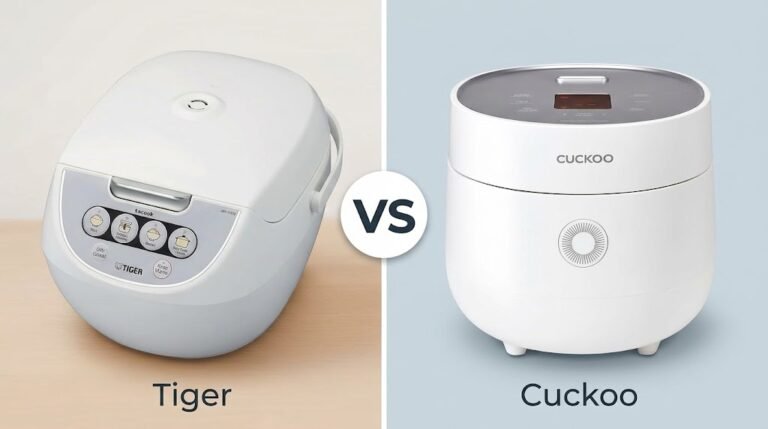
If you want hassle-free rice, choosing between a Toshiba vs Cuckoo Rice Cooker can feel tough. Both brands use smart fuzzy logic technology to adjust cooking times on the fly, but they target different home cooks. The Toshiba is built like a heavy-duty kitchen workhorse, while the Cuckoo is a sleek, modern machine made for speed.
After weeks of cooking white rice, brown rice, and oatmeal daily in both machines, I found clear differences in how they perform. Whether you need a rice cooker for a family of four or a small kitchen, this real-world comparison will show you which one is worth your hard-earned money. Weighing the pros and cons of each model will help you decide which is better for your home.
Side-by-Side Specs Comparison
Before we dive into my daily kitchen testing, let us look at how these two fuzzy logic models match up on paper. Here are the key specifications for these popular cookers.
| Feature | Toshiba Micom Rice Cooker | Cuckoo Micom Rice Cooker |
|---|---|---|
| Price Tier | Mid-range | Mid-range |
| Capacity (Cups Uncooked) | 5.5 Cups | 6 Cups |
| Heating Type | Fuzzy Logic (Micom) | Fuzzy Logic (Micom) |
Be sure to verify the current prices and specs online before making your final purchase decision.
Unboxing and First Impressions
Unboxing these two felt very different right from the start. The Toshiba came with a heavy, thick inner pot, a plastic measuring cup, a sturdy rice paddle, and a steam basket. There was a slight new-appliance plastic smell when I first heated it up, but it went away quickly after a quick steam cycle. The manual was thick but very easy to follow, making the first batch of jasmine rice simple to start.
The Cuckoo had a lighter feel with a more futuristic, rounded design. In its box, I found the measuring cup, rice paddle, and a simple manual. I noticed that the included measuring cup is about 180 ml, which is smaller than a standard kitchen cup. My very first batch of sushi rice in the Cuckoo turned out great, though the touch panels and icons took a second look at the manual to understand.
Build Quality and Materials
A great cooker needs to feel solid on your counter, and both of these units show great build quality. Let us look at how their parts hold up to daily wear and tear.
Inner Pot Material and Coating
The Toshiba features a very thick, multi-layer pot with a durable non-stick coating that feels heavy in the hand. The Cuckoo has a lighter inner pot, but its non-stick coating is incredibly slick, making sticky rice slide right out.
Lid Design and Steam Vent
Toshiba uses a simple button release with a removable inner lid that makes cleaning starchy buildup simple. The Cuckoo has a detachable inner lid as well, and its steam vent is easy to twist off and rinse under the tap.
Heating Plate and Controls
The heating plate inside the Toshiba is wide and flat, distributing heat well. The control panel uses clear buttons and a bright LCD display, whereas the Cuckoo uses a touch-sensitive panel that looks great but can register accidental touches.
Cord, Handle, and Overall Sturdiness
The Toshiba has a handy retractable power cord and a strong carrying handle. The Cuckoo has a detachable cord which is nice for storage, but it takes up slightly more countertop space due to its rounded shape.
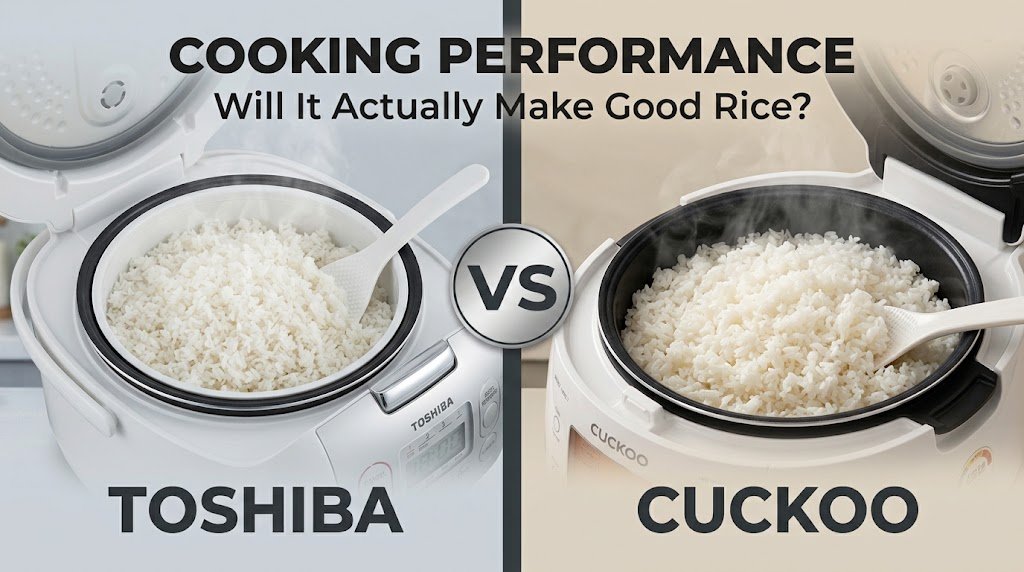
Cooking Performance — Will It Actually Make Good Rice?
The main job of any cooker is to deliver great rice texture, and this is where fuzzy logic shines. After weeks of daily use, I noticed some real differences in grain separation and taste.
My white rice batches came out consistently fluffy in the Toshiba, with excellent grain separation and no mushy spots. It is the best rice cooker for brown rice if you like a soft, fully bloomed grain that is easy to chew. The Cuckoo excels at sushi rice, delivering sticky yet distinct grains with a glossy shine. It also has a great quick cook mode that saves time when you are in a rush on a busy weeknight.
Cooking Speed and Convenience
Cooking speed is often a trade-off when using a smart rice cooker with timer functions. Let us look at how long these cookers take to finish a batch.
| Feature | Toshiba Micom Rice Cooker | Cuckoo Micom Rice Cooker |
|---|---|---|
| White Rice Cook Time | Shorter | Shorter |
| Brown Rice Cook Time | Longer | Shorter |
| Delay Timer | Dual delay timer | Single delay timer |
If you are always in a hurry, the difference between these cook times might make or break your routine. The Cuckoo is slightly faster overall, but setting the delay timer on the Toshiba the night before and waking up to fresh oats is incredibly easy.
Keep-Warm Performance and Rice Freshness
A good keep-warm function should keep your rice fresh for hours without drying it out or turning it yellow. Here is how both machines handled staying warm over a long workday.
| Feature | Toshiba Micom Rice Cooker | Cuckoo Micom Rice Cooker |
|---|---|---|
| Keep-Warm Duration | Up to 24 hours | Up to 12 hours |
| Rice Feel After 2 Hours | Perfect and moist | Fluffy and hot |
| Edge Yellowing or Crusting | Minimal after 12 hours | Slight dry edges after 8 hours |
After four hours, the white rice in the Toshiba still tasted like it was just cooked. The Cuckoo kept rice warm and soft, but if left for over eight hours, I noticed a slight yellowing around the edges. For the best taste, storing leftovers in a sealed container in the fridge is always best.
Design and Controls
Your rice cooker will likely sit on your counter, so the look and user interface are highly important. Here is a comparison of how they are designed and controlled.
| Feature | Toshiba Micom Rice Cooker | Cuckoo Micom Rice Cooker |
|---|---|---|
| Control Panel and Display | LCD with physical buttons | Touch control panel |
| Lid Type and Handle | Push-button lid with handle | Push-button lid with handle |
| Countertop Footprint | Compact, boxy | Rounded, slightly wider |
The Toshiba feels very traditional with its clear menu presets and physical buttons that give a satisfying click. The Cuckoo looks much more modern in a small kitchen, but the touch buttons can sometimes be hard to read in low light.
Noise, Steam, and Smell
Neither of these cookers is loud, but they do have distinct sounds and steam behaviors. The Toshiba has a gentle beep to let you know the cycle is done, and its steam vent releases a steady, quiet stream of vapor. There was no weird plastic smell after the first use, which was a huge plus for my small kitchen.
The Cuckoo is a bit more vocal, with a louder alert sound that can ring through the house. It can beep loudly at 6 a.m. while everyone sleeps if you set it early. It releases steam in shorter, slightly more intense puffs, and you will want to make sure it is not directly under your wooden cabinets.
Capacity and Portion Control
Getting the right rice-to-water ratio is key to avoiding soggy or dry rice. Let us look at how these units handle different batch sizes.
| Feature | Toshiba Micom Rice Cooker | Cuckoo Micom Rice Cooker |
|---|---|---|
| Measuring Cup Included | Yes, 180 ml cup | Yes, 180 ml cup |
| Water Line Clarity | Very clear, engraved lines | Clear, printed lines |
| Best Batch Size | 2 to 4 cups | 2 to 4 cups |
Both machines handle small batches of just one cup quite well, making them great for one person as well. However, they are perfect for a family size suitability batch, easily feeding up to six people with warm, fresh rice.
Ease of Use and Daily Routine
How much work is it to use these cookers every single day? Here is my breakdown of the cleanup and daily operation.
| Task | Toshiba Micom Rice Cooker | Cuckoo Micom Rice Cooker |
|---|---|---|
| Inner Pot Cleanup | Very easy, wipe clean | Quick rinse, non-stick |
| Lid and Vent Cleanup | Removable parts, easy | Removable inner lid |
| Risk of Boil-Over | None, very well controlled | None, steam cap works well |
Both units offer removable parts, but I highly recommend hand washing the removable inner pot to protect the non-stick coating. The overall ease of cleaning makes both of these cookers a joy to use during a hectic dinner rush.
Performance and Durability Over Time
After weeks of putting both cookers through their paces, I have not noticed any major wear. The Toshiba inner pot coating looks as pristine as day one, with no scratches from the plastic rice paddle. The hinge on the lid remains tight, and the automatic shut-off works perfectly every time.
The Cuckoo has also held up very well, with its glossy exterior remaining easy to wipe down. Its non-stick coating is still incredibly slick, though the touch buttons require a clean hand to respond properly. Both machines are built to last for years of daily cooking.
Price and Value for Money
Both products sit in the mid-range price tier, making them a solid step up from basic one-switch cookers. Is it worth it to spend a bit more on a smart machine? If you cook rice multiple times a week, yes.
The value for money here is excellent for both, as they replace the need for constant monitoring over a hot stove. You can find both of these brands at major online marketplaces, and they often see slight discounts. Make sure to check the current price online to see which model fits your budget today.
How It Compares to Similar Products
To give you a better idea of how they stack up, let us see how they compare to other popular options on the market.
Zojirushi Micom Rice Cooker
The Zojirushi is a premium fuzzy logic option that offers incredibly precise rice texture control. While it is more expensive, its build quality is legendary, though its cooking time is slightly longer than both the Toshiba and Cuckoo.
Tiger Micom Rice Cooker
The Tiger model is another strong contender that features a synchronized cooking plate for making a main dish while your rice cooks. It is an excellent choice for one-pot meals, though its keep-warm function can dry out the edges faster than the Toshiba.
Who Should Buy Which?
Here is a quick guide to help you decide which is better for your home.
Buy the Toshiba Micom Rice Cooker if:
- You want a heavy-duty inner pot that feels premium and durable.
- You cook a lot of brown rice and want the best soft texture.
- You want a handy retractable power cord for easy countertop storage.
- You prefer simple, physical buttons that click.
Buy the Cuckoo Micom Rice Cooker if:
- You want slightly faster cooking times for daily meals.
- You love a sleek, modern aesthetic with touch controls.
- You want a larger 6-cup capacity in a lightweight design.
- You make a lot of sticky or sushi rice.
Consider Neither If:
- You only cook rice once a month and want a simple, budget-friendly one-touch cooker.
- You have extremely limited countertop space and need a tiny travel-sized model.
Long-Term Ownership Considerations
Owning a fuzzy logic rice cooker means taking care of the delicate non-stick coating over the years. To keep getting great results, never use metal spoons or harsh abrasive sponges on the inner pot.
Replacement gaskets and inner pots are generally easy to find online for both brands, ensuring your machine can last for a long time. The energy use of these models is very low compared to cooking on a stovetop, and the peace of mind you get from the automatic shut-off is priceless.
Capacity and Energy Use: Toshiba vs Cuckoo Rice Cooker
When looking closely at the Toshiba vs Cuckoo Rice Cooker, capacity is a major factor for growing households. The Toshiba has a 5.5-cup uncooked capacity, which yields about 11 cups of cooked rice, making it perfect for a family of four. The Cuckoo offers a slightly larger 6-cup uncooked capacity, which is great if you love meal prep or hosting big gatherings.
Both machines use standard household wattage, meaning their energy use is highly efficient. They easily handle small batches of one or two cups of jasmine rice just as well as full batches, giving you great flexibility regardless of your meal size.
See More about Tiger Vs Panasonic Rice Cooker: The Ultimate Guide
Final Verdict: Toshiba vs Cuckoo Rice Cooker
After weeks of testing the Toshiba vs Cuckoo Rice Cooker side by side, both proved to be excellent additions to any kitchen. The Toshiba wins for those who want a heavy-duty, traditional cooker that excels at making soft, perfect brown rice with an incredibly durable pot.
However, the Cuckoo is the better choice for busy homes that prioritize modern design and faster cooking times. Whichever you choose, both of these fuzzy logic cookers offer fantastic value for money and will make soggy, scorched rice a thing of the past.