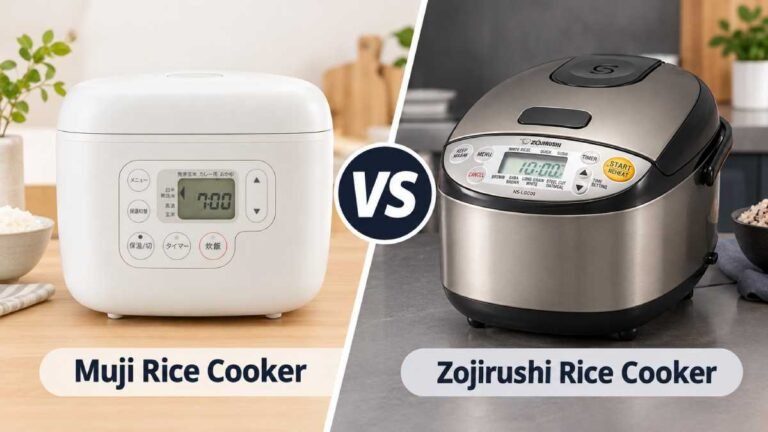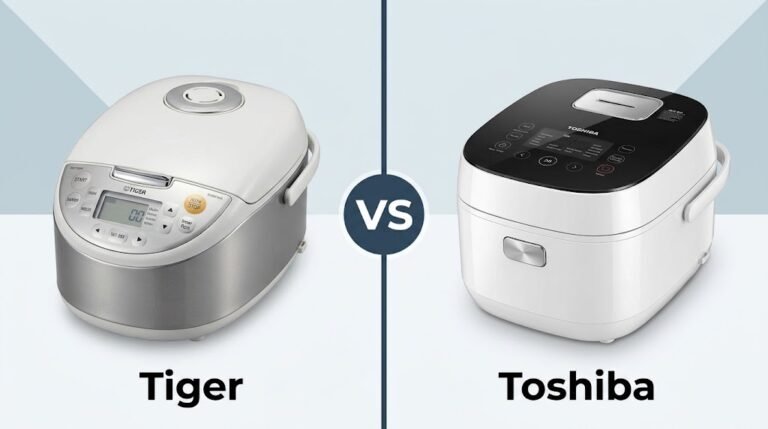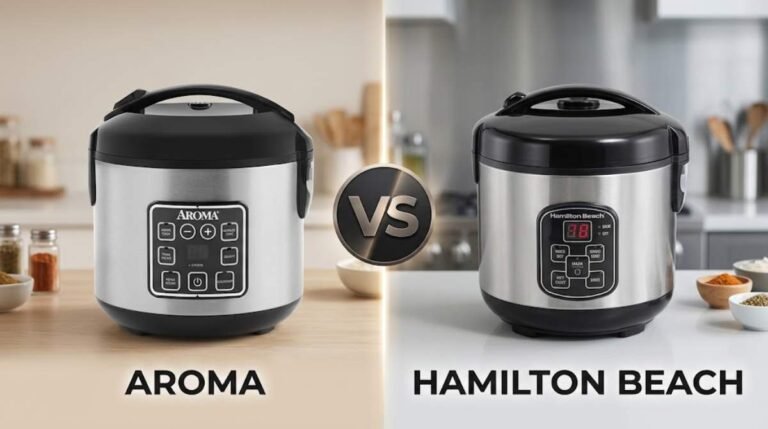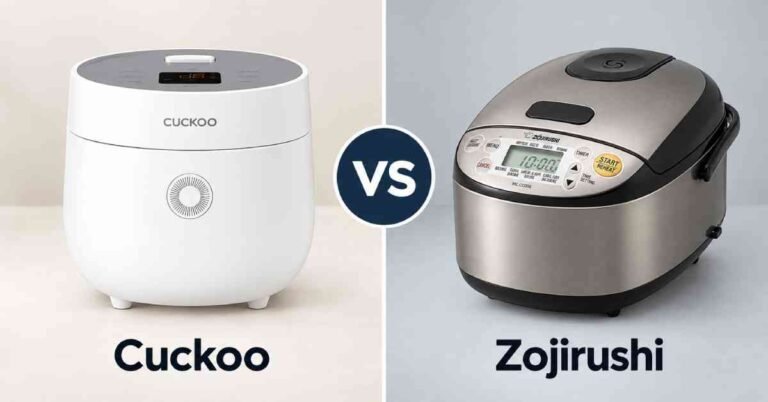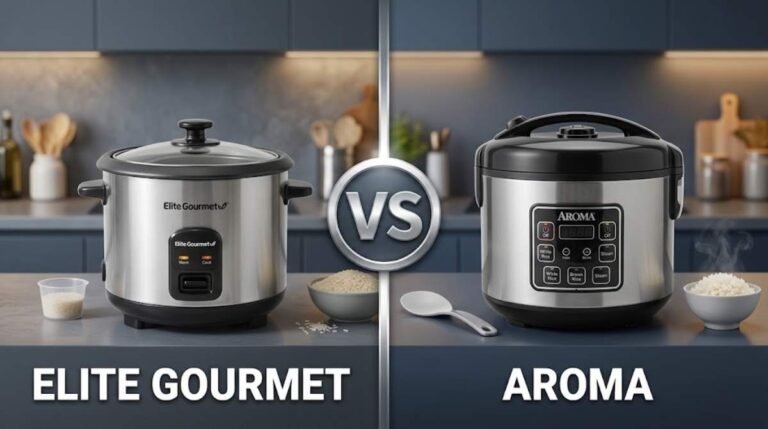
If you want to cook rice at home, you have probably looked at the Aroma rice cooker vs Zojirushi debate. After spending weeks cooking white rice, brown rice, and oatmeal in both machines, I found that they serve very different kitchens. The Aroma works best as a budget multicooker combo for busy students or families. The Zojirushi uses fuzzy logic to make perfect rice every single time, which is ideal for serious home cooks.
This hands-on review looks at how they perform in a real, busy kitchen. I watched them boil, tasted their grain texture, and cleaned their sticky pots. Here is my honest guide to their pros and cons to help you choose the right one for your budget and family.
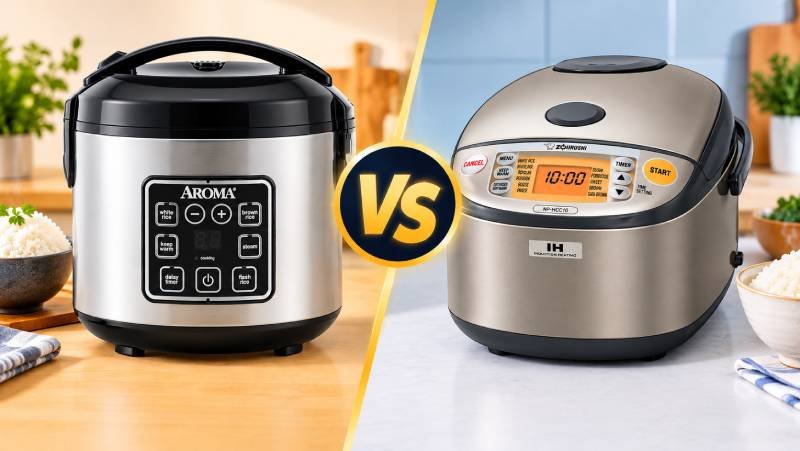
Side-by-Side Specs Comparison
Let us look at the main specifications of these two cookers. This will show you how they compare in size, power, and built-in features.
| Feature | Aroma Professional | Zojirushi Micom |
|---|---|---|
| Price Tier | Budget | Premium |
| Capacity (Cups Uncooked) | 10 Cups | 5.5 Cups |
| Wattage | 860W | 610W |
Make sure to check the current price and specs online before you make your final choice. Each brand offers slightly different features depending on the exact model year.
Unboxing and First Impressions
Unboxing these two units shows a clear difference in design philosophy. Inside the Aroma box, I found the cooker, a plastic steam basket, a plastic measuring cup, and a rice paddle. It felt light and a bit plastic-heavy, with a slight factory smell during the first test run. The Zojirushi came in a sturdier box with a thicker spatula, a spatula holder that clips to the side, and its own green measuring cup. It felt solid, dense, and premium right out of the bubble wrap.
For my first test, I used the included measuring cup, which is smaller than a standard kitchen cup. It holds about 180 ml of grain rather than the standard 240 ml. The first batch of jasmine rice in the Aroma was quick but had a small amount of foam near the steam vent. The Zojirushi took its time, played a little tune when it started, and produced perfectly fluffy rice with no mess at all.
Build Quality and Materials
A cooker needs to survive daily kitchen use without breaking or losing its coating. Here is how these two models compare in terms of build quality.
Inner Pot Material and Coating
The Zojirushi has a heavy, thick inner pot with a high-grade non-stick coating. It feels substantial in your hand and resists scratching. The Aroma uses a much lighter inner pot. Its non-stick coating works well but feels thin, so you must use the plastic paddle to avoid scratches.
Lid Design and Steam Vent
The Zojirushi features a removable inner lid that makes easy cleanup simple. Its steam vent traps condensation well. The Aroma has a heavy lid with a steam vent, but the inner lid is not removable, which makes wiping it down a bit harder after a starchy boil.
Heating Plate and controls
the Aroma has a standard heating plate at the bottom and a simple digital screen. The buttons feel soft when pressed. The Zojirushi has a bright LCD display and tactile buttons that click nicely. Its fuzzy logic microchip adjusts the heat during the cycle.
Cord, Handle, and Overall Sturdiness
The Zojirushi features a retractable power cord which is excellent for a small kitchen. It has a sturdy swing handle for carrying. The Aroma has a detachable power cord that you have to store inside the pot and a fixed handle on the outer body.
Safety Features
Both units have an automatic shut-off feature to prevent overheating. The exterior walls of both cookers stay cool to the touch during cooking. The Zojirushi feels more stable on the counter due to its rubber feet and lower center of gravity.
Cooking Performance — Will It Actually Make Good Rice?
The main test of any rice cooker is how it handles different types of grains. I cooked several batches of white rice, brown rice, and jasmine rice to see the difference.
When comparing the Aroma rice cooker vs Zojirushi, the difference in rice texture is easy to see. The Zojirushi makes fluffy rice with excellent grain separation and a beautiful shine. White rice comes out tender but firm, never mushy. The Aroma cooks white rice well, but it lacks that perfect grain definition. The bottom layer can sometimes get a little soft if you do not fluff it immediately after cooking.
For brown rice, the Zojirushi shines thanks to its dedicated brown rice setting. It pre-soaks the tough grains, turning them soft and chewy. The Aroma brown rice setting is faster but leaves the rice a bit more firm. If you cook mixed grains or sushi rice daily, the Zojirushi is worth the money. It gives a consistent texture even if your rice-to-water ratio is slightly off.
Cooking Speed and Convenience
On busy weeknights, speed can be just as important as texture. Let us look at how fast these cookers get dinner on the table.
| Feature | Aroma Professional | Zojirushi Micom |
|---|---|---|
| White Rice Cook Time | Shorter (30-35 mins) | Longer (50-60 mins) |
| Brown Rice Cook Time | Shorter (45-50 mins) | Longer (85-100 mins) |
| Delay Timer | Yes | Yes |
Both machines offer a quick cook option, which cuts cooking time down significantly. However, the faster speed can result in slightly drier rice on both units.
The Aroma is the clear speed winner here. If you need white rice in thirty minutes, it delivers. The Zojirushi takes almost an hour for white rice because it spends time soaking and warming the grains gently. If you plan ahead using the delay timer, the Zojirushi is great, but the Aroma is better for last-minute meals.
Keep-Warm Performance and Rice Freshness
A good keep-warm function keeps rice tasting fresh for hours without drying it out or turning it yellow.
| Feature | Aroma Professional | Zojirushi Micom |
|---|---|---|
| Keep-Warm Duration | Up to 12 Hours | Up to 24 Hours |
| Rice Feel After 2 Hours | Moist and soft | Fresh and fluffy |
| Rice Feel After 8 Hours | Dry on the edges | Soft and warm |
Using the keep-warm function for too long can ruin good rice, but some machines handle it much better than others.
The Zojirushi keeps rice fresh for an incredibly long time. Even after eight hours, the rice does not smell or develop dry, crusty yellow spots on the edges. The Aroma keep-warm function is best for short periods. If you leave rice in the Aroma for more than three hours, the bottom layer begins to dry out and stick to the inner pot coating.
Design and Controls
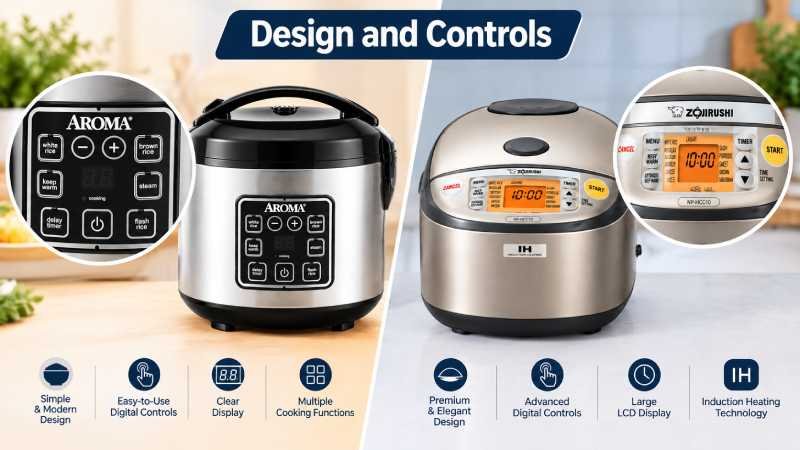
How a kitchen appliance looks and operates affects how much you will actually use it. Here is how their interfaces and designs compare.
| Feature | Aroma Professional | Zojirushi Micom |
|---|---|---|
| Exterior Material | Stainless Steel / Plastic | Brushed Stainless / Plastic |
| Control Panel and Display | Basic Digital Screen | Clear LCD Display |
| Lid Type and Handle | Push-button pop lid | Push-button pop lid |
Both cookers look neat on a counter, but their user interfaces are aimed at different types of cooks.
The Zojirushi LCD display has a clock and a clear delay timer that is easy to program. The menu presets are easy to scroll through with a simple button. The Aroma has more buttons on its front because it is a multi-function cooker. It has dedicated buttons for sauté-then-simmer, slow cook, and steam, which takes up more space but makes one-pot meals very easy.
Noise, Steam, and Smell
Noise level is something you only think about once the cooker is in your kitchen. The Zojirushi is very quiet during its cooking cycle, only making a soft boiling sound. Its most famous feature is the cheerful musical beep that signals the start and end of cooking. The Aroma makes a simple, loud electronic beep. Both models release steam through a top steam vent, but the Zojirushi controls the steam flow better.
The Aroma can sometimes release a more active puff of starchy steam, which might leave a light residue on the underside of upper cabinets. Neither cooker leaves a strong plastic smell after the first wash and run. The Zojirushi keeps cooking odors sealed inside well, while the Aroma multicooker allows soup or curry smells to escape slightly more during its slow cook mode.
Capacity and Portion Control
Getting the right amount of rice is all about using the correct measuring cup and water lines inside the pot.
| Feature | Aroma Professional | Zojirushi Micom |
|---|---|---|
| Measuring Cup Included | Yes (180 ml) | Yes (180 ml) |
| Water Line Clarity | Medium | High |
| Best Batch Size | 4 to 8 Cups | 2 to 4 Cups |
Make sure you use the measuring cup that comes in the box instead of a standard kitchen cup to avoid dry rice.
The Aroma has a large capacity in cups, making it great for a family of four or larger gatherings. However, it struggles slightly with small batches of just one cup of uncooked rice. The Zojirushi can handle single-serve portions perfectly. Its water line markings are embossed deeply into the non-stick coating, making it easy to get the right rice-to-water ratio every time.
Ease of Use and Daily Routine
A kitchen tool should make your life easier, not add to your dishwashing chore at the end of a long day.
| Task | Aroma Professional | Zojirushi Micom |
|---|---|---|
| Inner Pot Cleanup | Easy | Very Easy |
| Lid and Vent Cleanup | Moderate (fixed lid) | Easy (removable lid) |
| Storage Convenience | Medium (bulky) | High (retractable cord) |
Washing up is a big part of the daily routine, and small design choices make a massive difference here.
The removable inner lid of the Zojirushi makes easy cleanup a joy because you can wash it under running water. The Aroma inner lid is fixed, so you must wipe it down with a damp sponge. This can be tricky if you cooked a starchy batch of oatmeal. However, the Aroma dishwasher-safe parts, like the steam tray, save time if you have room in your machine.
Performance and Durability Over Time
After weeks of daily use, the Zojirushi looks and cooks exactly like it did on day one. Its heavy pot and premium non-stick coating resist wear exceptionally well, even if you accidentally use a metal spoon once or twice. The buttons remain clicky, and the seal around the lid stays tight. It is a machine built to last for a decade of daily rice cooking without losing its touch.
The Aroma holds up well for its price, but you can see small signs of wear sooner. The inner pot coating is thinner, so you must use the plastic rice paddle to prevent scratches. The lid spring feels slightly looser over time, and the outer plastic body can scuff. It is still a highly reliable budget option, but you will need to handle the pot with more care if you want it to last.
Price and Value for Money
Deciding between these two brands often comes down to your budget and how often you eat rice.
The Aroma sits firmly in the budget price tier, offering excellent value for money. It does more than cook rice; it works as a slow cooker and a steamer. For a busy student or a family on a budget, it is an easy buy that pays for itself quickly. You can find it online or in major retail stores, and sales are quite common throughout the year.
The Zojirushi is a premium investment. The price gap is wide, but it is justified if you eat rice daily. The build quality, the fuzzy logic consistency, and the long-term durability make it worth the money. It has a low yearly cost of ownership because you rarely need to buy replacement parts. Check the current price online to see how it fits your household budget.
How It Compares to Similar Products
To give you more perspective, let us look at how these two brands compare to other popular options on the market today.
Instant Pot Multi-Use Cooker
The Instant Pot is a pressure cooker that cooks rice very quickly, but it lacks the texture control of the Zojirushi. It has a stainless steel inner pot that can sometimes cause rice to stick. It is a great multicooker but not a dedicated rice specialist.
Hamilton Beach Digital Rice Cooker
This budget competitor is similar to the Aroma in price and features. It offers simple presets and a steam basket. However, its build quality is slightly lower, and it tends to suffer from more boil-over foam compared to the Aroma.
Aroma rice cooker vs Zojirushi: Who Should Buy Which?
Here is a quick summary to help you decide which machine deserves a permanent spot on your kitchen counter.
Buy the Aroma Professional if:
- You are on a tight budget and want great value for money.
- You want a multicooker combo that can steam vegetables and slow cook chili.
- You need to feed a family of four or more on a budget.
- You need your white rice cooked quickly on busy weeknights.
Buy the Zojirushi Micom if:
- You eat jasmine rice, brown rice, or sushi rice multiple times a week.
- You care deeply about perfect rice texture and grain separation.
- You want a premium build quality that lasts for many years.
- You love using a delay timer to have hot rice ready when you wake up.
Consider Neither If:
- You have an extremely small kitchen or dorm room and only need single-serve rice (look for a mini travel cooker instead).
Long-Term Ownership Considerations
Owning an appliance long-term means thinking about replacement parts, wear and tear, and ongoing maintenance.
To keep your rice cooker performing well, you must care for the non-stick coating. Never use metal utensils or abrasive scrubbers inside either pot. Zojirushi makes it easy to buy replacement inner pots and gaskets online if they ever wear out. Aroma replacement parts are also available but can sometimes be harder to source for older budget models.
The warranty on both products is typically one year. The Zojirushi has a very low energy use footprint despite its long cooking times because its heating element is highly efficient. Over hundreds of batches, the Zojirushi will maintain its perfect cooking performance, while the Aroma might show a slight drop in heat consistency after a few years of heavy multicooker use.
Capacity and Energy Use: Aroma rice cooker vs Zojirushi
Understanding how much rice you can make in the Aroma rice cooker vs Zojirushi is key to planning your family meals.
The Aroma has a large capacity of up to ten cups of uncooked rice, which yields twenty cups of cooked rice. This makes it the best choice for large gatherings or meal prep. Its wattage is higher to heat the larger pot quickly. However, cooking small batches can result in a dry layer at the bottom because the heat is less controlled.
The Zojirushi has a smaller capacity of five and a half cups of uncooked rice. This is the ideal size for a family of four. It excels at handling small batches, even down to a single cup of rice. The energy use is modest, and it does not draw excessive power while resting on the keep-warm function.
See more about: Toshiba Vs Zojirushi Rice Cooker: Ultimate 2026 Guide
Final Verdict
Both brands have earned their strong reputations, but they serve completely different cooking styles and budgets.
If your main goal is to get perfectly textured, restaurant-quality rice, the Zojirushi is the clear winner. Its fuzzy logic technology and exceptional keep-warm performance make it a premium kitchen tool that is worth every penny. It treats cooking as an art, ensuring your sushi rice and brown rice are always flawless.
However, if you want a versatile appliance that can steam dumplings, slow-cook a soup, and make a quick pot of rice, the Aroma offers incredible value. It is the practical choice for busy families who need speed, large capacity, and multi-function cooking without spending a fortune. Choose the one that matches your daily routine and budget.