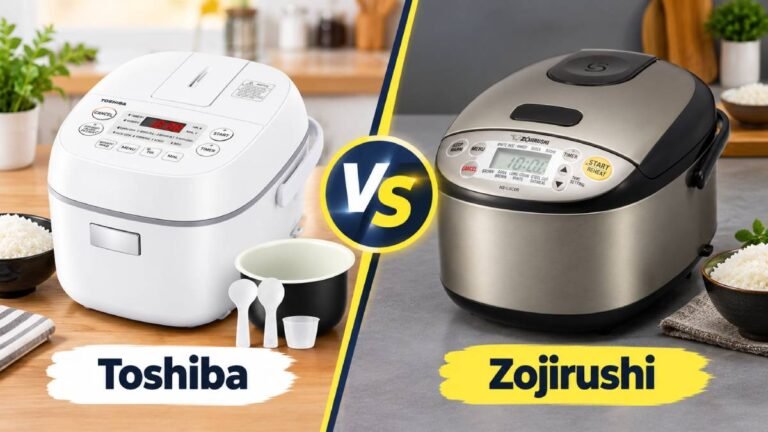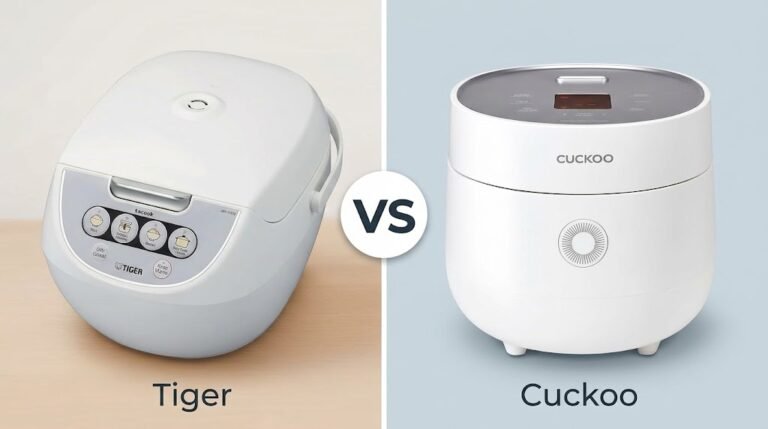
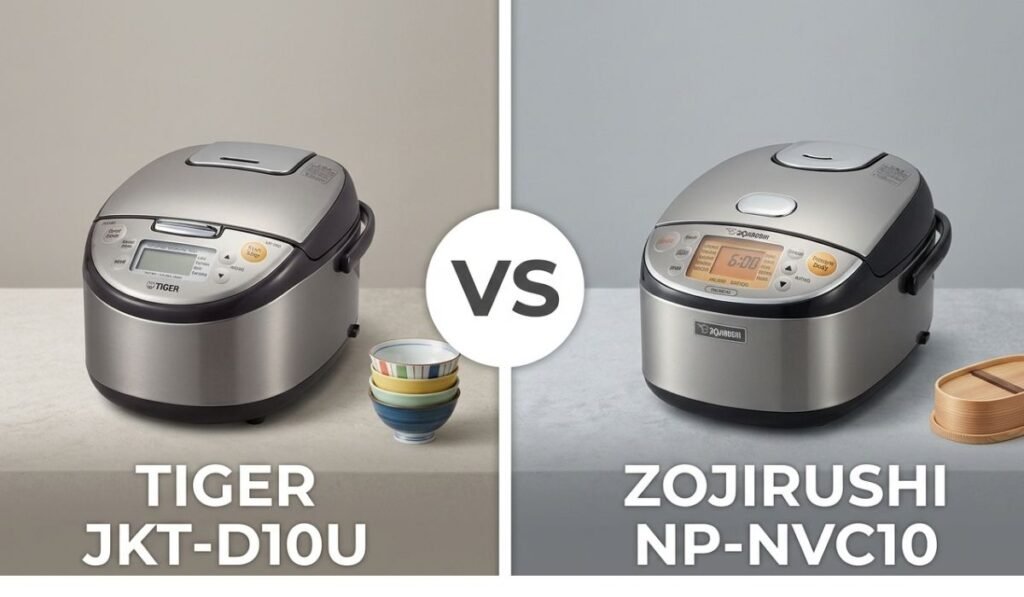
Finding a good rice cooker can make your kitchen life so much simpler. If you want to make great grains every day, comparing a Tiger vs Zojirushi rice cooker is the perfect place to start. These smart machines use microchips to adjust the heat as they cook, which prevents burnt pots and messy boil-overs.
After weeks of cooking jasmine, brown, and sushi rice in my own kitchen, I noticed clear differences between these two brands. One brand delivers a softer, traditional bite, while the other excels at fast meals and multi-cooking. Whether you cook for a family of four or just want to prep meals for one person, this guide will help you choose.
Side-by-Side Specs Comparison
Let us look at how these two Micom giants stack up on paper before we get into the kitchen tests. These details show how each machine handles the basic cooking tasks.
| Feature | Zojirushi NS-TSC10 | Tiger JBX-A10U |
|---|---|---|
| Price Tier | Premium | Mid-range |
| Capacity (Cups Uncooked) | 5.5 Cups | 5.5 Cups |
| Heating Type | Micom (Fuzzy Logic) | Micom (Fuzzy Logic) |
Make sure to check the current price and specs online before buying, as brands sometimes update their models.
Unboxing and First Impressions
I unpacked both units on my counter to see what came in each box. Each machine includes a plastic measuring cup, a non-scratch rice paddle, and a steaming tray. The Zojirushi felt quite solid with a smooth lid and a tidy retractable power cord. The Tiger had a lighter feel but offered a very clean, modern design and a thick inner pot.
There was a faint new-appliance plastic smell during the first heat-up cycle on both, but it went away quickly after a quick rinse. One key thing to note is that the included measuring cup is smaller than a standard kitchen cup. It holds about 180 ml of grain. You must read the manual first because the button icons on the panel can look a bit confusing at first glance. My first batch of white rice in both came out beautifully with zero starch foam bubbling out of the steam vent.
Build Quality and Materials
Having used both machines daily, the difference in materials and design becomes quite clear over time. Let us break down how each cooker is built to handle the heat of a busy kitchen.
Inner Pot Material and Coating
The Zojirushi features a heavy inner pot with a dark non-stick coating and clear water level lines. The Tiger pot also has a premium feel, utilizing a multi-layer black coating that seems highly scratch-resistant. Both pots feel durable, but you must avoid metal spoons to keep the coating safe.
Lid Design and Steam Vent
Zojirushi uses a robust latch lid with a removable inner lid for easy washing. Its steam vent does a great job of letting steam escape without spraying hot water on the counter. The Tiger has a simple push-button lid that pops open smoothly, and its steam cap is simple to twist off and rinse.
Heating Plate and controls
both machines use a bottom heating plate that works with a microchip to distribute warmth. The Zojirushi has a clear LCD display with responsive buttons that make selecting your program easy. The Tiger control panel is flat, easy to wipe down, and features very bright text.
Cord, Handle, and Overall Sturdiness
I love the retractable cord on the Zojirushi, as it keeps my small kitchen counter tidy. The Tiger uses a removable power cord which you can store inside the pot when not in use. Both have strong carrying handles that feel safe and secure when moving the machines.
Safety Features
Both units offer an automatic shut-off feature to prevent overheating. Their outer bodies stay cool to the touch even during a long cook cycle. The stable rubber feet on both bases prevent any slipping on slick countertops.
You can read also instant zest vs aroma rice cooker
Cooking Performance — Tiger vs Zojirushi Rice Cooker Grains
At the end of the day, the real question is how well these machines cook different types of grains. Here is my experience using the Tiger vs Zojirushi rice cooker for my daily meals.
My white rice tests showed a slight difference in the final rice texture. The Zojirushi produces fluffy rice with excellent grain separation and a glossy shine. It is the best for sushi rice because the sushi setting lets you get that perfect, slightly sticky bite. The Tiger also makes great white rice, but the texture is a bit firmer and the grain definition is highly pronounced.
For healthy grains, the Zojirushi is the best rice cooker for brown rice because its brown rice setting slowly preheats the grain. This makes the brown rice texture soft and chewy rather than tough. The Tiger brown rice setting is faster, but the grains come out slightly firmer, which is great if you like more bite. Both handle jasmine rice beautifully, keeping the sweet aroma and light texture intact. Small batches of just one cup cook just as evenly as a full pot in both machines.
Cooking Speed and Convenience
Let us look at how long you will wait for your dinner to cook on a busy weeknight. This table shows how the two models compare on speed and programming.
| Feature | Zojirushi NS-TSC10 | Tiger JBX-A10U |
|---|---|---|
| White Rice Cook Time | Shorter (About 50 mins) | Shorter (About 45 mins) |
| Brown Rice Cook Time | Longer (About 85 mins) | Shorter (About 70 mins) |
| Quick Cook Option | Yes | Yes |
These Micom machines prioritize quality over speed, so cooking takes longer than a basic cooker. The Tiger is generally faster across most settings, making it highly convenient for a family of four that needs dinner on the table quickly.
Keep-Warm Performance and Rice Freshness
A good keep-warm function is vital if your family eats meals at different times of the day. Here is how well these cookers preserve your grains over several hours.
| Feature | Zojirushi NS-TSC10 | Tiger JBX-A10U |
|---|---|---|
| Keep-Warm Duration | Up to 12 hours | Up to 12 hours |
| Rice Feel After 2 Hours | Fresh and moist | Fresh and moist |
| Rice Feel After 8 Hours | Soft and good | Slightly dry at edges |
The Zojirushi excels here; I set the delay timer the night before, and the rice was perfect for breakfast with no yellowing. Leaving rice in the Tiger for up to eight hours worked well, though the grains near the edges dried out just a tiny bit. For storing leftovers, it is best to pack the rice in an airtight container in the fridge rather than keeping it on warm for too long.
Design and Controls
The physical layout of your appliance dictates how often you will actually want to use it. Here is a comparison of their design footprints and control interfaces.
| Feature | Zojirushi NS-TSC10 | Tiger JBX-A10U |
|---|---|---|
| Exterior Material | Stainless Steel | Stainless Steel and Plastic |
| Control Panel and Display | Clear LCD with Clock | Flat Panel with LCD |
| Cord Storage | Retractable Cord | Detachable Cord |
The Zojirushi has a slightly larger countertop space footprint but feels like a classic, high-end appliance. Its menu presets are highly intuitive, although the beep volume at the end of the cycle is quite loud. The Tiger has a more compact, boxy design that fits easily in a small kitchen.
Noise, Steam, and Smell
Both of these cookers operate very quietly, with only a gentle hum during the boiling phase. The steam release is well-managed through the steam vent on the lid, but you still want to avoid placing them directly under low wooden cabinets. The steam smells like sweet, cooking starch, which makes the kitchen feel cozy.
During the first few uses, you might notice a very light warm-metal smell from the heating plate, but it is not offensive. The Zojirushi beeps cheerfully when the cooking time starts and ends. The Tiger uses a simple, clear beep that is easy to hear from the next room. Neither machine creates loud or disruptive noises, making them great for quiet apartments.
Capacity and Portion Control
Getting the right amount of food is easy when you understand the measuring system of these appliances. Let us look at how they handle different batch sizes.
| Feature | Zojirushi NS-TSC10 | Tiger JBX-A10U |
|---|---|---|
| Measuring Cup Included | Yes (180 ml) | Yes (180 ml) |
| Best Batch Size | 2 to 4 cups | 2 to 4 cups |
| Minimum Batch That Works | 1 cup | 1 cup |
Remember that the standard rice cooker measuring cup is about 3/4 of a standard US kitchen cup. Always use the included cup and fill water to the matching lines inside the removable inner pot for the perfect rice-to-water ratio. Cooking just a single cup of rice works perfectly in both, which is great if you are cooking for one person.
Ease of Use and Daily Routine
A rice cooker should make your life easier, not add extra chores to your evening. Here is how these two machines fit into a daily kitchen routine.
| Task | Zojirushi NS-TSC10 | Tiger JBX-A10U |
|---|---|---|
| Inner Pot Cleanup | Very easy (wipe clean) | Very easy (wipe clean) |
| Lid and Vent Cleanup | Moderate (removable lid) | Easy (simple shield) |
| Storage Convenience | High (retractable cord) | Moderate (cord fits inside) |
For daily ease of cleaning, both non-stick coating pots wipe clean with a soft sponge in seconds. Dishwasher-safe parts are limited, so hand washing the inner pot is highly recommended to protect the coating. The Tiger JBX-A10U features a “Synchro-Cooking” mode with its special cooking plate, allowing you to steam a main dish while the rice cooks below, saving tons of time.
Performance and Durability Over Time
After weeks of steady kitchen use, neither machine shows any signs of wear. The non-stick coating on both inner pots remains pristine, with no peeling or scratching. The lid gaskets are still tight and seal perfectly, which prevents any steam leaks during the cooking cycle.
The Zojirushi feels like a tank and has a reputation for lasting over a decade with proper care. The Tiger is also highly durable, and its flat control panel resists wear very well. If you wash the pots by hand and avoid abrasive sponges, both of these cookers will easily last for years of daily service.
Price and Value for Money
Both brands sit in the premium tier of the market, representing a real investment for your kitchen. They are worth the money if you cook rice multiple times a week and care about grain texture. These models are widely available on popular online marketplaces and at major kitchenware retailers.
The Tiger is often priced slightly lower than the Zojirushi, making it a stellar value for money option if you want Fuzzy Logic quality on a friendlier budget. The Zojirushi demands a small premium, but its exceptional keep-warm performance and retractable cord design justify the cost. The yearly cost of ownership for both is very low since they are highly durable and use minimal energy. Be sure to check the current price before making your final decision.
How It Compares to Similar Products
To see how these brands compare to the rest of the market, let us look at a couple of other popular options.
Zojirushi NHS-06 Basic Cooker
This is a simple, one-switch cooker that offers classic budget-friendly convenience. It lacks the advanced Fuzzy Logic microchip, which means you do not get the precise temperature control or texture settings of the premium models. It is highly compact and great for a dorm or a single person, but it is prone to boil-overs and scorched bottom rice if left unattended.
Instant Pot Duo Multicooker
This multi-function cooker can cook rice under pressure, but it lacks the specialized inner pot coating and steam vent system of a dedicated rice cooker. While it is highly versatile for stews and soups, the white rice texture can sometimes turn out a bit dense or sticky. It takes up a lot of countertop space and is not the best rice cooker for brown rice if you want soft, perfectly separated grains.
Who Should Buy Which?
Depending on your cooking style and household needs, one of these machines will be a better fit. Here is a simple guide to help you choose when weighing the pros and cons.
Buy the Zojirushi NS-TSC10 if:
- You priority is the absolute best rice texture and glossy grain separation.
- You love setting a delay timer the night before and need a flawless keep-warm function.
- You have a small kitchen and want a retractable cord for easy countertop storage.
- You regularly make sushi rice or porridge and want dedicated menu presets.
Buy the Tiger JBX-A10U if:
- You want slightly faster cooking times without sacrificing Fuzzy Logic quality.
- You want to cook a main dish and rice at the same time using a steam tray.
- You prefer a modern, boxy design that fits neatly into tight kitchen spaces.
- You want premium performance but prefer a mid-range price point.
Consider Neither If:
- You only cook rice once a month and prefer a cheap, basic one-switch cooker.
- You need an instant pressure cooker that handles massive family-sized stews and roasts.
Long-Term Ownership Considerations
Owning a premium micom rice cooker means planning for the long haul. To keep your machine running perfectly, never wash the inner pot with metal wool or harsh detergents, as protecting the non-stick coating is key. Both Zojirushi and Tiger offer replacement inner pots and gaskets online if yours eventually wear out.
The warranty on both models is typically one year, covering manufacturing defects. Over hundreds of batches, these machines maintain highly consistent results because the internal computer adjusts for slight errors in your water ratio. Their energy use is very efficient, drawing minimal power once they transition to the keep-warm function.
Capacity and Energy Use: Tiger vs Zojirushi Rice Cooker
When comparing the capacity of a Tiger vs Zojirushi rice cooker, both of these 5.5-cup models are highly versatile. This capacity in cups uncooked yields up to 11 cups of cooked rice, which is perfect for a family of four or for weekly meal prep. They handle small batches of a single cup just as efficiently as a full load.
With moderate wattage ratings, their energy use is very low compared to a standard oven or stovetop cook. This makes them highly economical for daily use. Whether you are cooking for one person or hosting a weekend gathering, these units offer the perfect size-to-performance balance for most homes.
Final Verdict
After weeks of side-by-side kitchen testing, both of these premium cookers proved they are worth the investment. The Zojirushi NS-TSC10 is the ultimate choice for the purist who wants unmatched rice texture, exceptional brown rice, and a flawless keep-warm experience. Its classic build quality and smart details like the retractable cord make it a joy to use every day.
On the other hand, the Tiger JBX-A10U stands out for its speed, modern look, and innovative synchro-cooking plate. It offers incredible value for money and is highly practical for busy families. No matter which brand you choose, you will never want to go back to a basic stovetop pot again.