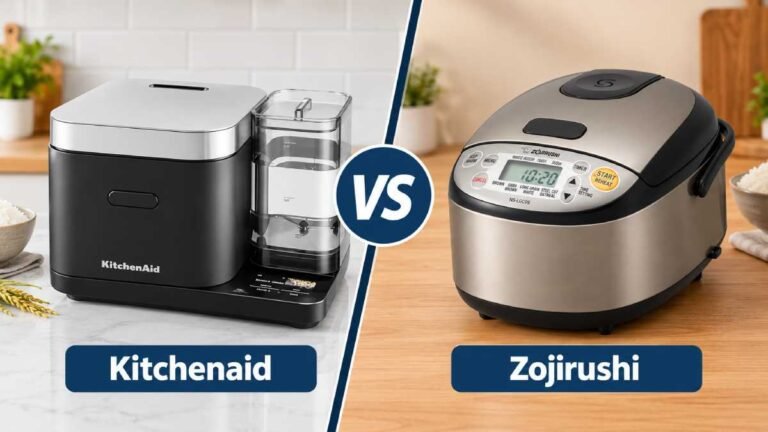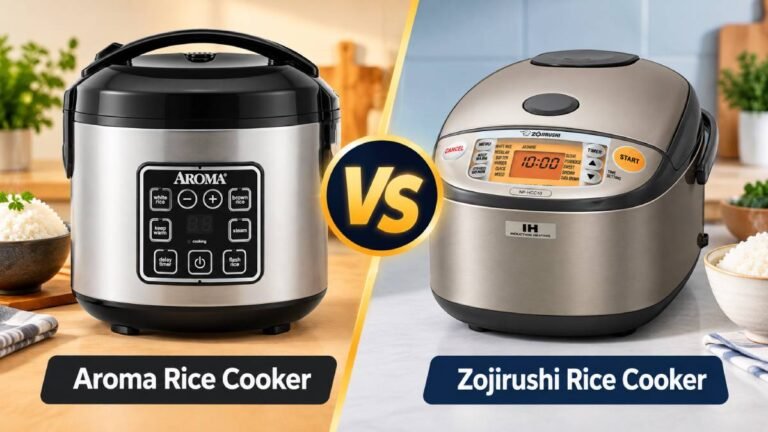
Choosing between the minimalist Muji Rice Cooker vs Zojirushi Micom models comes down to what you value more: clean kitchen aesthetics or advanced cooking performance. If you have a small kitchen and want a beautiful counter, the Muji is tempting. But if you want perfect brown rice every time, the Zojirushi is hard to beat.
After weeks of cooking daily batches of white rice, brown rice, and jasmine rice, I found a clear difference between these two Fuzzy Logic options. One shines for its simple look, while the other is a true kitchen workhorse. It is a classic battle of form versus function.
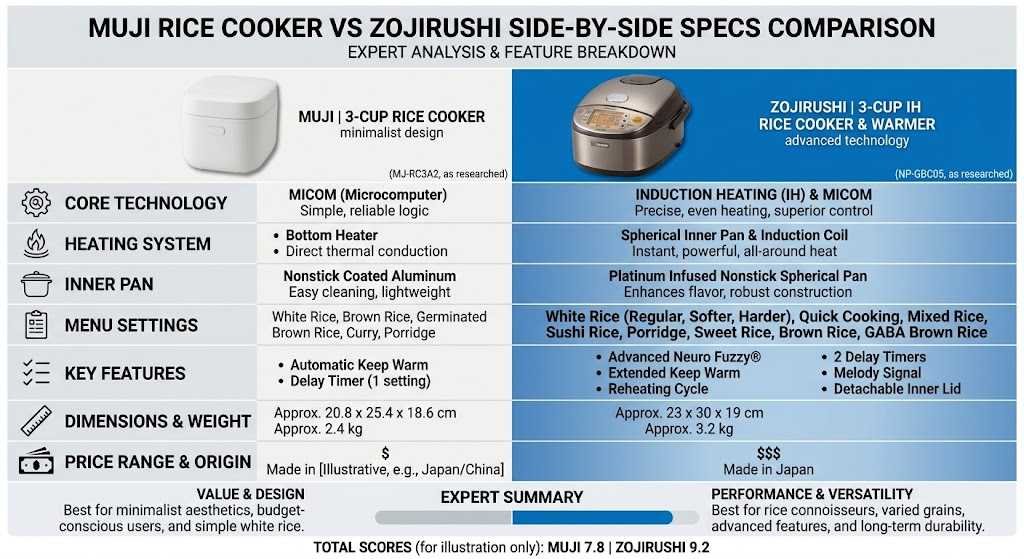
Side-by-Side Specs Comparison
Let us look at how these two compact cookers stack up on paper. Both use smart Fuzzy Logic chips to adjust heat, but they target different styles of cooks.
| Feature | Muji Rice Cooker | Zojirushi Micom Rice Cooker |
|---|---|---|
| Price Tier | Mid-range | Premium |
| Capacity (Cups Uncooked) | 3 Cups | 3 Cups |
| Wattage | 380W | 450W |
Make sure to check the current price and specs before you buy, as models can vary slightly by region. Both of these are designed primarily for smaller households.
Unboxing and First Impressions
Unboxing the Muji Rice Cooker is a visual treat for anyone who loves clean lines. It looks like a smooth white stone, and it even has a tiny ridge on top to hold the included rice paddle. Inside the box, you get a small measuring cup, a simple cord, and a clean manual. The Zojirushi feels much more industrial and stout, coming with its own measuring cup, a plastic holder, and a very detailed guide. Both cups are the standard 180 ml size, which is smaller than a standard kitchen cup of 240 ml.
During the first run, the Muji had a faint new-appliance plastic smell, but it faded quickly after the first boil. The Zojirushi was ready to go right away with no odor. I noticed right away that the Muji buttons are hidden on top, which look great but can be slightly confusing to navigate at first. The Zojirushi LCD display is bright, clear, and very easy to read, making the first batch simple to start.
Build Quality and Materials
Both cookers feel solid, but they approach design and materials in very different ways. Here is how they compare in daily wear and tear.
Inner Pot Material and Coating
The Zojirushi has a heavy, thick spherical pot with a premium non-stick coating that feels like it can handle years of daily scrubbing. The Muji has a lighter inner pot that gets the job done but feels thinner in hand. Both pots have clear markings for water levels.
Lid Design and Steam Vent
The Muji uses a completely flat lid with a built-in steam vent that is easy to wipe down. The Zojirushi has a traditional spring-loaded lid with a removable inner lid and a complex steam vent that captures starch well.
Heating Plate and Controls
The heating elements inside both machines are robust. The Muji uses minimalist membrane keys on top, while the Zojirushi uses soft-touch front buttons that give a satisfying click.
Cord, Handle, and Overall Sturdiness
The Zojirushi features a handy retractable power cord and a strong carrying handle. The Muji has a detachable cord and lacks a traditional handle, meaning you have to hug the whole unit to move it around your countertop space.
Safety Features
Both units feature a reliable automatic shut-off to prevent overheating, along with cool-touch outer walls so you will not burn your hands.
Cooking Performance: Muji Rice Cooker vs Zojirushi
At the end of the day, a cooker has to make great food. When comparing the Muji Rice Cooker vs Zojirushi, the differences in rice texture are subtle but noticeable.
For standard white rice, both machines produce excellent results. The grains are fluffy, and you get decent grain separation and a nice shine. However, the Zojirushi uses its micro-computer to adjust the cooking temperature more precisely. This means your jasmine rice comes out slightly more fragrant and less clumped together.
When it comes to the brown rice setting, the Zojirushi is easily the best rice cooker for brown rice in this compact size. It soaks the grains longer, resulting in a soft, chewy texture with no hard middle. The Muji can cook brown rice, but the texture is a bit firmer, and you might need to adjust your rice-to-water ratio to get it right.
For small batches, like cooking just one cup of sushi rice, both handle the job without leaving a scorched bottom or dry edges. But when you fill them to full capacity, the Zojirushi cooks more evenly throughout the pot, while the Muji can get slightly softer at the very bottom.
Cooking Speed and Convenience
Speed is another big factor if you are making dinner after a long workday. These Micom models prioritize texture over speed, so they do take longer than basic cookers.
| Feature | Muji Rice Cooker | Zojirushi Micom Rice Cooker |
|---|---|---|
| White Rice Cook Time | Standard (approx. 45 mins) | Standard (approx. 50 mins) |
| Brown Rice Cook Time | Longer (approx. 80 mins) | Longer (approx. 85 mins) |
| Delay Timer | Yes | Yes (Two settings) |
If you need to feed a family of four quickly, the quick cook mode on both machines is a lifesaver. It cuts the cooking time down significantly, though the white rice texture is slightly less fluffy than the standard cycle.
Keep-Warm Performance and Rice Freshness
A great keep-warm function can save you from throwing out dried-out rice at the end of the day. Here is how both units handled holding rice over several hours.
| Feature | Muji Rice Cooker | Zojirushi Micom Rice Cooker |
|---|---|---|
| Keep-Warm Duration | Up to 12 Hours | Up to 12 Hours (Plus Extended) |
| Rice Feel After 2 Hours | Soft and fresh | Fresh and hot |
| Rice Feel After 8 Hours | Slightly dry at the edges | Still moist and warm |
After four hours, the Muji’s heating element starts to dry the edges out slightly. The Zojirushi keeps the moisture locked in much better, even up to eight hours, without any strange smell or yellowing. For best results, I recommend storing leftovers in a sealed container in the fridge rather than keeping them on warm overnight.
Design and Controls
The visual difference between these two appliances is huge, and it will likely dictate which one you want sitting on your counter.
| Feature | Muji Rice Cooker | Zojirushi Micom Rice Cooker |
|---|---|---|
| Exterior Material | Matte White Plastic | Brushed Stainless/Plastic |
| Control Panel and Display | Top-mounted LCD | Front LCD with clock |
| Lid Type and Handle | Flat Lid (No Handle) | Domed Lid with Handle |
The Muji is the clear winner for a small kitchen where every inch of countertop space matters. It looks like a piece of art. However, the Zojirushi is far more practical to move around and store, thanks to its carrying handle and retractable cord.
Noise, Steam, and Smell
During the cooking cycle, both machines are relatively quiet. The Zojirushi greets you with a cheerful melody when it starts and finishes, which is a signature brand touch. The Muji uses a simple, quiet beep. The steam vent on the Muji releases a gentle, steady plume of steam that rises straight up, so you should avoid placing it directly under low kitchen cabinets.
The Zojirushi manages its steam release very well, leaving almost no starchy puddle on the lid. Neither machine produces a strong plastic smell after the first couple of runs, making them ideal for small apartments or shared dorm spaces where cooking odors can linger easily.
Capacity and Portion Control
Getting the right rice-to-water ratio is the secret to perfect grains. Both cookers make it simple, but you must use their specific tools.
| Feature | Muji Rice Cooker | Zojirushi Micom Rice Cooker |
|---|---|---|
| Measuring Cup Included | Yes (180 ml) | Yes (180 ml) |
| Water Line Clarity | Good | Excellent (Clear markings) |
| Best Batch Size | 1 to 2 cups | 1 to 2 cups |
Remember that the included measuring cup is smaller than a standard kitchen cup. If you lose it, you will have to adjust your measurements, as filling the pot using a standard cup will throw off the clear water lines marked inside the removable inner pot.
Ease of Use and Daily Routine
A rice cooker should make your life easier, not add to your dishwashing chore list. Here is how they handle the daily cleanup routine.
| Task | Muji Rice Cooker | Zojirushi Micom Rice Cooker |
|---|---|---|
| Inner Pot Cleanup | Easy non-stick hand wash | Very easy (Premium coating) |
| Lid and Vent Cleanup | Moderate (Wipe down inner lid) | Easy (Fully removable inner lid) |
| Storage Convenience | High (Compact) | High (Retractable cord) |
While neither cooker features dishwasher-safe parts, the easy cleanup is a breeze by hand. The Zojirushi wins slightly because its inner lid pops off with a simple click, allowing you to wash it in the sink. The Muji requires a bit more careful wiping around the lid gasket to keep starchy buildup from forming over time.
Performance and Durability Over Time
I have noticed that the non-stick coating on the Zojirushi is incredibly tough. Even after weeks of daily use and occasional sink scrambles, it shows zero scratches or dull spots. The Muji inner pot coating also holds up well, but because the pot is lighter, I felt the need to be much more careful with plastic spoons to avoid scratches.
Over time, the buttons on the Muji remain responsive, and its clean white exterior is surprisingly easy to wipe clean of fingerprints. However, for a long-term countertop companion, the Zojirushi feels like it is built to last a decade, whereas the Muji feels more like a stylish appliance you might replace sooner if the aesthetic of your kitchen changes.
Price and Value for Money
When comparing the Muji Rice Cooker vs Zojirushi, you are looking at a mid-range price point versus a premium one. You can find both of these cookers on major online marketplaces and specialized home goods retailers, though the Muji can sometimes be harder to find outside of select imports.
Discounts on the Zojirushi are rare but do happen during major holiday events, while the Muji tends to stay at a flat, stable price. The yearly cost of ownership is very low for both since they use minimal energy and rarely need parts replaced. If you eat rice multiple times a week, the higher price of the Zojirushi is absolutely worth the money because of its superior build quality and unmatched brown rice texture. However, if you only cook simple white rice occasionally, the Muji offers great value for money while elevating your kitchen style. Be sure to check the current price before making your final decision.
How It Compares to Similar Products
If you are still on the fence, it can help to see how these two models compare to other popular options on the market today. Here are two close competitors.
Tiger Micom Rice Cooker
This cooker is a direct competitor in the mid-range Fuzzy Logic space.
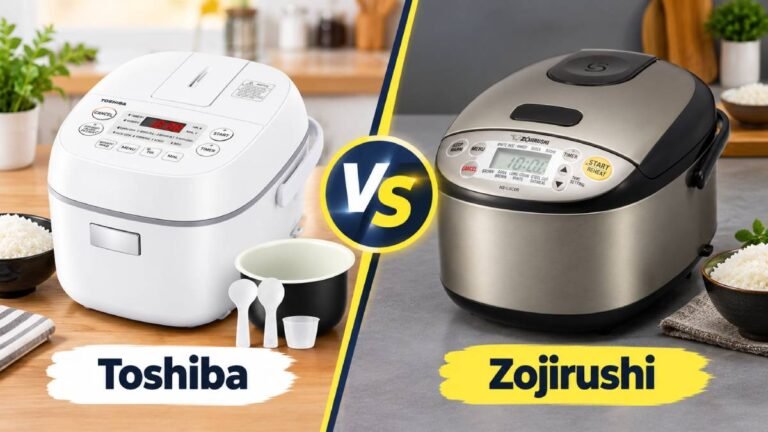
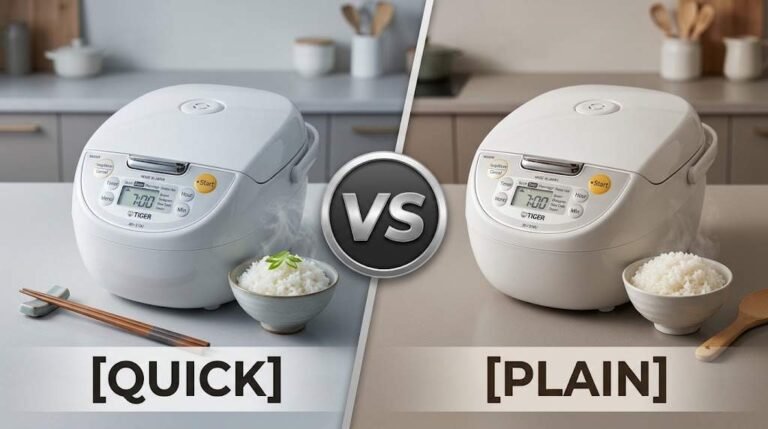
The Tiger Micom offers a similar 3-cup capacity and features a handy steam basket that allows you to cook rice and steam veggies at the same time. While its build quality is excellent, it has a bulkier plastic design that lacks the sleek beauty of the Muji and the legendary temperature control of the Zojirushi.
Hamilton Beach Digital Programmable Rice Cooker
This budget-friendly option is great for those who want Fuzzy Logic features without the high price tag.
It is a larger unit, making it a great rice cooker for a family of four on a tight budget. However, the inner pot coating is much thinner, and the rice texture cannot match the fluffy, consistent results you get from either the Zojirushi or the Muji.
Who Should Buy Which?
Weighing the pros and cons of both models will help you decide which is better for your home. Here is a quick guide to help you choose.
- Buy the Muji Rice Cooker if: You have a small kitchen, love minimalist design, mostly cook white rice, and want a beautiful appliance that sits quietly on your counter.
- Buy the Zojirushi Micom Rice Cooker if: You eat rice daily, want the best rice cooker for brown rice, appreciate a retractable cord and handle, and want a durable machine that produces perfect grains every time.
- Consider Neither If: You need a cooker for a family of four or more, as these 3-cup models are best for one person or couples.
Long-Term Ownership Considerations
Owning a premium rice cooker is a long-term investment. To keep your cooker running perfectly for years, always use the plastic rice paddle included in the box and never use metal utensils that can scratch the non-stick coating.
Replacement parts like a new removable inner pot or a fresh steam vent gasket are much easier to find for the Zojirushi due to its wide distribution. The warranty for both brands is typically one year, covering manufacturing defects. In terms of energy use, both are highly efficient, drawing very little power during the keep-warm cycle, meaning your yearly cost of ownership will remain incredibly low.
Capacity and Energy Use: Muji Rice Cooker vs Zojirushi
Understanding the capacity of the Muji Rice Cooker vs Zojirushi is crucial before you buy. Both are rated for 3 cups of uncooked rice, which yields about 6 cups of cooked rice.
This capacity makes both cookers ideal for one person, couples, or a small family of three. They are not the best fit for a family of four who eats large portions or for meal prep big batches. The low wattage of both machines (under 450 watts) means they run very efficiently, consuming far less energy than a standard stovetop burner or a large multi-cooker. They both perform exceptionally well with small batches of just one cup, ensuring your quick weekday lunches are always cooked to perfection.
See more about Instant Pot Vs Zojirushi Rice Cooker: Which Is Better
Final Verdict
If you want a gorgeous kitchen appliance that makes very good white rice, the Muji Rice Cooker is a delightful addition to your home. It brings a sense of calm and simplicity to your daily cooking routine, fitting perfectly into tiny spaces.
However, for sheer performance, durability, and versatility, the Zojirushi is the overall winner. It handles difficult grains like brown rice with ease, keeps food fresh for hours, and is designed for maximum convenience. It is a premium machine that is absolutely worth the investment for anyone who takes their rice seriously.