For cooks in the United States, especially those planning Thanksgiving or a Sunday family meal, a slow cooker may seem like an easy way to make a turkey. However, the USDA does not recommend cooking a whole raw turkey in a slow cooker. A whole bird may heat too slowly and may not reach a safe temperature evenly.
The safer choice is to roast a whole turkey in an oven. You can still use a slow cooker for turkey breast, thighs, drumsticks, or cooked turkey meat. This guide explains why, what to do instead, how to check doneness, and how to avoid common food safety mistakes.
Introduction
A slow cooker works best with smaller turkey pieces that fit in one even layer or in a loose stack. A whole turkey is too large and too dense for many slow cookers. The center may stay in the food safety danger zone, between 40°F and 140°F, for too long.
The USDA advises cooking turkey to a minimum internal temperature of 165°F, measured in the thickest part of the breast and the innermost part of the thigh and wing. Use a food thermometer, not color or cooking time, to confirm that the turkey is done.

Can You Cook a Whole Turkey in a Slow Cooker?
The safest answer is no. Do not cook a whole raw turkey in a standard slow cooker. The USDA recommends using an oven for a whole turkey because an oven can surround the bird with steady, high heat.
A slow cooker may not heat a whole bird quickly enough. The turkey can also press against the sides of the cooker, block the lid, or leave the center undercooked while the outside looks ready.
Why a whole turkey is risky in a slow cooker
Several factors make a whole turkey a poor fit:
- The bird is large and thick.
- The cavity can slow heat movement.
- A cold or partly frozen turkey heats unevenly.
- The lid must stay closed for steady heat.
- Many slow cookers are too small for safe, even cooking.
- Cooking time varies by bird size, shape, cooker, and starting temperature.
Do not rely on a recipe that gives only a cooking time. A time estimate cannot prove that the thickest parts reached 165°F.
What to use instead
Choose one of these safer options:
- Roast the whole turkey in an oven.
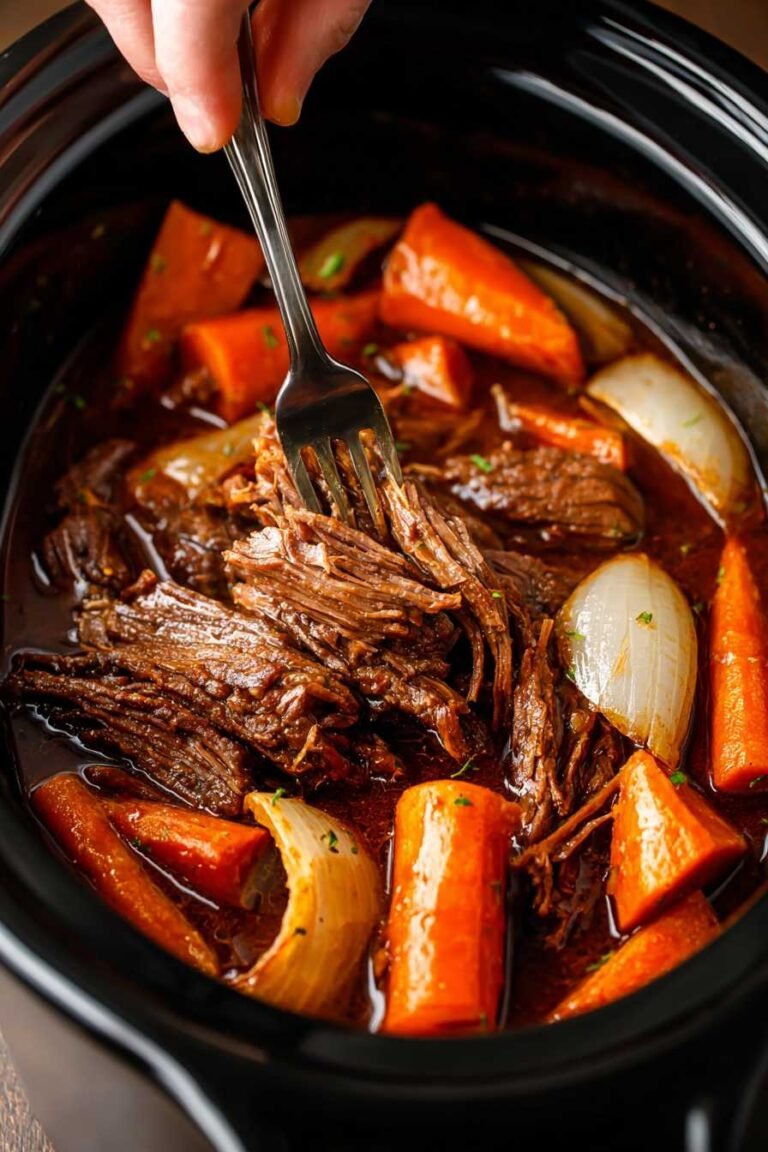
- Cook turkey parts in a slow cooker.
- Use a slow cooker for shredded turkey after the turkey has been safely cooked.
- Cook a turkey breast in a slow cooker if it fits with the lid fully closed and the manufacturer allows it.

How to Cook Turkey Parts in a Slow Cooker
Turkey breast, thighs, and drumsticks can work well in a slow cooker. The pieces should be fully thawed and small enough for the lid to close without touching or lifting.
Ingredients
For about 4 to 6 servings, use:
- 2 to 3 pounds turkey breast, thighs, or drumsticks
- 1 tablespoon cooking oil, optional
- 1 teaspoon kosher salt, or less to taste
- 1 teaspoon dried sage or poultry seasoning
– 1 teaspoon dried thyme - ½ teaspoon black pepper
- 1 cup low-sodium chicken or turkey broth
- 1 small onion, sliced
- 2 celery stalks, cut into pieces
- 2 carrots, cut into pieces
- 2 garlic cloves, crushed, optional
Use less salt if the turkey has been injected, brined, or labeled “self-basting.”
Steps
Thaw the turkey in the refrigerator.
Do not place a frozen turkey piece in a slow cooker. Allow enough time for the meat to thaw fully.Prepare the slow cooker.
Place the onion, celery, carrots, and garlic in the bottom. Add the broth. The liquid should help create moisture, but it does not need to cover the turkey.Season the turkey.
Pat the meat dry with paper towels. Rub it with the oil, if using, then add the herbs and pepper.Place the turkey in the cooker.
Keep the pieces in a single layer when possible. Do not pack the cooker tightly.Cook with the lid on.
Use the low or high setting based on your appliance instructions. Avoid lifting the lid during cooking because heat escapes each time.Check the temperature early.
Insert an instant-read thermometer into the thickest part of the meat. Avoid touching bone.Cook until the turkey reaches 165°F.
Check several thick pieces if the cooker contains different cuts.Rest the turkey for about 10 minutes.
Resting can make the meat easier to slice, but it does not replace reaching 165°F during cooking.
Estimated cooking times
These times are starting points, not guarantees:
| Turkey cut | Approximate slow-cooker time on low | Approximate time on high |
|---|---|---|
| Boneless turkey breast, 2–3 pounds | 4–6 hours | 2–3 hours |
| Bone-in turkey breast, 3–5 pounds | 5–7 hours | 3–4 hours |
| Turkey thighs or drumsticks, 2–3 pounds | 5–7 hours | 3–4 hours |
Your cooker may cook faster or slower. The thermometer decides when the turkey is safe to eat.

How to Cook a Whole Turkey Safely in an Oven
If you want a full centerpiece bird, use an oven. The oven method gives the turkey more space and more reliable heat than a slow cooker.
Basic oven method
Thaw the turkey completely.
Thaw it in the refrigerator, never on the counter.Remove the packaging and giblets.
Check both the main cavity and the neck area.Set the oven to 325°F.
Place the turkey breast-side up on a rack in a roasting pan.Season the turkey.
Brush the skin with oil or softened butter, then add salt and herbs as desired.Roast without stuffing when possible.
An unstuffed turkey generally cooks more evenly. If you stuff the bird, the stuffing must also reach 165°F.Use a thermometer.
Check the thickest breast area and the innermost thigh and wing. The turkey is ready when each tested area reaches at least 165°F.Rest before carving.
Let the turkey rest for about 20 minutes. This helps the juices settle and makes carving easier.
Approximate oven times for an unstuffed turkey
| Turkey weight | Approximate roasting time at 325°F |
|---|---|
| 8–12 pounds | 2¾–3 hours |
| 12–14 pounds | 3–3¾ hours |
| 14–18 pounds | 3¾–4¼ hours |
| 18–20 pounds | 4¼–4½ hours |
| 20–24 pounds | 4½–5 hours |
These are rough planning times from USDA guidance. Oven temperature, bird shape, starting temperature, and pan type can change the result. Always confirm doneness with a thermometer.

How to Tell When Turkey Is Done
Turkey is done when the thickest parts reach 165°F. Insert the thermometer into the thickest section of the breast and the innermost section of the thigh and wing.
Do not let the thermometer touch bone. Bone can give a false reading.
Signs that help but do not prove doneness
These clues may support your check, but they cannot replace a thermometer:
- The juices look clear.
- The meat is no longer pink near the surface.
- The skin is browned.
- The meat feels firm.
- The turkey pulls away from the bone.
A turkey can look done before the center reaches a safe temperature. It can also remain slightly pink after it is fully cooked. Temperature is the reliable test.
What if the turkey is below 165°F?
If the turkey is below 165°F:
- Keep cooking it.
- Check the temperature again in several minutes.
- Test the thickest parts.
- Do not serve it based on color alone.
If a whole turkey has been in a slow cooker for several hours but remains below 165°F, move it to an oven set to 325°F and continue cooking. If the turkey has stayed between 40°F and 140°F for more than 2 hours, discard it. In a hot kitchen above 90°F, the limit is 1 hour.

Food Safety Rules for Slow-Cooker Turkey
Safe handling starts before cooking. These rules apply to whole turkey and turkey parts.
Thaw turkey safely
Use one of these methods:
- Refrigerator: Keep the turkey at 40°F or below. A whole turkey may need several days.
- Cold water: Keep the turkey in leak-proof packaging and change the water every 30 minutes. Cook it right after thawing.
- Microwave: Follow the appliance instructions and cook the turkey at once.
Never thaw turkey on a kitchen counter. The outside can warm into the danger zone while the center remains frozen.
Keep the slow cooker covered
The lid keeps heat and moisture inside. Lift it only when you need to check the turkey near the end of cooking.
Do not overfill the cooker
Follow the slow cooker manual. As a general rule, food should not be packed to the top. Overfilling can slow cooking and lead to uneven heating.
Handle leftovers promptly
Refrigerate leftover turkey within 2 hours. Use shallow containers so the meat cools quickly. Keep the refrigerator at 40°F or below.
Eat refrigerated turkey within 3 to 4 days, or freeze it for longer storage. Reheat leftovers to 165°F.

Common Mistakes to Avoid
Putting a frozen turkey in the slow cooker
A slow cooker does not thaw meat safely. Start with fully thawed turkey.
Cooking by time alone
Cooking charts help with planning, but they cannot account for every appliance and bird. Check the thickest parts with a thermometer.
Using a turkey that is too large
If the lid does not close fully, heat escapes and cooking slows. Use a smaller turkey cut or switch to an oven.
Opening the lid again and again
Each opening releases heat. Check near the end, not every 30 minutes.
Adding stuffing to a slow cooker
Do not stuff a whole turkey in a slow cooker. The stuffing may remain below 165°F while the outside of the bird appears cooked. Cook stuffing separately, or follow tested oven instructions and check its center with a thermometer.
Cooking turkey on warm
The warm setting is for holding already cooked food. It is not a safe setting for cooking raw turkey.
Relying on a pop-up timer
A pop-up timer can help, but it should not be your only test. Confirm the turkey with a properly placed food thermometer.

What to Serve With Slow-Cooker Turkey
Slow-cooker turkey pairs well with sides that can be prepared while the meat cooks:
- Mashed potatoes
- Green beans
- Roasted carrots
- Cranberry sauce
- Cornbread
- Gravy
- Coleslaw
- Biscuits
For gravy, strain the cooking liquid and bring it to a full simmer in a saucepan. Thicken it with a flour or cornstarch slurry. Do not serve cooking liquid as gravy without heating it properly.
If you want crisp skin, transfer cooked turkey pieces to a baking sheet and place them under a broiler for a short time. Watch closely because the skin can burn quickly. The slow cooker creates tender meat but usually does not brown the skin.

Key Takeaways
- The USDA does not recommend cooking a whole raw turkey in a slow cooker.
- Roast a whole turkey in an oven set to 325°F.
- Turkey parts, such as breast, thighs, and drumsticks, can work in a slow cooker.
- Start with fully thawed turkey.
- Cook turkey until the thickest parts reach 165°F.
- Use a thermometer instead of color or time alone.
- Refrigerate leftovers within 2 hours.
FAQS About How To Cook Whole Turkey In A Slow Cooker
Can I put a small whole turkey in a slow cooker?
The USDA still does not recommend cooking a whole turkey in a slow cooker, even if the bird is small. The shape, cavity, and appliance design can cause uneven heating. Use an oven for a whole turkey.
Can I cook a turkey breast in a slow cooker?
Yes, a thawed turkey breast can be cooked in a slow cooker if it fits properly and the lid closes fully. Cook it until the thickest part reaches 165°F. Cooking time depends on the size, bone structure, and appliance.
Should turkey be covered with liquid in a slow cooker?
No. Turkey does not need to be covered with liquid. A small amount of broth can add moisture and flavor, but too much liquid may make the meat taste boiled and can make the cooker too full.
Can I cook turkey from frozen in a slow cooker?
No. Thaw turkey before placing it in a slow cooker. Frozen meat may remain at an unsafe temperature for too long.
How long can cooked turkey stay in a slow cooker?
Use the slow cooker only to keep already hot, cooked turkey warm if the appliance manual allows it. Keep the turkey at 140°F or above, and refrigerate it within 2 hours if it will not be served.
Can I use a slow cooker to reheat turkey?
Reheat turkey in an oven, microwave, or on the stovetop until it reaches 165°F. A slow cooker may heat leftovers too slowly. After reheating, a slow cooker can help hold the turkey hot, but it should not be the main reheating method.
Conclusion
A whole turkey and a standard slow cooker are not a safe combination. For a whole Thanksgiving turkey in the United States, use an oven and verify 165°F in the breast, thigh, and wing. For slow cooking, choose turkey breast, thighs, or drumsticks that fit comfortably, start with thawed meat, keep the lid closed, and use a food thermometer.
The next step is simple: choose the cut first. Use the oven for a whole bird, or prepare a smaller turkey piece in the slow cooker for tender meat with less hands-on work.