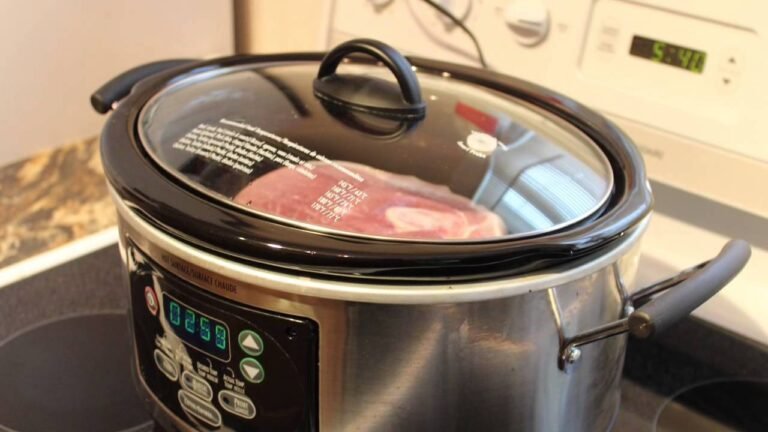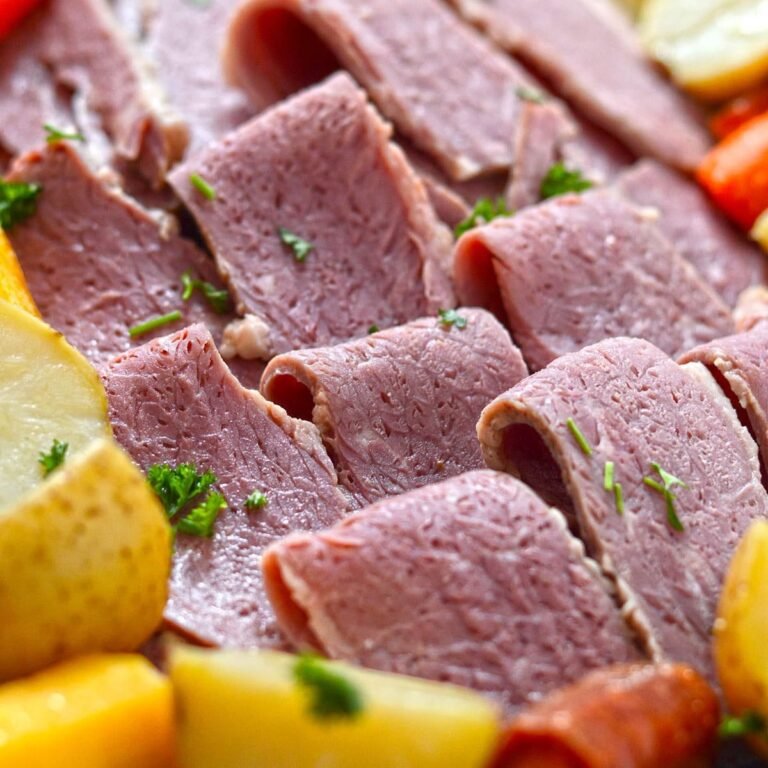
For most recipes, slow cooking takes 6 to 10 hours on Low or 3 to 5 hours on High. The exact time depends on the food, its size, the recipe, and your slow cooker. A beef roast may need 8 hours on Low, while chicken breasts may finish in about 3 to 4 hours.
In U.S. home kitchens, the safest way to judge doneness is by internal temperature, not time alone. Use a food thermometer and follow guidance from the USDA Food Safety and Inspection Service.

Slow Cooker Times at a Glance
Use this table as a starting point. Times assume thawed food, a covered cooker, and pieces that are close to the size listed in the recipe.
| Food | Low setting | High setting | Safe internal temperature |
|---|---|---|---|
| Beef chuck roast, 3–4 lb | 8–10 hours | 4–6 hours | 145°F minimum, then rest |
| Pork shoulder, 3–5 lb | 8–10 hours | 5–6 hours | 145°F minimum, then rest |
| Pork loin, 2–3 lb | 6–8 hours | 3–4 hours | 145°F minimum, then rest |
| Boneless chicken breasts | 3–5 hours | 2–3 hours | 165°F |
| Bone-in chicken thighs | 4–6 hours | 3–4 hours | 165°F |
| Turkey breast | 5–7 hours | 3–4 hours | 165°F |
| Dried beans, soaked | 6–8 hours | 3–4 hours | Fully tender |
| Stew meat and vegetables | 7–9 hours | 4–5 hours | Meat should be tender |
| Lentils | 4–6 hours | 2–3 hours | Soft and cooked through |
| Steel-cut oats | 6–8 hours | 3–4 hours | Soft, with liquid absorbed |
These are planning ranges, not guarantees. A large, cold roast takes longer than small pieces of meat. A fuller cooker also heats more slowly than one with a small amount of food.
Low versus High
The Low and High settings usually cook food to a similar final temperature. High does not mean the food should reach a higher safe temperature. It mainly helps the cooker reach its cooking range sooner.
Choose:
- Low for tough cuts, large roasts, beans, and meals that need a long cooking time.
- High when you have less time or when the recipe is designed for a shorter cook.
- Low for lean meat when possible, since extended high heat can make it dry.
A common rule is that 2 hours on Low equals about 1 hour on High, but this is only a rough guide. It does not work for every recipe or appliance.

How Long to Slow Cook Beef
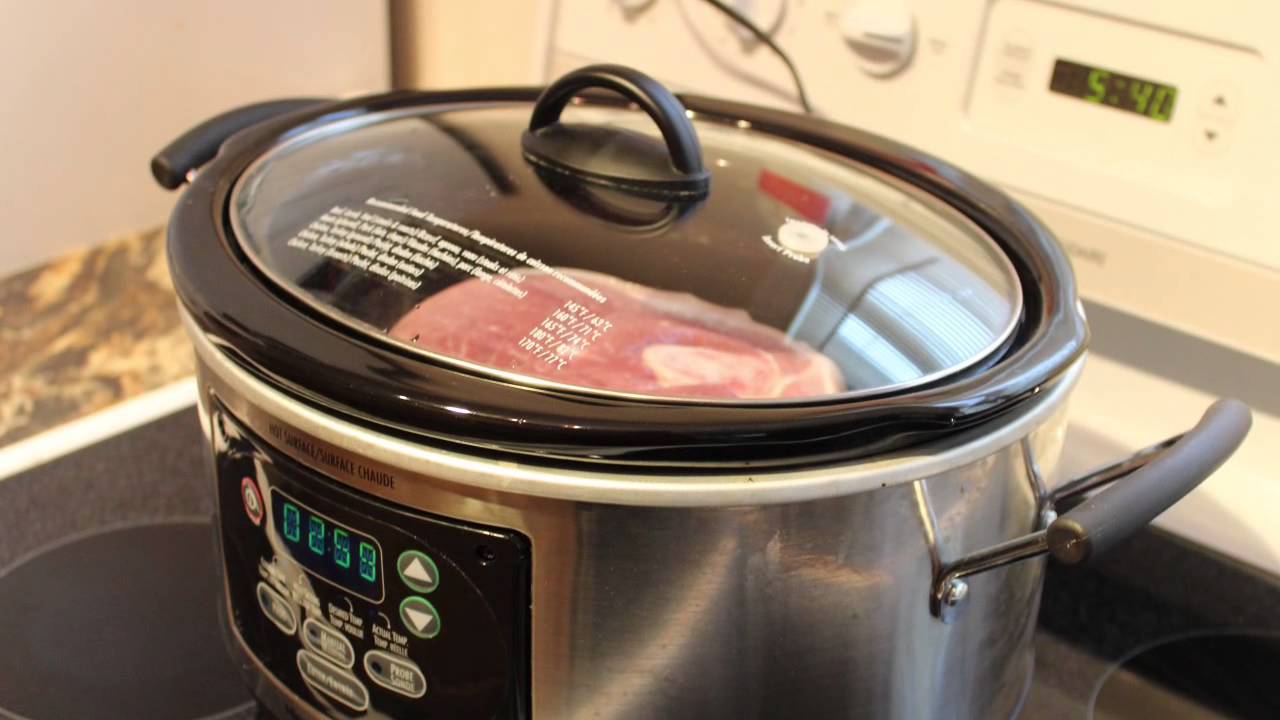
Beef roast usually needs 8 to 10 hours on Low or 4 to 6 hours on High. Tough cuts such as chuck roast, brisket, and round roast need time for connective tissue to soften.
Beef roast
For a 3- to 4-pound chuck roast:
- Pat the roast dry.
- Season it and brown it first if you want a deeper flavor.
- Add vegetables and a small amount of liquid.
- Cover and cook on Low for 8 to 10 hours.
- Check that the roast is tender when pierced with a fork.
- Use a thermometer to confirm the food reached a safe temperature.
Beef is safe at 145°F with a three-minute rest, according to the USDA. However, a pot roast often needs to cook beyond that point to become tender. Safety and tenderness are related, but they are not the same test.
Beef stew
Beef stew usually takes:
- 7 to 9 hours on Low
- 4 to 5 hours on High
Cut the beef into similar pieces so they finish at about the same time. Do not cut the pieces too small, or they may become dry before the vegetables are tender.
Add firm vegetables, such as carrots and potatoes, near the bottom of the cooker. They need more direct heat. Keep the lid closed during cooking, since each lift can release heat and add cooking time.

How Long to Slow Cook Pork
Pork shoulder takes about 8 to 10 hours on Low or 5 to 6 hours on High. Pork loin cooks faster, often in 6 to 8 hours on Low.
Pork shoulder and pork butt
Pork shoulder has a good amount of connective tissue. Long, gentle cooking helps turn that tissue soft and rich.
For pulled pork:
- Cook a 3- to 5-pound pork shoulder for 8 to 10 hours on Low.
- Check the meat after 8 hours.
- Continue cooking until it pulls apart easily.
- For shredding, many cooks prefer a texture that is much softer than the USDA’s minimum safety temperature.
The USDA lists 145°F with a three-minute rest as the safe minimum for whole cuts of pork. Pulled pork often cooks well past that temperature because shredding requires more tenderness.
Pork loin
Pork loin is leaner than pork shoulder. It can become dry if left in the slow cooker too long.
Plan for:
- 6 to 8 hours on Low
- 3 to 4 hours on High
Begin checking early. A pork loin may reach 145°F before the full time listed in a recipe, especially if it is small or your cooker runs hot.

How Long to Slow Cook Chicken and Turkey
Boneless chicken breasts often take 3 to 5 hours on Low or 2 to 3 hours on High. Bone-in chicken thighs usually take 4 to 6 hours on Low.
Poultry must reach 165°F in the thickest part. Check more than one piece if the cooker contains several pieces.
Chicken breasts
Chicken breasts are lean, so they need care:
- Use similar-sized pieces.
- Add enough sauce or cooking liquid to prevent a dry surface.
- Avoid cooking them for many extra hours after they reach 165°F.
- Check the thickest part with a thermometer.
A recipe that says “cook all day” may work for chicken thighs, but it can make chicken breasts stringy or dry.
Chicken thighs and drumsticks
Dark meat is more forgiving. Bone-in thighs and drumsticks usually need:
- 4 to 6 hours on Low
- 3 to 4 hours on High
The meat should reach 165°F and pull away from the bone with ease. If you want crisp skin, transfer the cooked chicken to a baking sheet and broil it briefly. A slow cooker cannot create a crisp, dry surface.
Turkey breast
A turkey breast commonly takes 5 to 7 hours on Low or 3 to 4 hours on High, depending on its weight and shape. Check the thickest part without touching the bone.
Do not rely on color. Poultry can look done before the center reaches a safe temperature.
How Long to Slow Cook Beans, Vegetables, and Grains
Dried beans often take 6 to 8 hours on Low after soaking. Some beans take longer, and older beans may remain firm even after many hours.
Beans
For best results:
- Sort and rinse the beans.
- Soak them if the recipe calls for it.
- Use enough liquid to keep them covered.
- Do not fill the slow cooker more than two-thirds full.
- Make sure the beans become fully tender before serving.
Some food safety guidance advises boiling certain dried kidney beans before slow cooking because raw kidney beans can contain high levels of a natural toxin called phytohaemagglutinin. Follow a trusted recipe from a university extension service or food safety authority for kidney beans.
Root vegetables
Potatoes, carrots, and turnips usually take:
- 6 to 8 hours on Low
- 3 to 4 hours on High
Place them under or around the meat. Cut large vegetables into even pieces. If the pieces vary greatly in size, the small ones may turn mushy before the large ones soften.
Grains and pasta
Rice, barley, and pasta do not all behave the same way.
- Steel-cut oats: about 6 to 8 hours on Low.
- Barley: about 6 to 8 hours on Low.
- White rice: often cooks faster and may become soft or sticky.
- Pasta: usually works best when added near the end.
For pasta, add it during the last 20 to 40 minutes unless the recipe gives different instructions. This helps prevent a soft, broken texture.

What Changes Slow-Cooking Time?
The cooking time can change by several hours when the food, cooker, or method changes.
Food size and shape
A whole roast cooks more slowly than small cubes. A thick chicken breast takes longer than a thin one. Keep pieces similar in size when possible.
Starting temperature
Thaw meat in the refrigerator before placing it in a slow cooker. The USDA advises against cooking frozen meat in a slow cooker because it may spend too long in the food-safety danger zone, between 40°F and 140°F.
Do not use a slow cooker to thaw food. Thaw it in the refrigerator, in cold water changed regularly, or in the microwave if you will cook it at once.
Cooker size and fullness
For steady heating, fill the slow cooker about one-half to two-thirds full. A nearly empty cooker may overcook food. An overfilled cooker may heat too slowly.
The cooker’s shape matters as well. A deep, narrow cooker may heat differently from a wide, shallow model, even when both have the same capacity.
Lid removal
Keep the lid on. Slow cookers lose heat slowly when opened, and recovery can take time. If you need to check doneness, open the lid once near the end rather than several times during cooking.
Liquid
Slow cookers lose less moisture than ovens. Most recipes need less liquid than a stovetop stew, but the food should not be dry.
Too much liquid can make the dish thin and dilute its flavor. Too little can leave food scorched around the edges, especially in a cooker with a hot surface.

How to Tell When Slow-Cooked Food Is Done
Use a food thermometer for safety and a texture test for quality.
Check the temperature
Insert the thermometer into the thickest part of the food. Avoid bones, the cooker wall, and large pockets of fat.
Use these basic targets:
- Poultry: 165°F
- Ground meat: 160°F
- Whole cuts of beef, pork, veal, and lamb: 145°F, followed by a three-minute rest
- Leftovers: Reheat to 165°F
These temperatures come from the USDA safe minimum internal temperature chart.
Check the texture
Temperature does not tell you whether a roast is tender. For tough cuts, test with a fork:
- The fork should slide in with little resistance.
- The meat should pull apart when gently twisted.
- Vegetables should be soft but not falling apart unless the recipe calls for that texture.
- Beans should be creamy inside, not firm or chalky.
If the food is safe but tough, keep cooking it. Toughness often means the connective tissue has not softened yet.

What to Do If the Food Is Not Done
If the meat has not reached its safe temperature, replace the lid and continue cooking on High. Check again after 30 to 60 minutes.
If a roast is safe but still tough, continue cooking until tender. Adding more time can improve a tough chuck roast, but it may not rescue an already dry chicken breast.
If the dish is too watery, remove the meat and vegetables when they are done. Then thicken the liquid in a saucepan with a cornstarch slurry. Do not leave cooked meat sitting at room temperature while you work.
If food has stayed in a turned-off slow cooker for more than two hours, discard it. The FDA advises keeping perishable food out of the danger zone, where bacteria can grow quickly.

Slow Cooker Safety Rules
A slow cooker is safe when it heats food correctly and the food is handled well.
Follow these rules:
- Thaw meat before slow cooking.
- Start with clean hands, utensils, and ingredients.
- Keep the lid on during cooking.
- Do not overfill the cooker.
- Use a thermometer for meat and poultry.
- Do not use the “Warm” setting to cook raw food.
- Refrigerate leftovers within two hours.
- Store leftovers in shallow containers so they cool faster.
- Use refrigerated leftovers within three to four days, or freeze them.
- Reheat leftovers to 165°F before eating.
If your slow cooker does not become hot enough to simmer after several hours, stop using it for safety-sensitive cooking until you check the appliance. Older or damaged units may not heat reliably.
Common Slow-Cooking Mistakes
Cooking frozen meat
Frozen meat may remain too cold for too long. Thaw it first in the refrigerator.
Adding too much liquid
A slow cooker traps steam. Start with the amount listed in the recipe, then adjust the sauce after cooking.
Cutting chicken too small
Small chicken pieces can dry out quickly. Use larger, even pieces and check them early.
Opening the lid often
Each opening slows the cook. Trust the recipe until the earliest suggested check time.
Using the wrong cut
Lean cuts, such as pork loin and chicken breast, need less time. Tough cuts, such as chuck roast and pork shoulder, need longer cooking to become tender.
Treating time as a guarantee
“Eight hours” is a plan, not proof of doneness. Food thickness, starting temperature, cooker design, and batch size all affect the result.

Quick Takeaways
- Most slow-cooker meals take 6 to 10 hours on Low or 3 to 5 hours on High.
- Beef chuck and pork shoulder often need the longest cooking time.
- Chicken cooks faster and can become dry if left too long.
- Thaw frozen meat before slow cooking.
- Keep the cooker one-half to two-thirds full.
- Use a food thermometer for safety.
- Test tough cuts for tenderness as well as temperature.
- Keep the lid closed and refrigerate leftovers within two hours.
FAQs
Can I slow cook meat for 12 hours?
You can cook some tough cuts for 10 to 12 hours on Low, but the recipe and cut matter. Beef chuck and pork shoulder may improve with extra time. Chicken breast, pork loin, and other lean cuts may become dry.
Is it better to slow cook on Low or High?
Low is usually better for tough cuts and long cooking. High is useful when time is limited. Both settings can cook food safely when the cooker works properly and the food reaches the required internal temperature.
Can I leave a slow cooker on while I am away?
Many slow cookers are designed for unattended cooking, but follow the manufacturer’s instructions. Place the cooker on a heat-safe surface, keep the cord away from water, and never use a damaged appliance.
Why is my slow-cooked meat tough?
The meat may need more time, especially if it is a tough cut with connective tissue. If the meat has reached a safe temperature but remains firm, continue cooking on Low until it becomes tender.
Can I put raw meat and vegetables in the slow cooker together?
Yes. Place the food in the cooker according to the recipe, keep the lid on, and cook until the meat reaches a safe internal temperature. Put dense vegetables near the bottom so they receive more heat.
Conclusion
For a reliable starting point, plan on 8 to 10 hours on Low for large, tough cuts and 3 to 5 hours on High for faster meals. Chicken and lean pork often need less time. Beans and firm vegetables may need several hours before they soften.
Start with thawed ingredients, keep the cooker partly full, limit lid removal, and check the center of the food with a thermometer. Then use texture as the final guide for tender roasts, stews, and pulled meat.