You can slow cook on a U.S. stovetop by using a heavy pot, keeping the food at a low simmer, and cooking it over low heat with the lid on. This method works well for stews, chili, beans, soups, braised meat, and other dishes that need gentle heat.
A stovetop slow cook is not the same as using an electric slow cooker. The heat is more direct, so you must check the pot from time to time. With the right heat and a tight lid, you can still get tender meat, rich broth, and deep flavor.
What Does “Slow Cook on the Stovetop” Mean?
Stovetop slow cooking means cooking food in a covered pot over very low heat for a long time. The food should stay hot and cook gently, but it should not boil hard.
A low simmer usually looks like this:
- Small bubbles rise now and then.
- The surface moves gently.
- Steam escapes slowly.
- The liquid does not splash or roll across the pot.
A hard boil can make meat tough, break apart vegetables, and reduce the liquid too fast. A low simmer gives connective tissue time to soften while the food stays moist.
The best cookware is a heavy Dutch oven or thick-bottomed pot. Heavy metal spreads heat better and lowers the risk of hot spots. A tight lid also helps keep moisture inside.
Stovetop cooking compared with a slow cooker
A slow cooker surrounds the crock with steady heat. A stovetop pot receives heat from the bottom only. Because of this difference:
- Stovetop cooking may finish sooner.
- You need to adjust the burner by hand.
- Liquid may evaporate faster.
- The pot can scorch if the heat is too high.
- The food may need occasional checks.
Use the recipe’s cooking time as a guide, not a guarantee. The best test is texture. Meat should be tender, beans should be soft, and vegetables should be cooked through.
What You Need Before You Start
Gather a heavy pot with a lid, a burner, a spoon, and a reliable food thermometer. A Dutch oven is useful, but any thick-bottomed pot with a well-fitting lid can work.
You may also need:
- A cutting board and sharp knife
- Tongs for browning meat
- A measuring cup for broth or water
- A heat-safe spoon
- A thermometer for checking meat and leftovers
Choose a pot that is large enough to hold the food without filling it to the rim. Leave some space for liquid to bubble without spilling.
Cut meat and vegetables into similar-size pieces. Small pieces cook faster. Large pieces take longer and may need more liquid. If you use vegetables that cook quickly, such as peas or zucchini, add them near the end.
Choose the right liquid
Most stovetop slow-cooked dishes need some liquid. Good choices include:
- Water
- Low-sodium broth
- Stock
- Crushed tomatoes
- Canned tomatoes with their juices
- Wine used as part of a recipe
- A sauce or cooking liquid
The liquid does not always need to cover the food. For a stew, the liquid may reach halfway up the meat. For beans, use enough water to keep them covered as they expand.
Too little liquid can cause burning. Too much liquid can make the dish thin and dilute its flavor.

How to Slow Cook on the Stovetop: Step-by-Step
Follow these steps for most stovetop slow-cooked meals.
1. Prepare and season the ingredients
Trim excess fat from meat, then cut it into large, even pieces. Season it with salt and other spices. Chop vegetables into pieces that can withstand a long cook.
If you are using dried beans, check them for small stones or damaged beans. Rinse them before cooking. Do not add acidic ingredients, such as tomatoes, until the beans are nearly tender unless your recipe says otherwise. Acid can slow softening in some beans.
2. Brown the meat, if the recipe calls for it
Heat a small amount of oil over medium-high heat. Brown the meat in batches so the pieces do not crowd the pot.
Browning adds a dark, savory flavor. It does not seal in juices. After browning, move the meat to a plate and lower the heat before adding onions, garlic, or liquid.
If the browned bits on the bottom look dark but not burned, add a little broth or water and scrape them up. These bits can add flavor to the sauce.
3. Soften the aromatics
Add onions, carrots, celery, garlic, or other aromatics to the pot. Cook them until they begin to soften.
This step helps release flavor. Keep the heat moderate. Garlic can turn bitter if it burns.
4. Add the liquid and return the meat
Pour in the recipe’s liquid. Scrape the bottom of the pot with a wooden or heat-safe spoon.
Add the meat back to the pot. Arrange the food so the pieces sit in the liquid without being packed too tightly.
5. Bring the pot to a gentle simmer
Raise the heat until the liquid begins to simmer. Then immediately turn the burner to low.
Do not leave the pot at a full boil. A hard boil can make meat fibers tighten and can cause the liquid to evaporate quickly.
For many gas or electric stoves, the correct setting may be low or medium-low. Every burner is different. Adjust the setting until you see only small, gentle bubbles.
6. Cover and cook slowly
Put the lid on the pot. Cook until the main ingredient is tender.
Typical stovetop cooking ranges include:
| Food | Approximate time | Signs it is done |
|---|---|---|
| Beef chuck in stew pieces | 2 to 3 hours | A fork slides in with little resistance |
| Pork shoulder pieces | 2 to 3 hours | Meat pulls apart easily |
| Bone-in chicken pieces | 45 to 90 minutes | Meat is tender and reaches a safe internal temperature |
| Dried beans | 1 to 3 hours | Beans are soft at the center |
| Lentils | 20 to 45 minutes | Lentils are tender but not hard |
| Tough root vegetables | 45 to 90 minutes | A fork passes through easily |
These times are estimates. The size, age, and type of food can change the result.
7. Check the pot during cooking
Check the pot after about 30 minutes, then check it from time to time. Look for a gentle simmer and enough liquid.
If the liquid is dropping fast, reduce the heat and add a small amount of hot broth or water. If the food is not simmering at all, raise the heat slightly.
Avoid lifting the lid again and again. Each opening lets heat and steam escape. Check quickly, then replace the lid.
8. Add quick-cooking ingredients near the end
Add peas, fresh herbs, leafy greens, cream, cooked pasta, or tender vegetables during the final stage. This helps prevent them from turning mushy.
If you add dairy, keep the heat low. High heat can cause milk, cream, or sour cream to split.
9. Confirm doneness and adjust the flavor
Use a food thermometer when meat is part of the dish. The USDA advises cooking poultry to 165°F and ground meats to 160°F. Whole cuts of beef, pork, veal, and lamb should reach at least 145°F, followed by a three-minute rest, according to USDA FSIS guidance.
For tough cuts, temperature alone does not tell the whole story. Meat may be safe to eat but still chewy. Keep cooking until the connective tissue softens.
Taste the sauce at the end. Add salt, pepper, acid, fresh herbs, or a small amount of heat as needed.

How to Control the Heat
Heat control is the main difference between successful and failed stovetop slow cooking. The goal is to keep the pot hot enough to cook but gentle enough to avoid a hard boil.
Use these signs:
- No bubbles: The heat may be too low.
- Small bubbles every few seconds: The heat is usually right.
- Large bubbles across the surface: The heat is too high.
- Food sticking to the bottom: The heat is too high, the pot is too dry, or the food needs stirring.
- Steam escaping heavily: The lid may be loose or the heat may be too high.
Electric burners often stay hot after you lower the setting. You may need to move the pot to a smaller burner or turn the heat down before the simmer becomes too strong.
If your lowest burner setting is still too hot, use one of these options:
- Move the pot to a smaller burner.
- Use a heat diffuser made for stovetop cooking.
- Shift the pot partly off the burner for a short time.
- Use a second burner that holds a lower temperature.
Do not place a regular glass casserole dish directly on a stovetop unless the manufacturer says it is designed for that use.

How Much Liquid Should You Use?
Start with the recipe’s stated amount. If you are adapting a slow-cooker recipe, reduce the liquid only with care.
A slow cooker loses little water. A stovetop pot can lose more, even with the lid on. This means a slow-cooker recipe may need a similar amount of liquid—or sometimes more—when adapted to the stove.
Use enough liquid to prevent the bottom from drying out. Do not flood the pot unless the food needs to be fully covered.
A simple adjustment guide
- For a covered stew, liquid often reaches one-half to two-thirds of the way up the ingredients.
- For braised meat, the liquid often reaches one-third to one-half of the way up the meat.
- For dried beans, the beans should remain covered as they expand.
- For soup, add enough liquid to create the desired final texture.
You can add more liquid during cooking, but it is harder to remove excess liquid without overcooking the food. If the finished dish is too thin, simmer it uncovered for a few minutes after the meat and vegetables are tender.
How to Convert a Slow-Cooker Recipe for the Stove
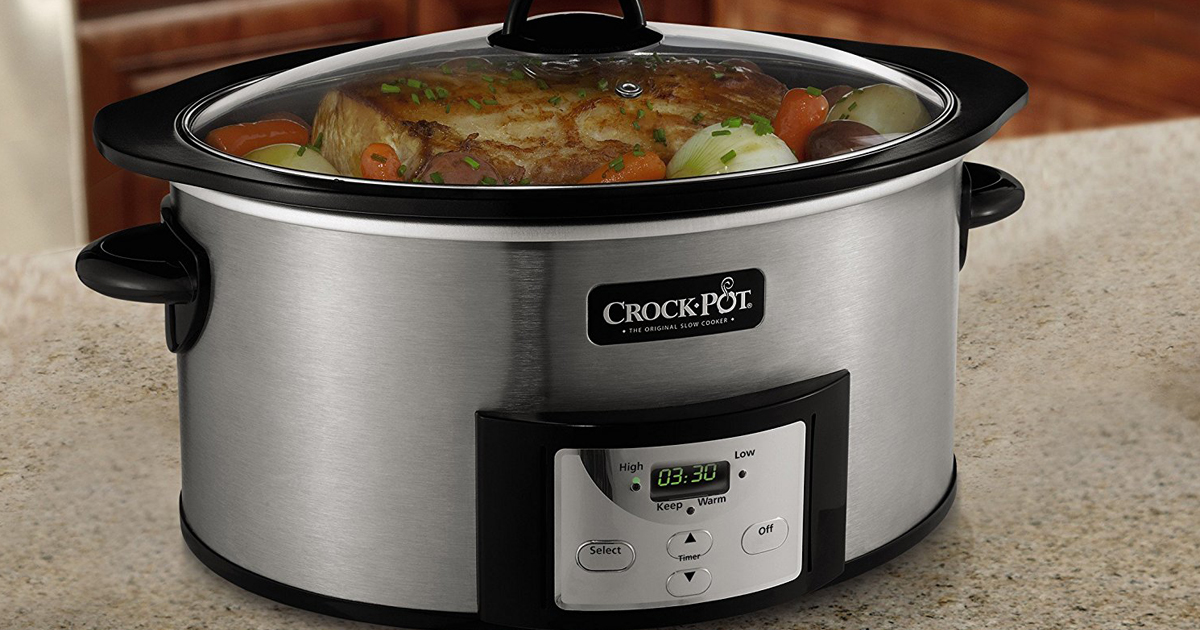
A slow-cooker recipe can often be made in a pot, but the timing will change. Do not assume that “8 hours on low” means the same thing as eight hours on the stovetop.
Use this basic method:
- Brown the meat in a heavy pot if desired.
- Add the vegetables, seasonings, and liquid.
- Bring the mixture to a gentle simmer.
- Cover the pot.
- Cook over low heat until the food is tender.
- Check the liquid and texture during cooking.
Many dishes that take several hours in a slow cooker may finish in one to three hours on the stove. The exact time depends on the cut, piece size, pot, burner, and recipe.
Do not shorten the cooking time just because the meat has reached a safe temperature. Tough cuts need time for collagen to break down. The dish is ready when it has both safe temperatures and the texture you want.
Food Safety for Stovetop Slow Cooking
Safe handling matters when food cooks for a long time. Keep raw meat separate from ready-to-eat food, wash hands after handling it, and use clean utensils.
The USDA describes 40°F to 140°F as the food safety “danger zone,” where bacteria can grow quickly. A pot should not sit warm but inactive for a long period. Once cooking begins, keep the food hot and actively cooking.
Follow these safety rules:
- Thaw meat in the refrigerator, cold water, or microwave—not on the counter.
- Do not use a slow simmer as a way to make spoiled food safe.
- Check poultry and ground meat with a thermometer.
- Refrigerate leftovers within two hours, or within one hour if the room is above 90°F.
- Divide large amounts of food into shallow containers so they cool faster.
- Reheat leftovers to 165°F, as advised by USDA FSIS.
If you cook dried kidney beans, boil them vigorously for at least 10 minutes before simmering. Raw or undercooked kidney beans can contain a naturally occurring toxin. Use the directions from a trusted food safety source, such as the FDA.

Common Problems and Fixes
The meat is still tough
The meat may need more time. Tough cuts often become tender only after connective tissue breaks down.
Keep the pot covered and continue cooking at a gentle simmer. Add liquid if needed. Raising the heat may cook the outside faster but will not always make the meat tender.
The bottom is burning
Turn off the heat and move the food to a clean pot if you smell burning. Do not scrape burned food into the rest of the dish.
Common causes include high heat, too little liquid, a thin pot, or long gaps between checks. Use a lower burner setting and a heavy pot next time.
The sauce is too thin
Remove the lid and simmer the liquid after the main ingredients are tender. This lets water evaporate.
You can also thicken the sauce with a cornstarch slurry. Mix cornstarch with cold water first, then stir it into the hot liquid. Add a little at a time.
The sauce is too thick
Stir in hot broth or water in small amounts. Taste again after each addition because extra liquid can reduce the salt and spice level.
The vegetables are mushy
Cut vegetables into larger pieces or add them later. Potatoes, carrots, and onions can handle long cooking better than peas, zucchini, spinach, and fresh herbs.
The food tastes flat
Long cooking does not replace seasoning. Add salt in small amounts, then consider black pepper, vinegar, lemon juice, herbs, or a little tomato paste.
Taste only with a clean spoon. Never return a used tasting spoon to the pot.
Key Takeaways
- Use a heavy pot with a tight lid.
- Bring the food to a simmer, then lower the heat.
- Aim for small bubbles, not a hard boil.
- Check the liquid and heat during cooking.
- Cook until the food is tender, not only until the clock says it is done.
- Use a thermometer for meat and reheated leftovers.
- Refrigerate leftovers promptly.
FAQ about How To Slow Cook On Stove Top
Can I slow cook on an electric stovetop?
Yes. Electric burners work well, but they can hold heat after you lower the setting. Adjust the burner early, and move the pot to a cooler burner if the simmer stays too strong.
Can I slow cook without a lid?
You can, but more liquid will evaporate and the food may cook unevenly. A lid helps hold in heat and moisture. If you cook uncovered, check the liquid more often.
Can I leave a pot simmering while I leave the house?
No. A stovetop pot should be monitored. The burner can run too hot, liquid can evaporate, and the pot can scorch or boil over.
Is stovetop slow cooking faster than using a slow cooker?
It can be. Direct heat from the burner often brings food to a simmer faster and may reduce the total cooking time. Begin checking for tenderness well before the slow-cooker time listed in a recipe.
Can I use a regular pot instead of a Dutch oven?
Yes, if the pot has a thick bottom and a well-fitting lid. A thin pot may develop hot spots, so use the lowest heat and check the food more often.
What is the best first dish to try?
A simple beef, chicken, bean, or vegetable stew is a good starting point. Use a heavy pot, keep the liquid at a low simmer, and add quick-cooking vegetables near the end.
Conclusion
To slow cook on a stovetop, use low, steady heat in a covered heavy pot. Keep the liquid at a gentle simmer, check the pot during cooking, and judge doneness by texture and safe internal temperature.
Start with a simple stew or soup. Once you can control the simmer, you can adapt many slow-cooker recipes for the stove with confidence.