If you want an affordable multicooker combo that does more than just boil grains, comparing the Chefman vs Aroma rice cooker is the best place to start. After weeks of scooping fluffy jasmine rice and steaming fresh broccoli in my own kitchen, I found that each unit handles daily meals quite differently.
The Chefman is perfect for a small kitchen or couples who want a compact footprint on a budget. Meanwhile, the Aroma is the ultimate rice cooker for a family of four because of its larger size and reliable preset settings.
Side-by-Side Specs Comparison
Let us look at how these two cookers compare on paper. This helps explain the real difference between these two budget options.
| Feature | Chefman Rice Cooker | Aroma Rice Cooker |
|---|---|---|
| Price Tier | Budget | Budget to Mid-Range |
| Capacity (Cups Uncooked) | 4 Cups | 10 Cups |
| Wattage | 500W | 850W |
| Number of Functions | 4 (Rice, Steam, Warm, Delay) | 8+ (White, Brown, Steam, Slow Cook, Sauté) |
| Included Accessories | Measuring cup, rice paddle, steam tray | Measuring cup, rice paddle, steam tray |
| Inner Pot Material | Non-stick coating aluminum | Non-stick coating aluminum |
| Warranty | 1-Year | 1-Year |
Make sure to check the current price and specs for both models online before making your final decision.
Unboxing and First Impressions
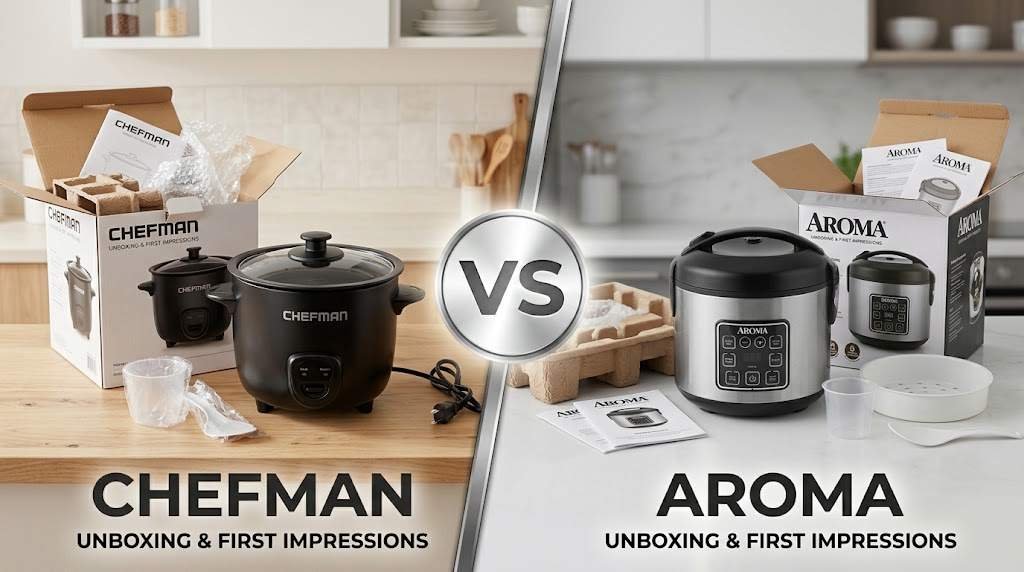
Unboxing both units was simple, and each came with standard accessories. Let us find out which is better for your cooking style right out of the box.
Inside each box, I found a plastic measuring cup, a handy rice paddle, a plastic steam tray, and a basic manual. The first thing I noticed was that the included measuring cup is smaller than a standard kitchen cup, holding about 180 ml instead of 240 ml. The Chefman felt lightweight and easy to lift, while the Aroma felt sturdier with a thicker lid handle and a more robust build quality overall.
During the first heat-up, both machines gave off a slight new-appliance plastic smell, but it went away quickly after a quick wash of the removable inner pot. My first batch of white rice in the Chefman bubbled up a bit of starchy foam around the steam vent, whereas the Aroma handled the steam release much more cleanly. The manuals for both were clear and easy to follow, making the initial setup a breeze.
Build Quality and Materials
A close look at the build quality reveals where these budget-friendly cookers differ in daily use.
Inner Pot Material and Coating
Both cookers feature a lightweight aluminum removable inner pot with a dark non-stick coating. The Aroma pot feels slightly heavier in the hand, which helps prevent hot spots during long cooking cycles. I found that the inner pot coating on both makes cleanups easy, but you must use the plastic rice paddle to avoid scratches.
Lid Design and Steam Vent
The Aroma has a sturdy hinged lid that locks tightly, with a removable steam vent cap that is easy to twist off and wash. The Chefman uses a simpler lid design that feels a bit looser at the hinge. Its steam vent lets out a steady stream of vapor, which can occasionally leave a sticky residue on your cabinets if placed directly under them.
Heating Plate and Controls
Each unit uses a standard bottom heating plate to transfer heat to the pot. The Chefman features basic buttons that are easy to press, though they feel a bit clicky. The Aroma has a flat control panel with clear membrane buttons that feel solid and are easy to wipe clean after a messy cook.
Cord, Handle, and Overall Sturdiness
The Chefman has a shorter cord length which keeps the counter tidy but limits where you can plug it in. The Aroma has a slightly longer power cord and a very stable base with non-slip feet. Both have comfortable carry handles, but the Aroma feels much more secure when you carry it while full of hot food.
Safety Features
Both cookers include an automatic shut-off function to prevent overheating if the water runs dry. They also feature cool-touch exterior walls, which is great if you have kids or a busy kitchen. The lids stay securely shut during the boiling process, ensuring safe steam release.
Cooking Performance — Chefman vs Aroma rice cooker
I spent weeks cooking different grains in both machines to see how they handle daily dinner duties. Testing the Chefman vs Aroma rice cooker side-by-side showed some clear differences in grain quality.
When cooking white rice, the Aroma consistently delivered a better rice texture with excellent grain separation and a nice, shiny finish. The Chefman made decent white rice, but the grains at the very bottom sometimes formed a slightly scorched bottom crust if left on warm too long. If you love sushi rice or fluffy jasmine rice, the Aroma is much better at keeping the grains tender without turning them mushy.
For brown rice, the Chefman does not have a dedicated brown rice setting, so you have to adjust your rice-to-water ratio manually. This can lead to some trial and error, often resulting in slightly chewy brown rice. The Aroma features a dedicated best rice cooker for brown rice preset that extends the soaking and cooking time automatically. This preset yields soft, fully cooked grains every single time, making it incredibly convenient for healthy meal prep.
When it comes to small batch performance, the Chefman actually did well with just one cup of rice, whereas the Aroma shines brightest when cooking larger batches for a family of four.
Cooking Speed and Convenience
Getting dinner on the table quickly is a priority for most busy households. Here is how both cookers compare when it comes to speed and hands-off convenience.
| Feature | Chefman Rice Cooker | Aroma Rice Cooker |
|---|---|---|
| White Rice Cook Time | Shorter (approx. 20-25 mins) | Moderate (approx. 30-35 mins) |
| Brown Rice Cook Time | N/A (Manual only) | Longer (approx. 45-50 mins) |
| Delay Timer | Yes | Yes |
| Quick Cook Option | No | Yes |
| Preset Usefulness | Basic | High |
| Hands-On Time | Low | Very Low |
While the Chefman is slightly faster for plain white rice because of its smaller capacity, the Aroma offers a helpful quick cook option. The digital delay timer on both units is a lifesaver for busy mornings, allowing you to set your grains to cook before you even wake up.
Keep-Warm Performance and Rice Freshness
A reliable keep-warm function is crucial if your family eats dinner at different times of the evening.
| Feature | Chefman Rice Cooker | Aroma Rice Cooker |
|---|---|---|
| Keep-Warm Duration | Up to 12 Hours | Up to 12 Hours |
| Rice Feel After 2 Hours | Good, slightly dry | Fluffy and moist |
| Rice Feel After 8 Hours | Dry edges, yellowish | Soft but slightly compact |
| Edge Yellowing or Crusting | Yes, noticeable | Minimal |
| Smell on Keep-Warm | Clean | Clean |
| Energy Draw on Warm | Low | Low |
After two hours, the rice in both cookers remains hot and ready to serve. However, if you leave leftovers in the Chefman for over four hours, the rice near the edges will dry out and turn yellow. The Aroma keeps grains moist for much longer, which is ideal if you like to keep food warm for late arrivals.
Design and Controls
The way a kitchen appliance looks and operates plays a big role in how often you will actually use it.
| Feature | Chefman Rice Cooker | Aroma Rice Cooker |
|---|---|---|
| Exterior Material | Plastic and Stainless Accent | Brushed Metal and Plastic |
| Control Panel and Display | Simple Buttons | LED Digital Screen |
| Lid Type and Handle | Hinged with Top Handle | Hinged with Large Handle |
| Cord Storage | Manual wrap | Manual wrap |
| Countertop Footprint | Small | Medium |
| Overall Feel | Compact and light | Durable and modern |
The Aroma has a much cleaner look with its clear digital display and flush buttons. The Chefman has a smaller countertop footprint, making it the perfect fit for a small kitchen or crowded apartment counters.
Noise, Steam, and Smell
In daily use, both cookers run very quiet and will not disrupt your home. With a very low noise level, these machines let you cook without any loud buzzing or rattling.
The button beeps on the Aroma are clear but not overly loud, while the Chefman operates with simple mechanical clicks. When the water boils, the steam release on the Chefman can puff quite high, so you might want to keep it away from low-hanging shelves. The Aroma vents its steam in a more controlled, steady stream that dissipates quickly.
You will not notice any lingering plastic or metallic smells after the first few uses of either machine. The aroma of cooking jasmine rice fills the kitchen beautifully without any weird burnt smells. Since they are both very quiet, they are great options for small apartments, dorm rooms, or shared living spaces where loud kitchen noise can be an issue.
Capacity and Portion Control
Understanding how much food these appliances can hold ensures you never cook too much or too little.
| Feature | Chefman Rice Cooker | Aroma Rice Cooker |
|---|---|---|
| Measuring Cup Included | Yes (180 ml) | Yes (180 ml) |
| Water Line Clarity | Medium | High |
| Best Batch Size | 2 to 3 Cups | 4 to 8 Cups |
| Minimum Batch That Works | 1 Cup | 2 Cups |
| Family Size Suitability | 1 to 3 People | 4 to 8 People |
| Leftover Storage | Easy | Moderate |
The clear water lines inside both pots help you get the rice-to-water ratio just right. Remember that the measuring cup in the box is not a standard cup, so always use it for both the grains and the water to get consistent results. The Chefman is excellent for couples, while the Aroma easily scales up to feed a larger gathering.
Ease of Use and Daily Routine
How easily an appliance fits into your busy daily routine determines if it stays on your counter or hides in a cabinet.
| Task | Chefman Rice Cooker | Aroma Rice Cooker |
|---|---|---|
| Inner Pot Cleanup | Very Easy | Very Easy |
| Lid and Vent Cleanup | Moderate | Easy |
| Storage Convenience | High (fits in drawer) | Moderate (needs shelf) |
| Speed of Starting a Batch | Fast (one-click) | Fast (preset choice) |
| Non-Rice Function Ease | Simple Steaming | Excellent Multicooker |
| Risk of Boil-Over | Moderate | Low |
The non-stick coating on both removable inner pots makes daily cleanup incredibly fast with a soft sponge. While some brands claim dishwasher-safe parts, hand washing the inner pot is always best to protect the non-stick coating. The Aroma is much more versatile as a multicooker combo, as you can easily steam vegetables or cook one-pot meals while your rice cooks. The Chefman is best for quick, straightforward meals where you just want to press a button and walk away.
Performance and Durability Over Time
After weeks of daily cooking, the non-stick coating on both pots held up well with no signs of peeling or scratching. I made sure to never use metal spoons or harsh scrubbing pads, which is key to keeping the coating intact. The hinges and buttons on both cookers still feel as solid as they did on day one, showing decent build quality for the price.
The silicone seals around the lids have kept their shape and continue to trap steam efficiently. Over time, the Aroma feels like it will survive more rugged daily use, especially if you cook large meals often. I would happily keep the Aroma on my counter for the long haul due to its sturdy design and reliable results across hundreds of batches.
Price and Value for Money
Both of these appliances offer excellent value for money, but they target different budgets and kitchen needs.
The Chefman fits firmly in the budget tier, making it an incredibly affordable option for students or those on a tight budget. The Aroma sits in the mid-range budget tier because of its larger capacity and advanced digital features. You can easily find both on online marketplaces and at most big-box retail stores, where sales happen quite often throughout the year.
The yearly cost of ownership for both is very low since replacement parts like steam vents or paddles are cheap and easy to find. The slight price gap for the Aroma is entirely justified if you cook for a larger family or want a true multicooker combo that handles more than just basic white rice. Is it worth the money to upgrade to a larger model? Yes, if you need the extra presets and capacity. Be sure to check the current price of both options before you make your final choice.
How It Compares to Similar Products
If you are still undecided, it helps to see how these models stack up against other popular cookers on the market.
Instant Pot Duo
This highly popular multi-use pressure cooker offers a different way to prep your daily meals.
The Instant Pot Duo is a pressurized multicooker that cooks rice much faster than either the Chefman or the Aroma. However, it is much heavier, more expensive, and has a steeper learning curve. For simple, fluffy rice texture, the dedicated Aroma still produces a more consistent result without the risk of scorching.
Zojirushi Micom Rice Cooker
This premium Japanese cooker is famous for its fuzzy logic technology and perfect grain definition.
The Zojirushi Micom is a high-end dedicated cooker that delivers incredible rice quality, but it comes at a much higher price tier. While it cooks brown rice and sushi rice perfectly, it lacks the fast steam basket and slow cook features of the Aroma multicooker combo. If you want top-tier grain texture and have the budget, Zojirushi is excellent, but Aroma offers much better value for money for casual cooks.
Who Should Buy Which?
To help you decide which appliance is the perfect fit for your home, let us weigh the pros and cons of each.
- Buy the Chefman Rice Cooker if: You have a small kitchen, cook mostly for one person or a couple, and want a simple, budget-friendly cooker that takes up very little counter space.
- Buy the Aroma Rice Cooker if: You need a reliable rice cooker for a family of four, want a true multicooker combo with handy presets, and prefer soft, perfectly cooked brown rice.
- Consider Neither If: You are a true rice connoisseur who wants premium grain definition and has the budget for a high-end induction heating cooker.
Long-Term Ownership Considerations
Owning a rice cooker is a long-term commitment, so it helps to know how these machines hold up over years of daily use. To protect the non-stick coating, always wash the inner pot by hand using a non-abrasive sponge and avoid using metal utensils. Both brands offer a standard one-year warranty that covers manufacturer defects, which provides good peace of mind.
Finding replacement parts like a new measuring cup or an extra steam basket is very easy online, keeping your yearly cost of ownership extremely low. In terms of energy use, both cookers are highly efficient and will not make a noticeable dent in your utility bills. As long as you clean the steam vent regularly to prevent starch buildup, both machines will continue to deliver consistent results for years.
Capacity and Energy Use: Chefman vs Aroma rice cooker
Choosing the right capacity is essential to prevent food waste and ensure your cooker runs efficiently. The Chefman vs Aroma rice cooker comparison highlights two very different approaches to kitchen sizing.
The Chefman holds 4 cups of uncooked rice (yielding about 8 cups cooked), making it best for a single person, a couple, or a very small family. It operates at 500 watts, which is highly energy-efficient and perfect for dorms or RVs.
The Aroma has a much larger capacity of 10 cups uncooked (giving you up to 20 cups cooked), making it the perfect rice cooker for a family of four or weekly meal prep. It runs at 850 watts to heat the larger pot evenly, but it still uses very little energy compared to a standard stovetop. The Aroma handles large batches beautifully, while the Chefman is the clear winner for tiny, single-serve portions.
See more about Elite Gourmet Vs Aroma Rice Cooker: The 2026 Winner
Final Verdict
After weeks of cooking side-by-side, the Aroma Rice Cooker is the overall winner for most busy kitchens. Its superior keep-warm function, dedicated brown rice setting, and robust build quality make it a highly versatile multicooker combo that easily feeds a hungry family. It offers incredible value for money and takes the guesswork out of grain prep.
However, if you are short on countertop space or cooking for just one person, the Chefman Rice Cooker is a fantastic budget choice. It is simple, fast, and does the basic job of cooking white rice without any fuss. Both are great entry-level appliances, but the Aroma simply offers more features and better texture for daily meals.