If you look at kitchen shelves trying to choose between an Aroma rice cooker basic vs professional model, you are not alone. After weeks of cooking white rice, brown rice, and steaming vegetables in both, I have learned that the best choice depends on how much you cook and how much time you have. One is a simple one-switch cooker that sits quietly in a small kitchen, while the other is a multi-function cooker with menu presets designed for a busy household.
This comparison cuts through the marketing hype to show you how these machines actually handle daily meals. Whether you need a cheap budget cooker for one person or a versatile rice cooker for a family of four, my real-world testing reveals what it is actually like to clean, use, and live with both models.
Side-by-Side Specs Comparison
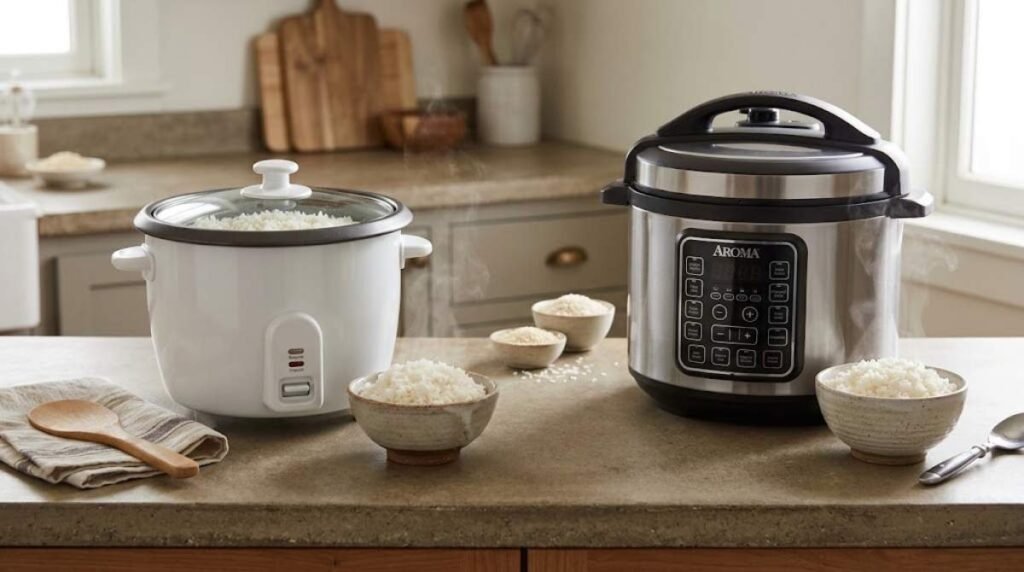
Let us look at how these two cookers compare on paper before we dive into the kitchen results. These technical details show the clear difference between a simple mechanical design and a modern digital appliance.
| Feature | Aroma Basic | Aroma Professional |
|---|---|---|
| Price Tier | Budget | Mid-range |
| Capacity (Cups Uncooked) | 3 Cups | 4 Cups |
| Wattage | 350W | 450W |
| Cooking Modes | Cook and Warm | 8 Digital Presets |
| Inner Pot Material | Non-stick Aluminum | Thick Non-stick Aluminum |
| Keep-Warm Function | Yes | Yes (Up to 12 Hours) |
| Warranty | 1 Year | 1 Year |
Make sure to check the current price and exact specifications online before making your final purchase. These details can vary slightly depending on the exact model number.
Unboxing and First Impressions
When I first opened the boxes, the difference in build quality was clear right away. The Aroma Basic arrived with a light inner pot, a plastic measuring cup, a basic rice paddle, and a simple glass lid. It had a strong new-plastic smell on the first run, which went away after a thorough soapy wash and a test cycle of plain water.
The Aroma Professional felt much heavier and more solid. It came with a steam basket, a measuring cup, a spatula, and a power cord. The included measuring cup is smaller than a standard kitchen cup, holding about 180 ml instead of 240 ml, so do not lose it. My first batch of white rice in the basic model boiled over slightly, creating a starchy foam around the steam vent. The professional model handled the same rice with no mess, though the buttons were slightly confusing at first glance.
Build Quality and Materials
Both machines use lightweight materials, but they feel very different in daily use.
Inner Pot Material and Coating: The basic cooker has a very thin aluminum pot with a thin non-stick coating. It feels light in your hand and can scratch easily if you use metal spoons. The professional cooker features a thicker, multi-layer pot with a stronger non-stick coating that resists wear much better.
Lid Design and Steam Vent: The basic model uses a loose glass lid with a small steam vent that lets starchy foam bubble out easily. The professional model has a locking lid with a secure gasket and a removable steam vent that prevents messy boil-overs.
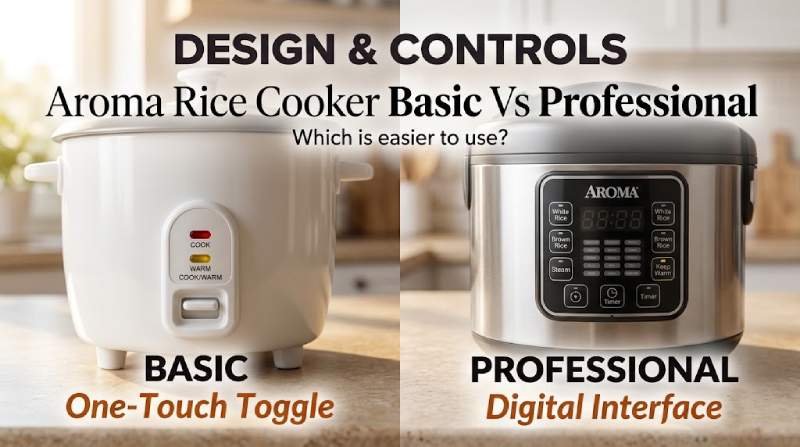
Heating Plate and Controls: On the basic model, you get a simple heating plate and a mechanical cook-and-warm switch. The professional model uses fuzzy logic sensors under the pot and a sleek digital control panel with an LCD display.
Cord, Handle, and Overall Sturdiness: The basic model has a short, non-detachable cord and light plastic handles. The professional model has a sturdy handle for easy carrying and a secure, detachable cord that stores away neatly.
Safety Features: Both units have an automatic shut-off feature to prevent overheating. The professional model stays cool to the touch on the outside, while the basic model’s metal sides get very hot during cooking.
Cooking Performance — Will It Actually Make Good Rice?
Cooking daily meals in both machines showed a real difference in rice texture and consistency. When using the basic one-switch cooker, white rice cooked quickly but often developed a scorched bottom. The rice near the edges of the pot turned dry and chewy, while the middle stayed soft. For decent grain separation, I had to wash the rice multiple times to stop the starch from burning. There is also nothing worse than forgetting to flip the switch on the basic cooker and returning to a pot of cold water and raw rice.
The professional model uses a smart brown rice setting and a dedicated white rice setting that adjust the heat dynamically. It makes beautifully fluffy rice with excellent grain definition and zero scorching. It is easily the best rice cooker for brown rice of the two, turning tough grains soft and tender without any manual adjustments. If you want a reliable rice cooker for a family of four, the professional model delivers a perfect texture every time, even if you do not wash the rice perfectly.
Cooking Speed and Convenience
Busy weeknights require a quick meal, and these two cookers handle time very differently. Here is a quick breakdown of how long you will wait for your dinner with each machine.
| Feature | Aroma Basic | Aroma Professional |
|---|---|---|
| White Rice Cook Time | 20 to 25 Minutes | 35 to 45 Minutes |
| Brown Rice Cook Time | 40 to 50 Minutes | 60 to 70 Minutes |
| Auto Switch to Warm | Yes | Yes |
| Quick Cook Option | No | Yes (25 Minutes) |
| One-Touch Simplicity | Yes | No (Needs Menu Select) |
| Hands-On Time | Low | Low |
The basic model is much faster because it simply blasts the pot with constant heat. However, the professional model has a delay timer and a quick cook setting that make it much more convenient for busy schedules.
Keep-Warm Performance and Rice Freshness
Leaving rice in the cooker for later is a common habit, but the results vary wildly between these cookers. This table shows how long your rice will stay fresh and edible after the cooking cycle ends.
| Feature | Aroma Basic | Aroma Professional |
|---|---|---|
| Keep-Warm Duration | Up to 2 Hours | Up to 12 Hours |
| Rice Feel After 2 Hours | Warm but dry on edges | Soft and moist |
| Rice Feel After 8 Hours | Hard and yellow | Still soft and warm |
| Edge Yellowing or Crusting | Yes, severe | Minimal |
| Smell on Keep-Warm | Flat or slightly burnt | Fresh |
| Energy Draw on Warm | Low | Low to Moderate |
The basic model’s keep-warm function will quickly turn your leftovers into a hard, yellow crust if you leave it on for more than two hours. The professional model keeps the rice moist and fresh for a full day without changing the smell.
Design and Controls
Your countertop space and kitchen style will play a big role in which machine you prefer. Let us compare the look, size, and layout of these two appliances.
| Feature | Aroma Basic | Aroma Professional |
|---|---|---|
| Exterior Material | Painted Steel and Plastic | Brushed Stainless Steel |
| Switch and Indicator Lights | Single Switch, Two Lights | Digital Panel, LCD Screen |
| Lid Type and Handle | Glass Lid, Plastic Knob | Locking Lid, Carrying Handle |
| Portability and Cord Length | Light, Short Fixed Cord | Sturdy, Detachable Cord |
| Countertop Footprint | Very Small | Moderate |
| Overall Feel | Simple and Lightweight | Modern and Solid |
If you have a small kitchen or a dorm room, the basic model takes up almost no space. The professional model is larger but looks much nicer sitting on a modern countertop.
Noise, Steam, and Smell
The basic cooker is completely silent except for a loud click when the switch flips to the warm setting. However, it releases a lot of steam and starchy water through the vent, which can coat your cupboards in sticky moisture. In the first few uses, it also emitted a mild hot-metal smell that faded over time.
The professional model makes soft beep sounds when you press the buttons and when the cycle ends. Its steam release is much more controlled, puffing out a gentle stream that does not make a mess. The sealed lid keeps the rice aroma inside the pot, which prevents your whole apartment from smelling like starch. It is highly suited for small apartments or shared living spaces.
Capacity and Portion Control
Understanding how much rice you can actually cook is vital for feeding your household. Here is how these cookers handle different batch sizes and family needs.
| Feature | Aroma Basic | Aroma Professional |
|---|---|---|
| Measuring Cup Included | Yes (180 ml) | Yes (180 ml) |
| Water Line Clarity | Faint lines inside pot | Clear embossed lines |
| Best Batch Size | 2 to 3 Cups Cooked | 4 to 6 Cups Cooked |
| Minimum Batch That Works | 1 Cup Cooked | 2 Cups Cooked |
| Family Size Suitability | 1 to 2 People | 3 to 4 People |
| Leftover Storage | Hard to store (dries out) | Easy to store in pot |
Remember that the rice cup in the box is smaller than a standard kitchen measuring cup. Always use the provided cup to maintain the correct rice-to-water ratio and get consistent results.
Ease of Use and Daily Routine
How much work is it to clean these machines and get dinner started every single day? This comparison shows how each model fits into a busy daily cooking schedule.
| Task | Aroma Basic | Aroma Professional |
|---|---|---|
| Inner Pot Cleanup | Harder (rice sticks easily) | Easy (slick coating) |
| Lid and Vent Cleanup | Simple glass lid wash | Needs inner lid removal |
| Storage Convenience | Very easy to tuck away | Needs cabinet space |
| Speed of Starting a Batch | Instant (one push) | A few button clicks |
| Travel or Dorm Use | Excellent | Moderate |
| Risk of Boil-Over or Sticking | High | Very Low |
The basic model offers instant, one-touch cooking but requires more elbow grease during cleanup due to stuck-on starch. The professional model has dishwasher-safe parts and an easy cleanup design that saves time after dinner.
Performance and Durability Over Time
After weeks of daily use, the thin non-stick coating on the basic cooker started showing tiny hairline scratches. I had to be extremely careful to only use the plastic rice paddle and a soft sponge. The cooking performance remained the same, but the tendency for rice to stick to the hot spots on the bottom increased slightly over time.
The professional model’s inner pot held up beautifully with zero signs of wear. The digital display remained bright, and the locking lid gasket kept a tight seal. This is the machine you want to keep on your counter long-term because its build quality is designed to handle years of daily wear.
Price and Value for Money
When looking at the difference between these two models, budget is always a key factor. The basic cooker sits firmly in the budget price tier, making it an incredibly affordable choice for students or anyone on a tight budget. You can find it at most online marketplaces and big retailers, and it is worth the money if you only cook simple white rice occasionally.
The professional model sits in the mid-range price tier, but the price gap is fully justified by its features. The digital presets, delay timer, and superior pot coating offer excellent value for money over time. It saves you from wasting ruined, burnt rice and will likely outlast the basic model by several years. Be sure to check the current price before making your choice.
How It Compares to Similar Products
To help you decide which is better for your home, let us see how these Aroma cookers stack up against other popular brands in the same category.
Zojirushi NHS-06
The Zojirushi NHS-06 is a premium basic cooker that offers better build quality than the Aroma Basic. However, it is much more expensive for a simple one-switch design, making the Aroma a better budget choice.
Instant Pot Duo
The Instant Pot Duo is a multi-function cooker that can pressure cook and slow cook. While it has more features, its white rice texture is not as fluffy or consistent as the Aroma Professional, which is built specifically for grains.
Hamilton Beach Advanced Multi-Function
This model offers fuzzy logic technology at a similar mid-range price to the Aroma Professional. It makes good rice but has a larger countertop footprint, making it less ideal for small kitchens.
Who Should Buy Which: Aroma rice cooker basic vs professional?
Let us look at the real-world pros and cons of these options to see which machine fits your lifestyle.
- Buy the Aroma Basic if:
- You are cooking for one person or need a dorm cooker.
- You have very little countertop space and need easy storage.
- You are on a tight budget and want simple one-touch cooking.
- Buy the Aroma Professional if:
- You want to cook high-quality jasmine rice, sushi rice, or brown rice.
- You are cooking for a family of four and need consistent results.
- You want a delay timer to have hot rice ready when you get home.
- Consider Neither If:
- You want advanced pressure induction heating for restaurant-grade grains.
Long-Term Ownership Considerations
Owning a rice cooker over many years requires a little bit of care to keep it performing like new. To protect the inner pot coating, never use metal utensils or abrasive scrubbers, and stick to hand washing when possible. Over time, the basic model’s simple mechanical switch is less likely to fail than the professional model’s digital motherboard, but its thin pot will need replacing sooner.
For the professional model, keep the removable inner lid clean to prevent mold or odors from building up in the seal. Replacement parts like inner pots and steam baskets are easy to find online for both models. Since both models use low to moderate wattage, their daily energy use is very low, making the yearly cost of ownership extremely reasonable.
Capacity and Energy Use: Aroma rice cooker basic vs professional
Let us look closely at how capacity affects daily use and energy draw for these cookers. The basic model holds up to 3 cups of uncooked rice, which is perfect for a single person or a couple. The professional model has a larger capacity of 4 cups uncooked (yielding 8 cups cooked), which is the ideal size for a family of four or meal prep.
When it comes to small batches, the professional model handles a single cup of rice surprisingly well without burning it, thanks to its smart sensors. The basic model tends to scorch small batches because its heating element runs at full power regardless of the food volume. In terms of wattage, the basic model uses around 350 watts, while the professional model draws 450 watts. Both are highly energy-efficient compared to cooking on a stovetop.
Final Verdict
After weeks of cooking with both machines, the professional model stands out as the clear winner for most households. Its ability to cook perfect brown rice, keep leftovers fresh for hours, and clean up easily makes it well worth the extra investment. It is the best choice for anyone who eats rice multiple times a week.
The basic cooker remains a solid, honest option for students, solo renters, or occasional cooks. It does not make perfect grains, and you have to clean up boil-overs, but it gets the job done quickly and cheaply. Choose the model that matches your daily routine, and you will enjoy fuss-free meals for years to come.